
Use the tool: Work toward the monthly rotation and carry-forward rule; test it with the real items and route before expanding storage.
Keep monthly work out of the weekly schedule
- Frequency: If a task becomes visibly or functionally necessary every week, it belongs in the weekly rotation. Monthly slots are for slower accumulation and inspection.
- Access: A job that requires moving appliances, using a ladder, or disassembling hardware may need more time, a second person, or professional service.
- Material: Check manufacturer care guidance before cleaning filters, finishes, seals, stone, wood, or appliance components. The calendar never overrides those instructions.
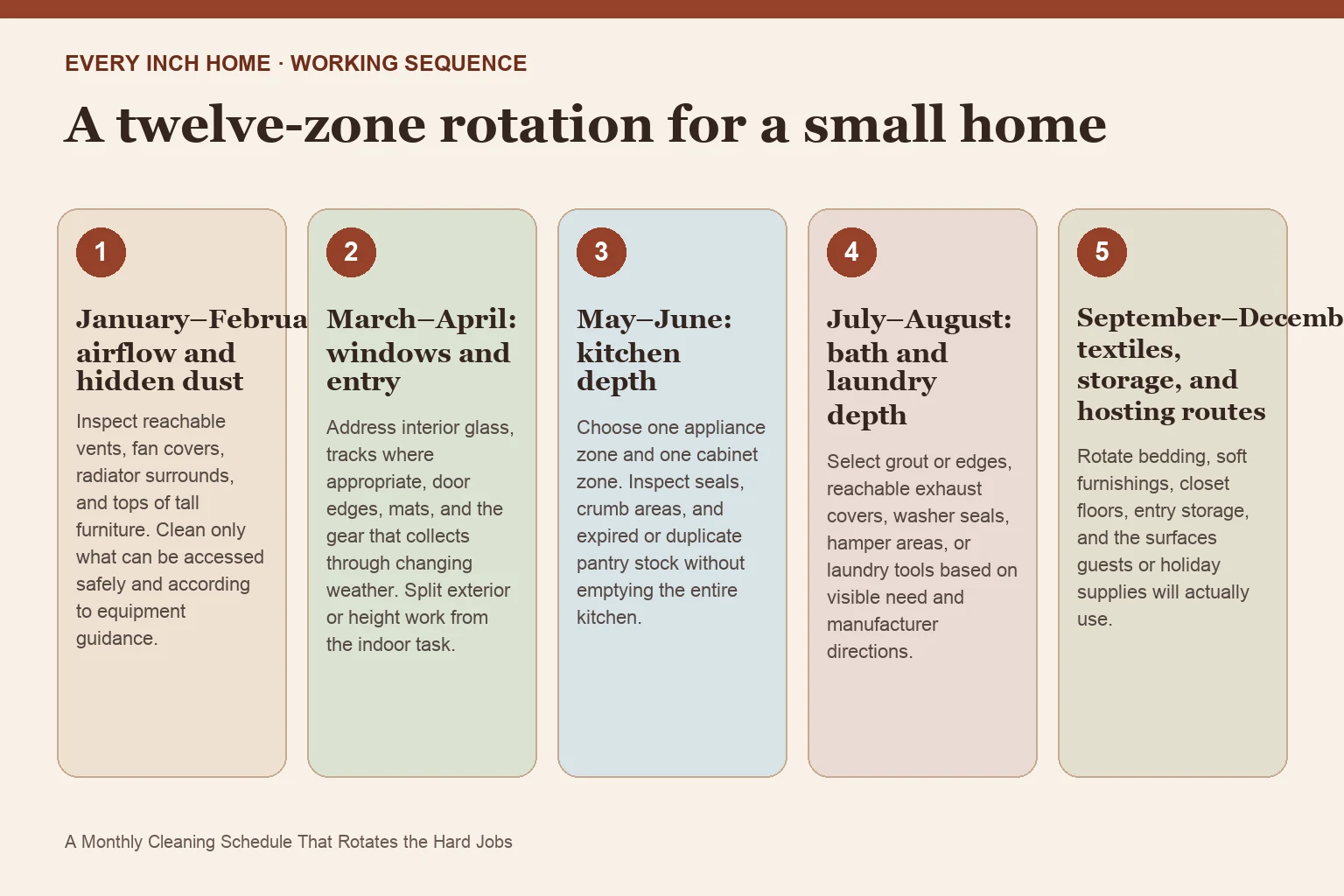
A twelve-zone rotation for a small home
1. January–February: airflow and hidden dust
Inspect reachable vents, fan covers, radiator surrounds, and tops of tall furniture. Clean only what can be accessed safely and according to equipment guidance.
2. March–April: windows and entry
Address interior glass, tracks where appropriate, door edges, mats, and the gear that collects through changing weather. Split exterior or height work from the indoor task.
3. May–June: kitchen depth
Choose one appliance zone and one cabinet zone. Inspect seals, crumb areas, and expired or duplicate pantry stock without emptying the entire kitchen.
4. July–August: bath and laundry depth
Select grout or edges, reachable exhaust covers, washer seals, hamper areas, or laundry tools based on visible need and manufacturer directions.
5. September–December: textiles, storage, and hosting routes
Rotate bedding, soft furnishings, closet floors, entry storage, and the surfaces guests or holiday supplies will actually use.
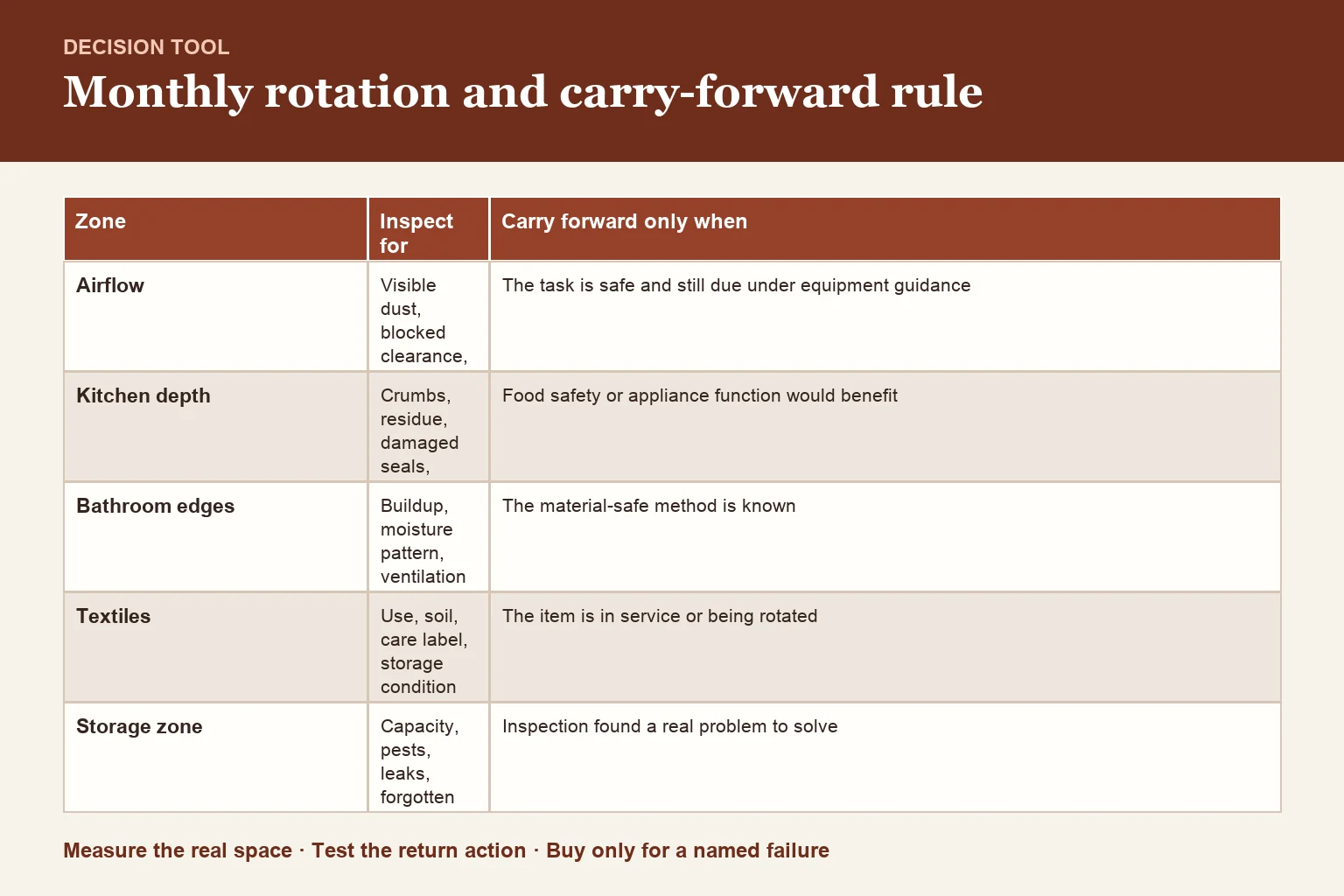
Monthly rotation and carry-forward rule
| Zone | Inspect for | Carry forward only when |
|---|---|---|
| Airflow | Visible dust, blocked clearance, filter status | The task is safe and still due under equipment guidance |
| Kitchen depth | Crumbs, residue, damaged seals, expired stock | Food safety or appliance function would benefit |
| Bathroom edges | Buildup, moisture pattern, ventilation | The material-safe method is known |
| Textiles | Use, soil, care label, storage condition | The item is in service or being rotated |
| Storage zone | Capacity, pests, leaks, forgotten stock | Inspection found a real problem to solve |
Do not clean by calendar alone
The date is a reminder to inspect, not a command to scrub. If the zone is clean, dry, functional, and within its service guidance, mark it checked and move on. If you find damage, persistent moisture, electrical concerns, or a task beyond safe reach, stop and use qualified help rather than turning routine cleaning into repair work.
Skip and recovery without backlog
If a month is missed, inspect its highest-consequence zone at the next available session. Carry forward one task only when evidence says it matters; return the rest to their next normal rotation. Keep a short dated note of what was inspected so seasonal memory does not become an expanding checklist.
Frequently asked questions
What cleaning should be done monthly?
Good candidates include lower-frequency dust and edge work, one deep kitchen or bathroom zone, storage inspection, and selected textiles. The right list depends on use and manufacturer care.
Should I deep-clean the whole house every month?
Usually not. Rotating bounded zones is more sustainable and avoids repeatedly cleaning low-need areas while important tasks wait.
How do I catch up on missed monthly cleaning?
Inspect first, choose the one task with a current functional or hygiene benefit, and return the others to their next rotation instead of stacking every missed item.