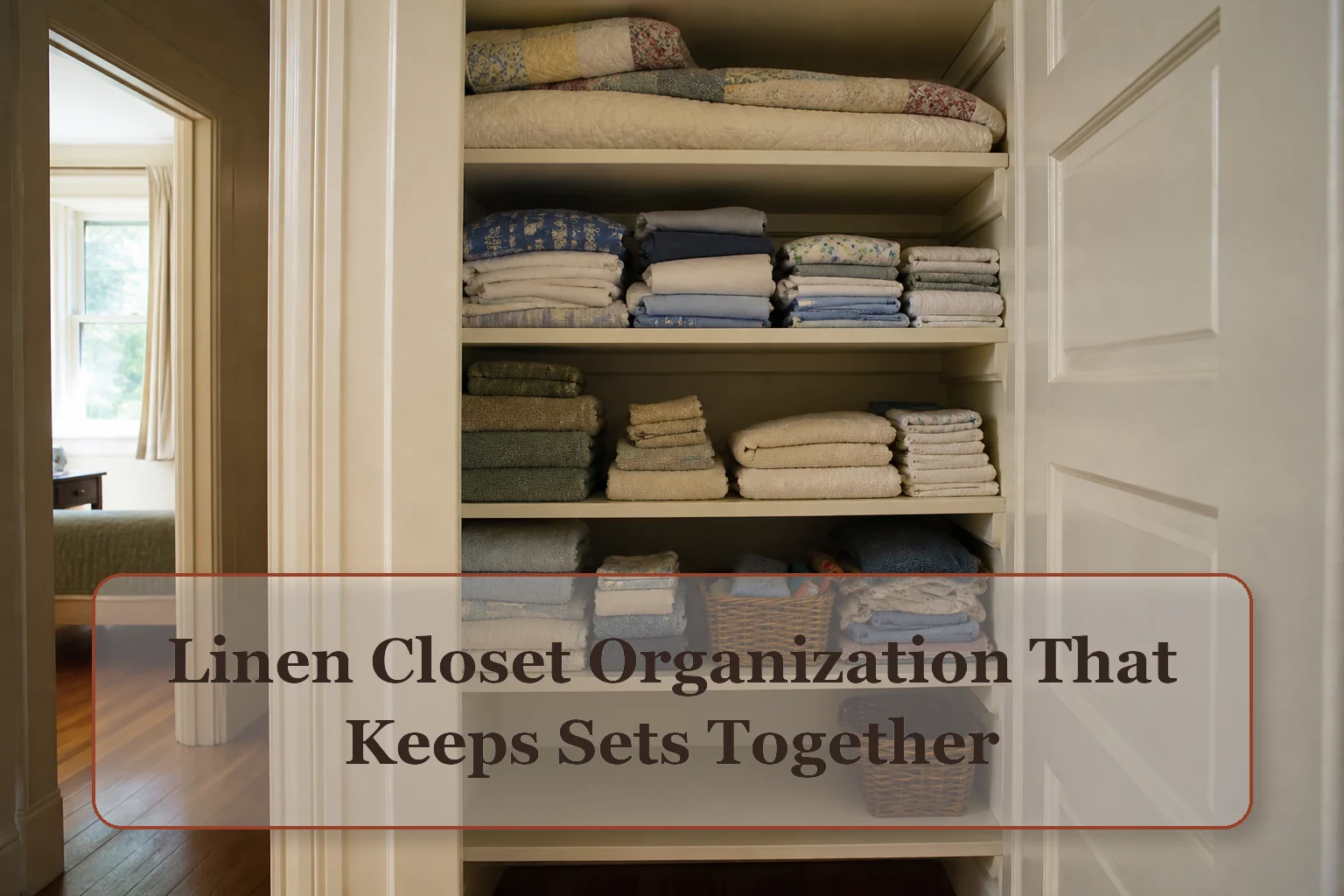
Use the tool: Work toward the set-based shelf map; test it with the real items and route before expanding storage.
Count complete uses, not individual pieces
- Bed sets: Match fitted sheet, flat sheet if used, and pillowcases to the correct bed size. Orphaned pieces need a named use or an exit decision.
- Towel cycle: Count what is in use, in laundry, and needed before the next wash. Household size and laundry access matter more than a universal par number.
- Shelf depth: Measure reach and stack height. A shelf that can physically hold twelve folded items may only let you retrieve six well.
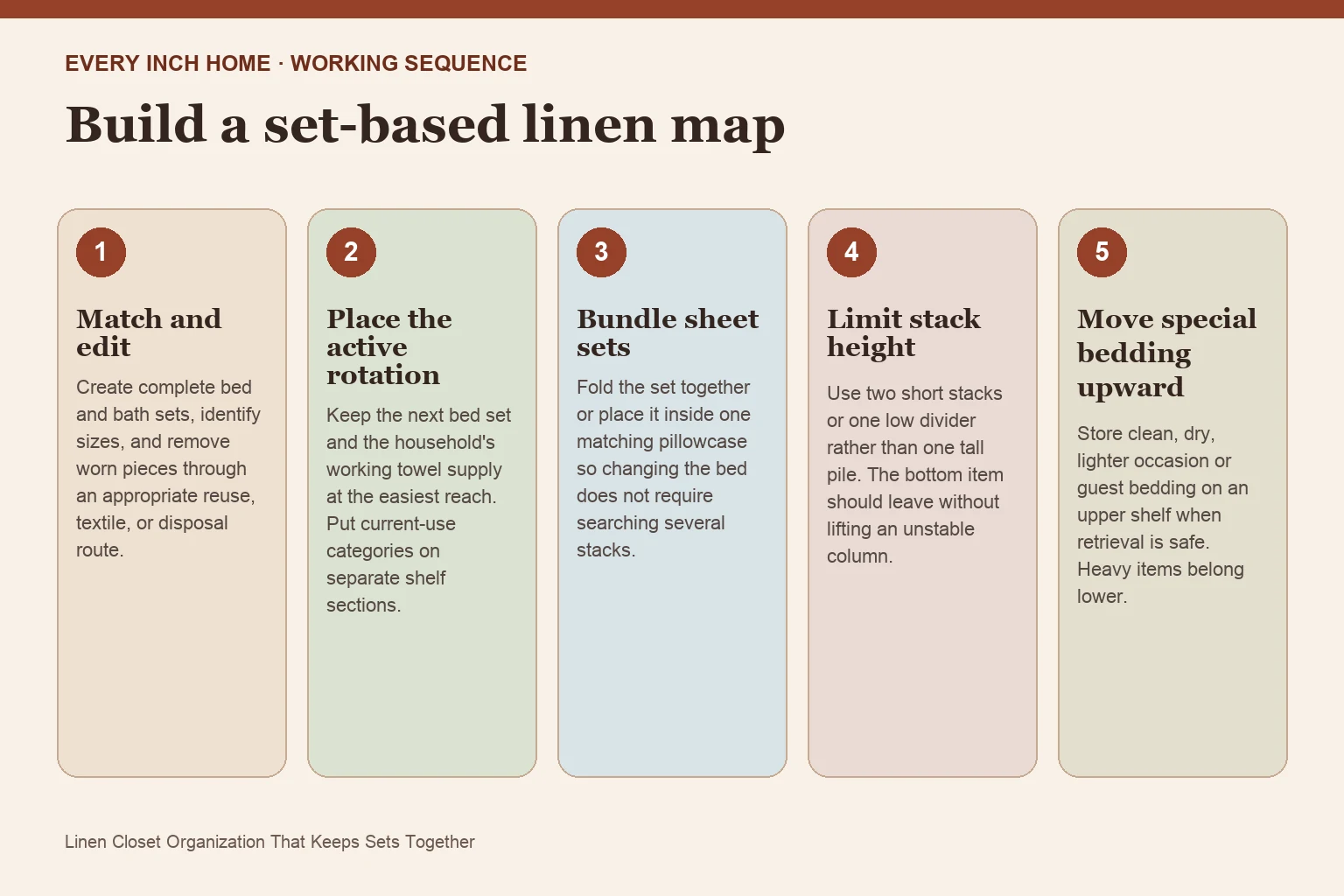
Build a set-based linen map
1. Match and edit
Create complete bed and bath sets, identify sizes, and remove worn pieces through an appropriate reuse, textile, or disposal route.
2. Place the active rotation
Keep the next bed set and the household's working towel supply at the easiest reach. Put current-use categories on separate shelf sections.
3. Bundle sheet sets
Fold the set together or place it inside one matching pillowcase so changing the bed does not require searching several stacks.
4. Limit stack height
Use two short stacks or one low divider rather than one tall pile. The bottom item should leave without lifting an unstable column.
5. Move special bedding upward
Store clean, dry, lighter occasion or guest bedding on an upper shelf when retrieval is safe. Heavy items belong lower.
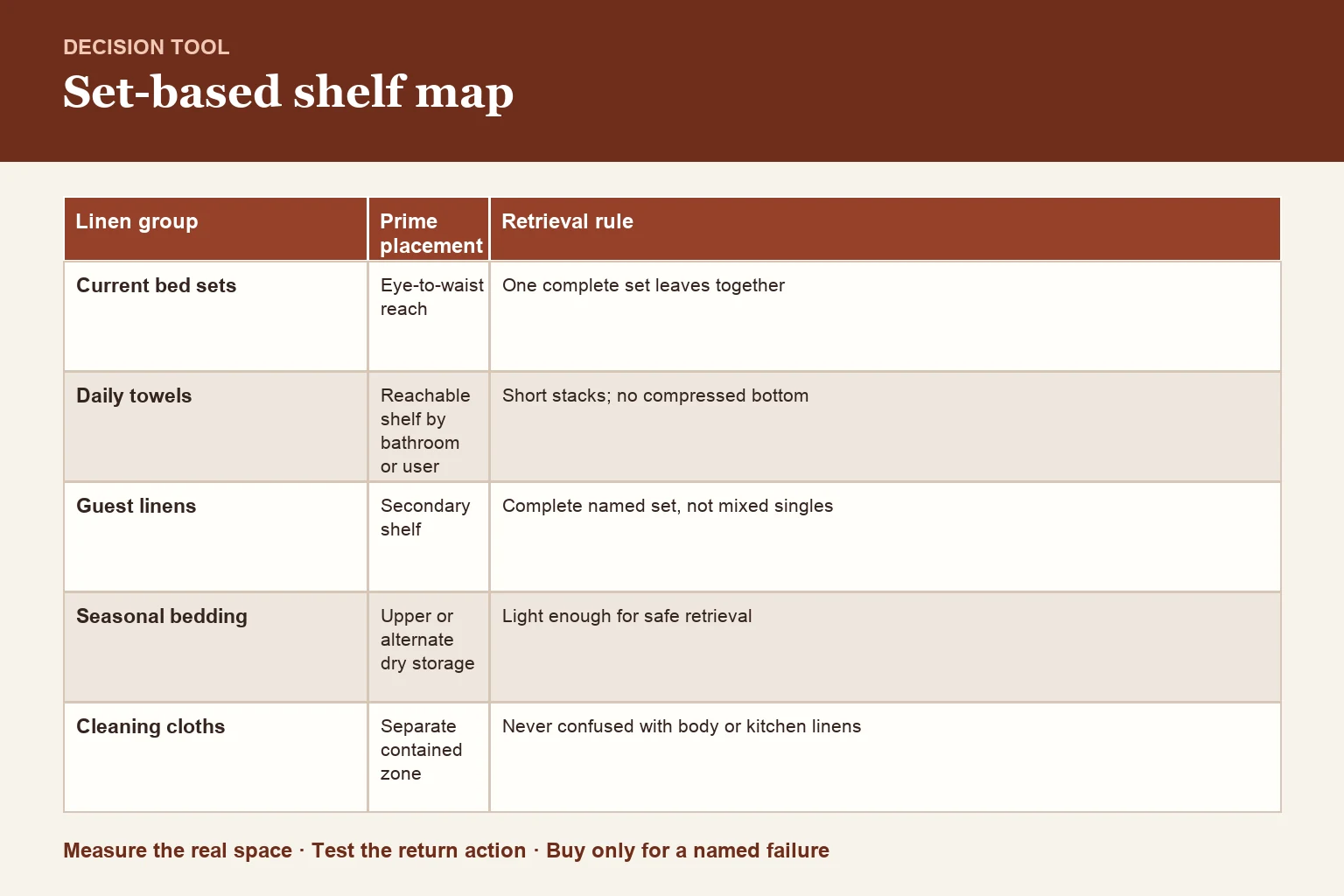
Set-based shelf map
| Linen group | Prime placement | Retrieval rule |
|---|---|---|
| Current bed sets | Eye-to-waist reach | One complete set leaves together |
| Daily towels | Reachable shelf by bathroom or user | Short stacks; no compressed bottom |
| Guest linens | Secondary shelf | Complete named set, not mixed singles |
| Seasonal bedding | Upper or alternate dry storage | Light enough for safe retrieval |
| Cleaning cloths | Separate contained zone | Never confused with body or kitchen linens |
Use shelf dividers before deep bins
A simple divider can keep short stacks upright without hiding them. Deep bins are useful for a complete occasional set only when the loaded unit remains breathable where needed, light, and easy to remove. Measure shelf depth and the lift space above; avoid making daily towels a heavy pullout project.
Audit when every set returns from laundry
The truthful capacity test happens when the laundry is put away. Match sets, rotate the next-use group forward, inspect for lingering dampness before storage, and correct category spillover immediately. If a shelf only closes while several towels are in use, the stored quantity exceeds the boundary.
Frequently asked questions
How do I keep sheet sets together?
Fold the complete set together or tuck it inside one matching pillowcase, then store by bed size and use frequency.
How many towels should I keep?
Base the quantity on household members, guest needs, laundry frequency, and true emergencies within a shelf that stays retrievable.
What goes on the top shelf of a linen closet?
Use it for lightweight, clean, dry, lower-frequency linens that can be retrieved safely, not heavy stacks or daily towels.