
Use the tool: Work toward the material-care and rotation checklist; test it with the real items and route before expanding storage.
Separate now, transition, later, and exit
- Wear now: Current weather and weekly roles determine the active wardrobe. Give this group prime closet and drawer access.
- Transition: Light layers, rain gear, or variable-weather pieces need a smaller reachable zone rather than being buried with the full off-season group.
- Wear later or exit: Store only pieces expected to serve the next relevant season. Clothing that no longer fits its role needs repair, trial, transfer, or exit before packing.
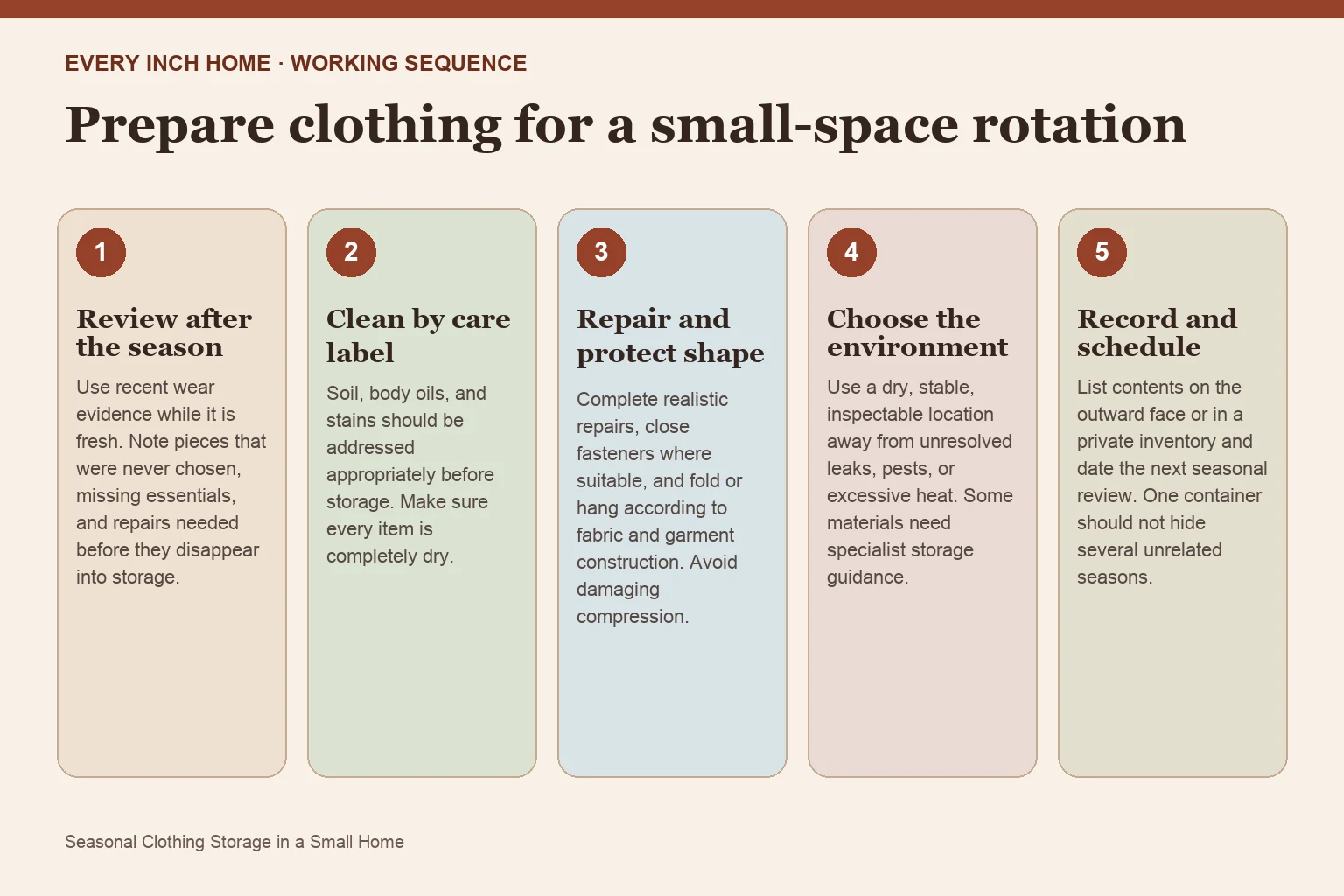
Prepare clothing for a small-space rotation
1. Review after the season
Use recent wear evidence while it is fresh. Note pieces that were never chosen, missing essentials, and repairs needed before they disappear into storage.
2. Clean by care label
Soil, body oils, and stains should be addressed appropriately before storage. Make sure every item is completely dry.
3. Repair and protect shape
Complete realistic repairs, close fasteners where suitable, and fold or hang according to fabric and garment construction. Avoid damaging compression.
4. Choose the environment
Use a dry, stable, inspectable location away from unresolved leaks, pests, or excessive heat. Some materials need specialist storage guidance.
5. Record and schedule
List contents on the outward face or in a private inventory and date the next seasonal review. One container should not hide several unrelated seasons.
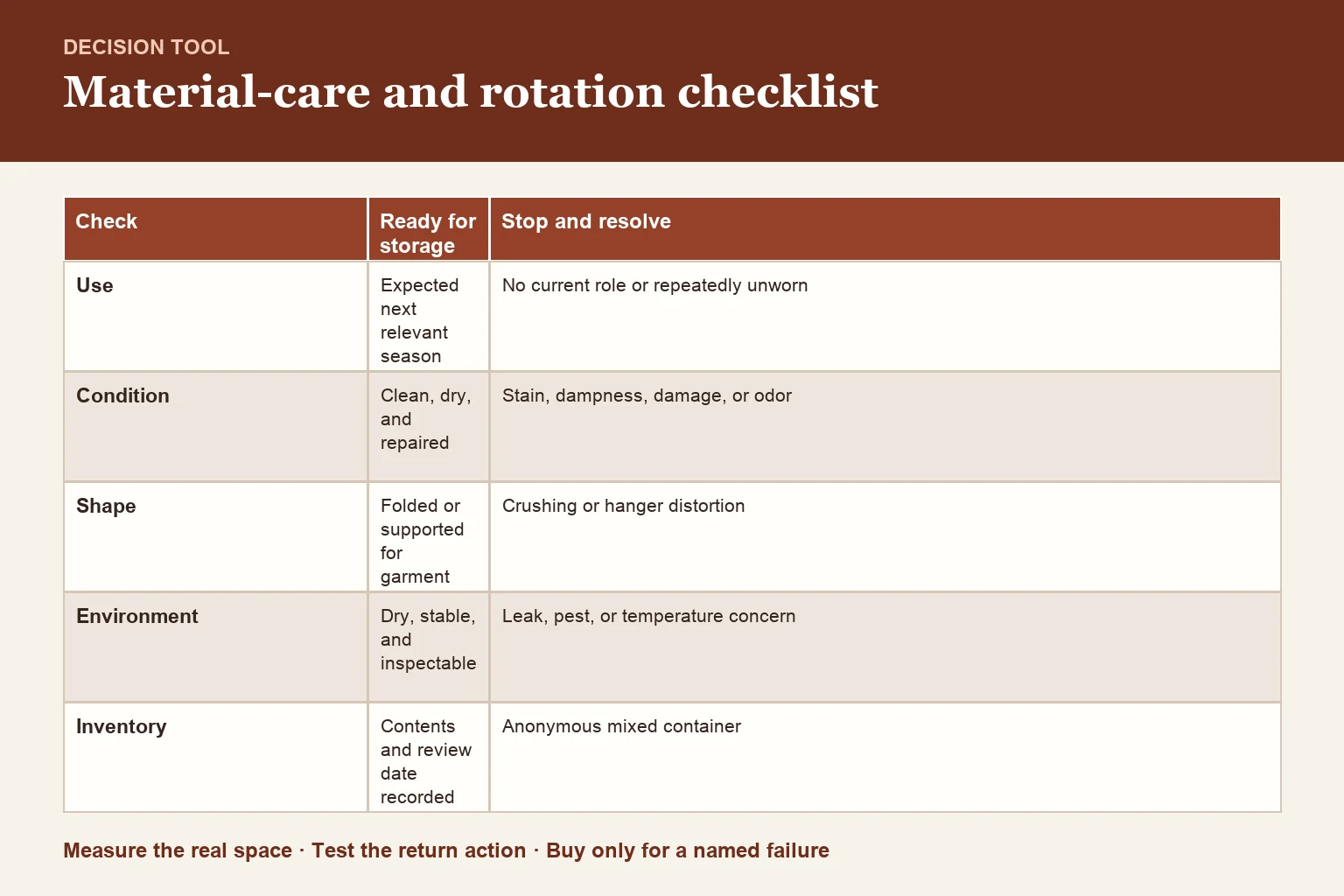
Material-care and rotation checklist
| Check | Ready for storage | Stop and resolve |
|---|---|---|
| Use | Expected next relevant season | No current role or repeatedly unworn |
| Condition | Clean, dry, and repaired | Stain, dampness, damage, or odor |
| Shape | Folded or supported for garment construction | Crushing or hanger distortion |
| Environment | Dry, stable, and inspectable | Leak, pest, or temperature concern |
| Inventory | Contents and review date recorded | Anonymous mixed container |
Vacuum compression is not a universal answer
Compression can reduce volume for some robust textiles, but long-term pressure may crease or damage loft and structure. Follow garment and container guidance, avoid assuming every fabric can be vacuum-packed, and use specialist advice for valuable, structured, leather, fur, or heirloom pieces.
Open every container at rotation time
Inspect clothing and storage conditions before returning pieces to the active closet. Air or clean items as their care permits, address any moisture or pest evidence, and edit clothing that no longer serves the coming season. The container count should stay stable: new seasonal pieces replace capacity rather than silently expanding it.
Frequently asked questions
How should seasonal clothes be stored?
Store only useful next-season items, clean and dry them fully, support the fabric appropriately, choose a suitable environment, and record contents.
Can clothes be stored in plastic bins?
Rigid bins can protect from dust or some pests, but environment and fabric needs matter. Avoid trapping moisture and follow garment and container guidance.
Should I vacuum-seal seasonal clothing?
Not for every fabric. Compression may harm loft or structure; check care guidance and use it only where the material and storage duration are appropriate.