Safety first: read every label, keep products in their labeled containers, provide ventilation when directed, and never mix household cleaners. CDC specifically warns against mixing bleach with ammonia or other cleaners.
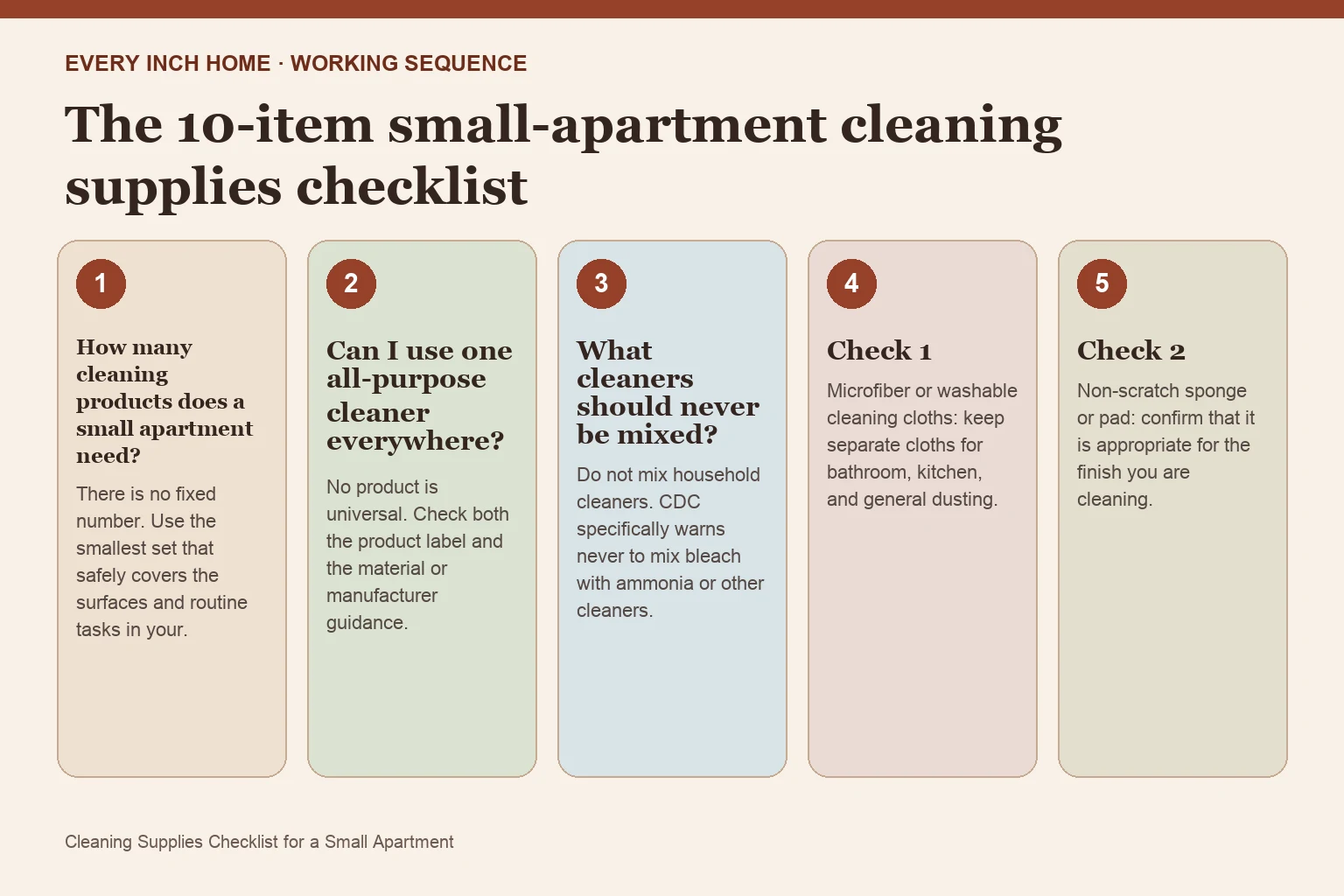
The 10-item small-apartment cleaning supplies checklist
- Microfiber or washable cleaning cloths: keep separate cloths for bathroom, kitchen, and general dusting if that makes the return route clearer.
- Non-scratch sponge or pad: confirm that it is appropriate for the finish you are cleaning.
- Small detail brush: useful around fixtures, grout lines, tracks, and other narrow edges when the material allows scrubbing.
- General cleaner: choose one labeled for the washable surfaces you use it on; more products are not automatically better.
- Dish soap: keep it for dishes and uses supported by the product and surface guidance; do not improvise chemical combinations.
- Bathroom cleaner, if needed: choose for the actual fixture and buildup, and follow the label’s contact, rinse, ventilation, and protection directions.
- Floor tool: a compact vacuum, broom and dustpan, or another tool matched to your flooring and storage space.
- Floor-cleaning product, if required: use what the flooring manufacturer recommends; some floors need very little moisture.
- Gloves or other protection specified on labels: store them dry and ready with the kit.
- One small caddy or shelf zone: it should hold the routine kit without stacking incompatible products or blocking labels.
Match the supply to the job
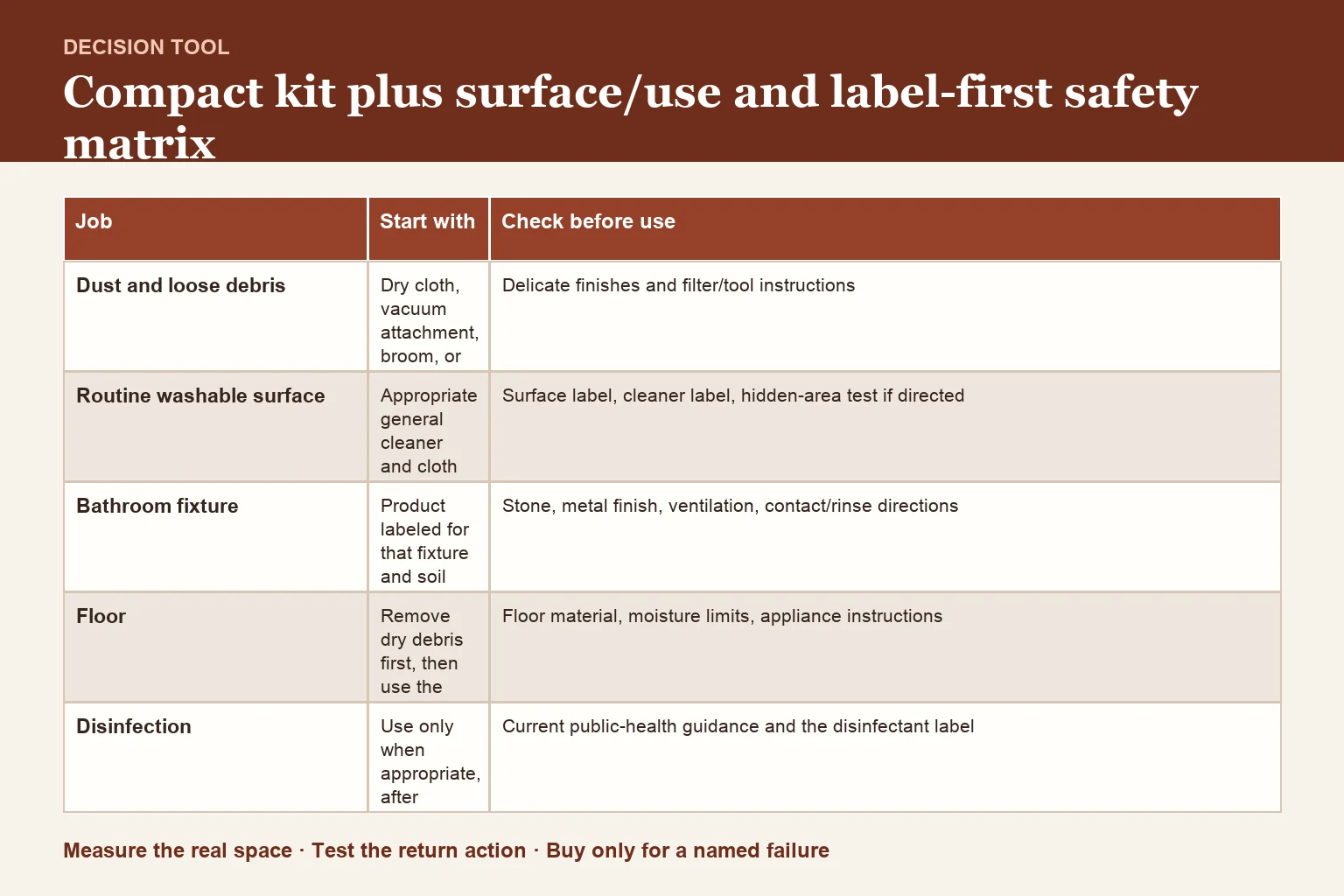
| Job | Start with | Check before use |
|---|---|---|
| Dust and loose debris | Dry cloth, vacuum attachment, broom, or dustpan | Delicate finishes and filter/tool instructions |
| Routine washable surface | Appropriate general cleaner and cloth | Surface label, cleaner label, hidden-area test if directed |
| Bathroom fixture | Product labeled for that fixture and soil | Stone, metal finish, ventilation, contact/rinse directions |
| Floor | Remove dry debris first, then use the recommended method | Floor material, moisture limits, appliance instructions |
| Disinfection | Use only when appropriate, after cleaning | Current public-health guidance and the disinfectant label |
What does not need to live in the core kit
Specialty stain products, silver or metal polishes, oven products, carpet treatments, wood care, stone care, and strong disinfectants may be useful in some homes, but they should earn their space through a real surface and a real task. Store occasional products according to their labels and away from children, pets, food, heat, or other incompatible conditions as directed.
Cleaning and disinfecting are different jobs
CDC guidance says that, in most situations, cleaning with soap and water can remove most germs from surfaces. Disinfection is more likely to be needed when someone is sick or at higher risk, and surfaces should be cleaned first. Always follow the current label for any disinfectant.
For people who want an additional product-selection signal, the U.S. EPA Safer Choice label identifies products whose ingredients and performance meet that voluntary program’s criteria. It does not replace reading the product or surface instructions.
Fit the kit into a small storage footprint
- List the routine jobs you actually do.
- Circle products that serve more than one approved use.
- Remove empty, expired, damaged, or unreadable containers according to local and label directions.
- Group products so labels remain visible and containers stay upright.
- Measure the shelf or caddy after the edit, then choose storage only if it is still needed.
Do not decant chemicals into decorative or food-like containers. A clear original label is part of safe storage.
Frequently asked questions
How many cleaning products does a small apartment need?
There is no fixed number. Use the smallest set that safely covers the surfaces and routine tasks in your home, with specialty products added only for a real need.
Can I use one all-purpose cleaner everywhere?
No product is universal. Check both the product label and the material or manufacturer guidance, especially for stone, wood, specialty finishes, screens, and appliances.
What cleaners should never be mixed?
Do not mix household cleaners. CDC specifically warns never to mix bleach with ammonia or other cleaners because dangerous gases can result.