Map one normal load: Where is it removed? Where is it sorted? Where is it washed and dried? Where is it folded or hung? Where is it returned? Fix the longest or most failure-prone handoff first.
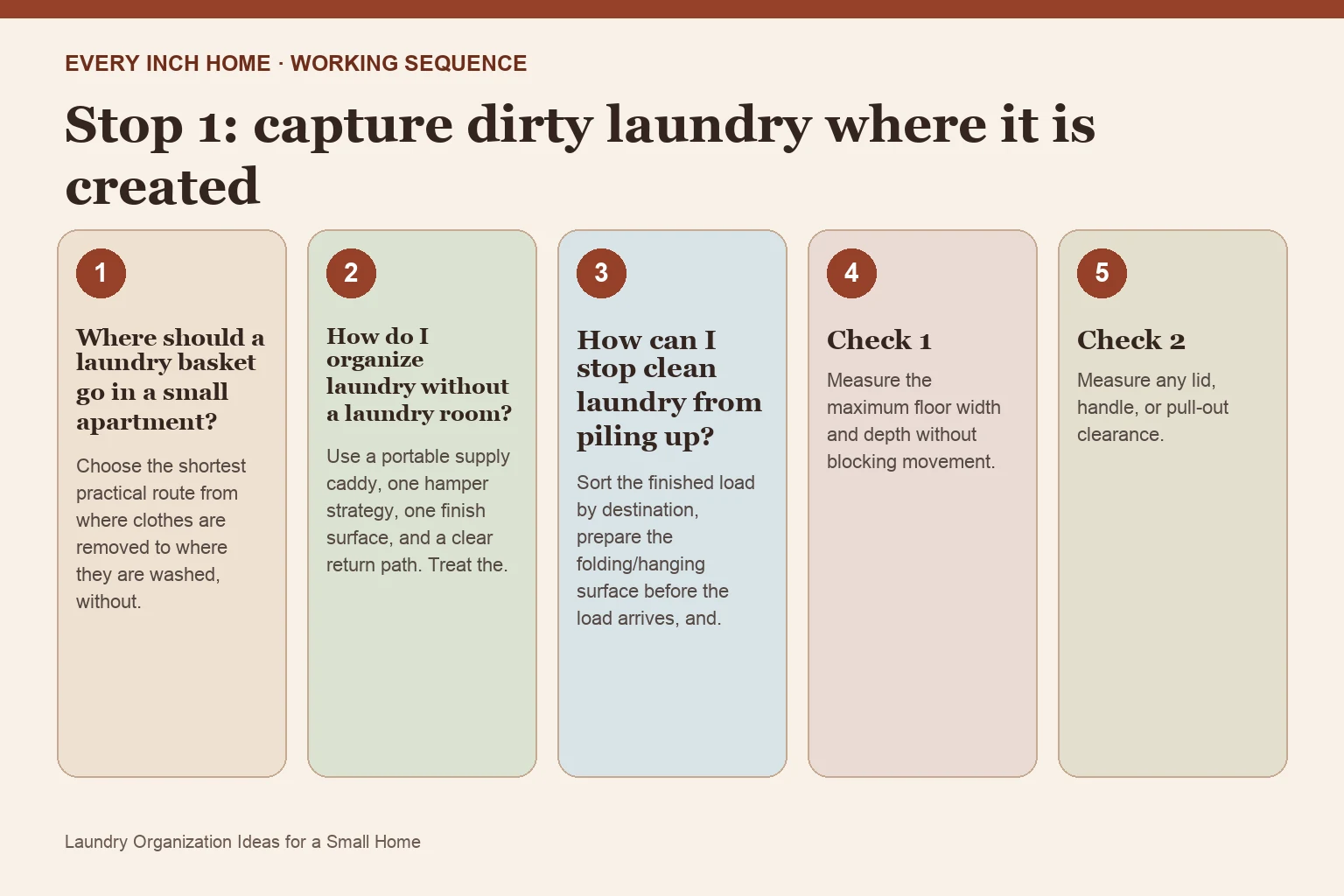
Stop 1: capture dirty laundry where it is created
Place a hamper where clothing is usually removed, provided it fits the room and household needs. One central hamper can be efficient in a very small home; separate bedroom or bathroom hampers can shorten the route in a shared home. Choose based on the path, not a universal number.
Measure the footprint with doors, drawers, and walking space in use. A tall narrow hamper may save floor area, while a collapsible or handled basket may suit a route to a shared laundry area.
Stop 2: sort only as much as the routine needs
Follow garment-care labels, household needs, and appliance instructions. If sorting several categories creates half-full piles that stall, use fewer capture categories and make the final decisions at wash time. If certain items need separate handling, give that category a clearly labeled small container.
Stop 3: give washing and drying supplies one boundary
Keep the routine products together near the appliance or travel basket used for the task. Store them upright in original labeled containers and follow label instructions, especially around children and pets. Avoid decanting products into unlabeled decorative jars.
If you use a shared laundry room or laundromat, a handled caddy can hold only the products and payment/access items needed for one trip. Return the caddy to the same parking place after each load.
Stop 4: choose one finish surface and return route
A bed, table, cleared counter, wall-mounted surface, or the top of an appliance may serve as a folding area when appropriate. The best spot is the one that can be cleared before the load arrives and does not create a new permanent pile.
Return clothing by destination, not just by person or type. Put closet items on hangers as part of the finish step when possible. Group drawer items so each stack or basket has one immediate next stop.
Laundry organization ideas for common small-home constraints
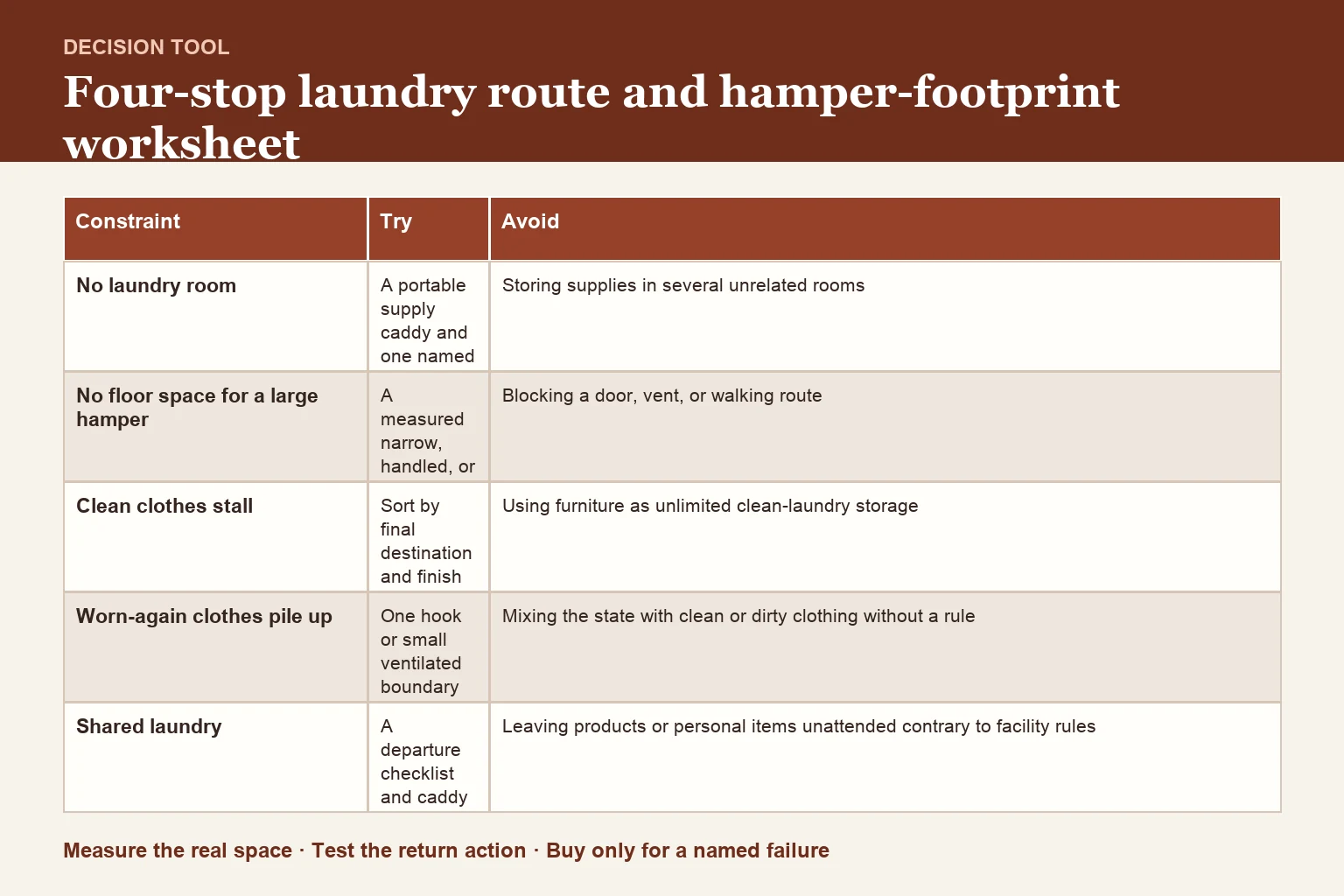
| Constraint | Try | Avoid |
|---|---|---|
| No laundry room | A portable supply caddy and one named folding surface | Storing supplies in several unrelated rooms |
| No floor space for a large hamper | A measured narrow, handled, or collapsible option | Blocking a door, vent, or walking route |
| Clean clothes stall | Sort by final destination and finish one load before starting another | Using furniture as unlimited clean-laundry storage |
| Worn-again clothes pile up | One hook or small ventilated boundary as appropriate | Mixing the state with clean or dirty clothing without a rule |
| Shared laundry | A departure checklist and caddy that returns home with the load | Leaving products or personal items unattended contrary to facility rules |
A hamper-footprint worksheet
- Measure the maximum floor width and depth without blocking movement.
- Measure any lid, handle, or pull-out clearance.
- Decide whether the hamper must travel to the washer.
- Estimate one normal load, not the largest possible backlog.
- Choose how often the hamper will be emptied.
- Confirm washable materials and ventilation needs for your use.
The one-load rule
When laundry often stalls, finish one load from capture to return before starting another, unless a real household constraint requires overlap. This makes the bottleneck visible. If folding is the stop, reduce the folding batch or hang more items directly. If return is the stop, simplify closet and drawer access.
Frequently asked questions
Where should a laundry basket go in a small apartment?
Choose the shortest practical route from where clothes are removed to where they are washed, without blocking doors, vents, drawers, or walking space.
How do I organize laundry without a laundry room?
Use a portable supply caddy, one hamper strategy, one finish surface, and a clear return path. Treat the process as a route rather than trying to recreate a room.
How can I stop clean laundry from piling up?
Sort the finished load by destination, prepare the folding/hanging surface before the load arrives, and return one complete load before beginning another when possible.