Use the tool: Work toward the daily minimum, optional pass, and recovery; test it with the real items and route before expanding storage.
Separate sanitation, function, and appearance
- Sanitation: Food residue, spills, bathroom soil, and trash can require timely attention. Follow product labels and the care instructions for the surface you are cleaning.
- Function: A usable sink, prep area, bed, and walking route make the next day easier. These are the core of the minimum schedule.
- Appearance: Polishing, styling, and low-priority dust can wait. Treat them as optional focus work, not proof that the home is failing.
The 12-minute daily minimum
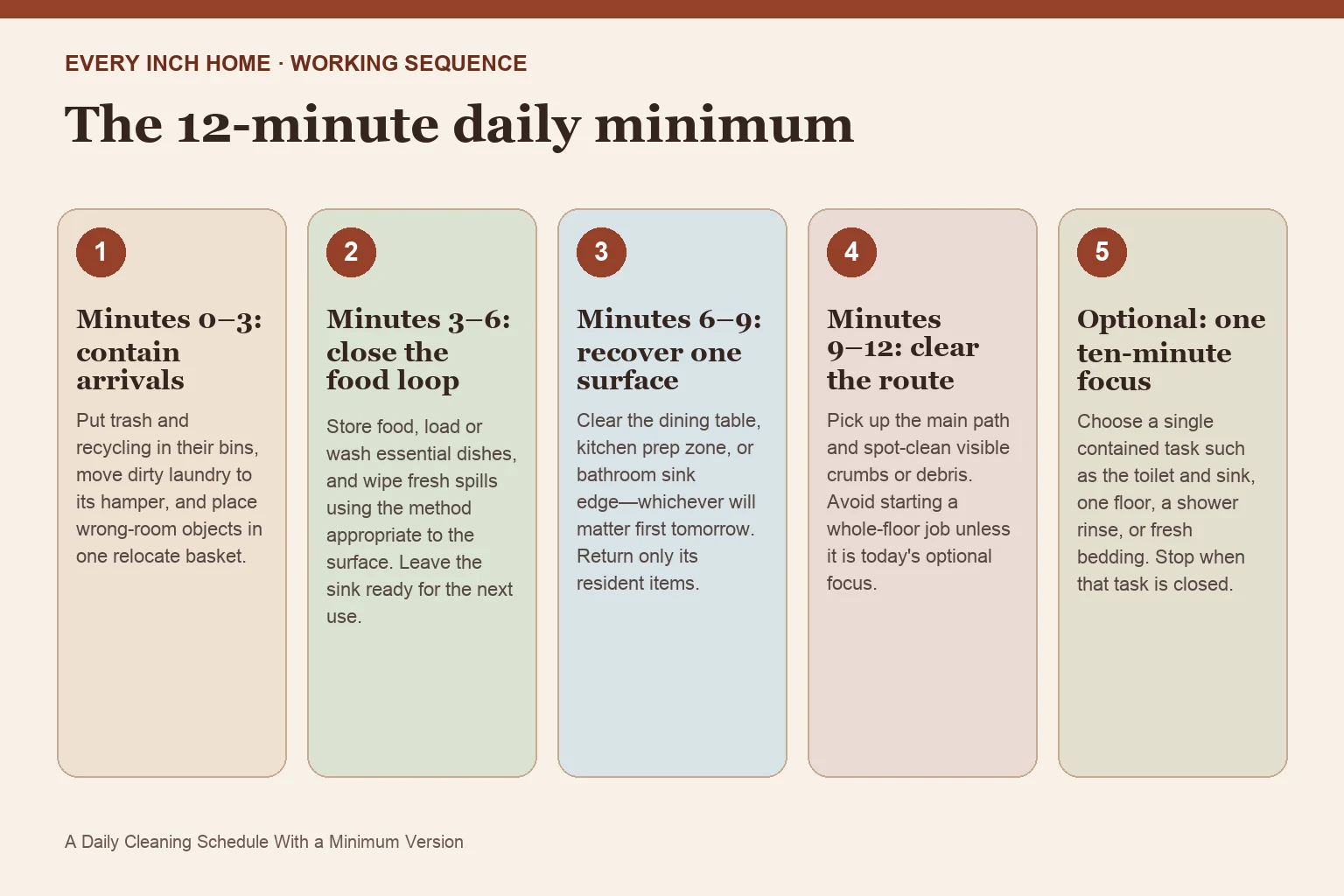
1. Minutes 0–3: contain arrivals
Put trash and recycling in their bins, move dirty laundry to its hamper, and place wrong-room objects in one relocate basket.
2. Minutes 3–6: close the food loop
Store food, load or wash essential dishes, and wipe fresh spills using the method appropriate to the surface. Leave the sink ready for the next use.
3. Minutes 6–9: recover one surface
Clear the dining table, kitchen prep zone, or bathroom sink edge—whichever will matter first tomorrow. Return only its resident items.
4. Minutes 9–12: clear the route
Pick up the main path and spot-clean visible crumbs or debris. Avoid starting a whole-floor job unless it is today's optional focus.
5. Optional: one ten-minute focus
Choose a single contained task such as the toilet and sink, one floor, a shower rinse, or fresh bedding. Stop when that task is closed.
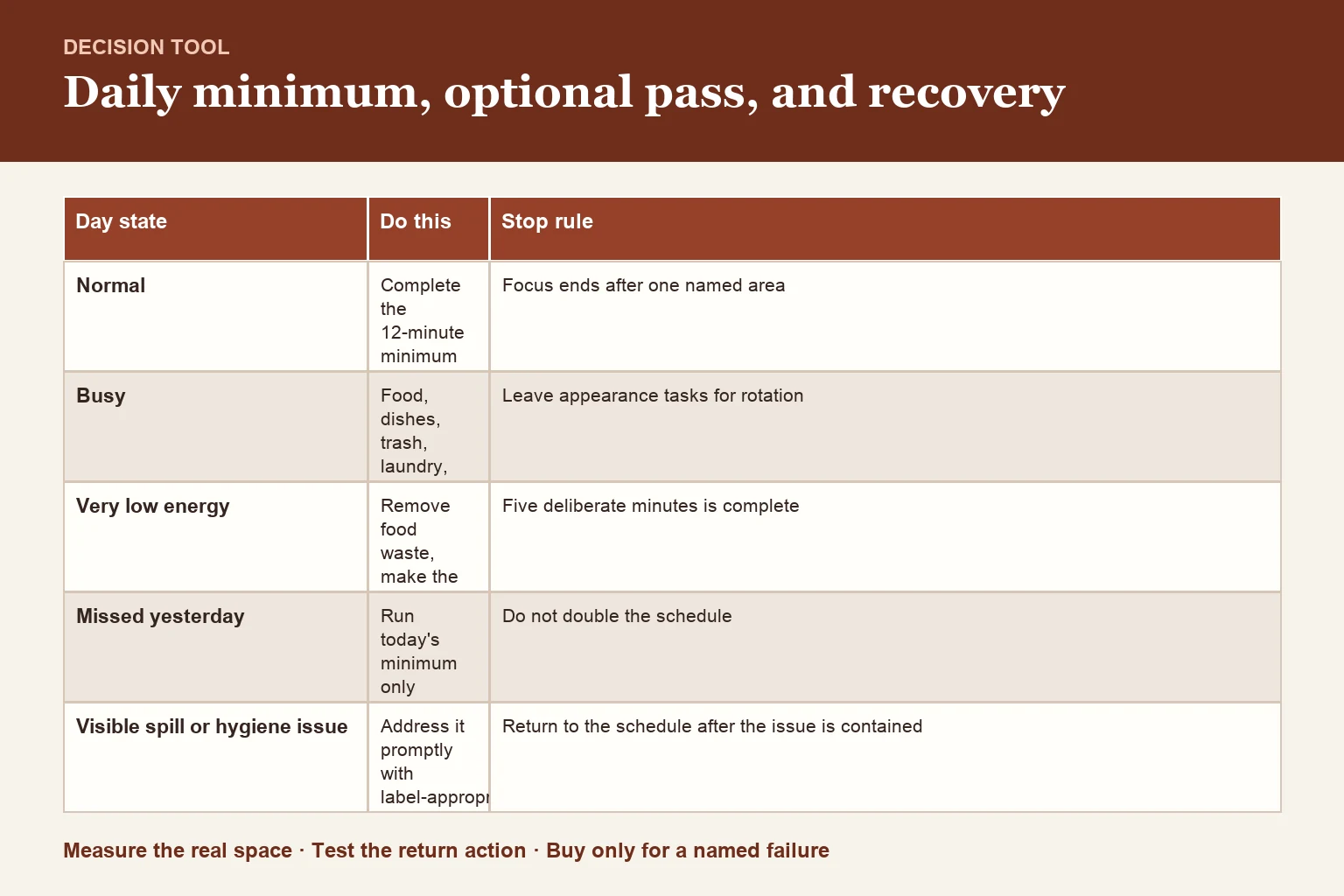
Daily minimum, optional pass, and recovery
| Day state | Do this | Stop rule |
|---|---|---|
| Normal | Complete the 12-minute minimum and one focus | Focus ends after one named area |
| Busy | Food, dishes, trash, laundry, and main route | Leave appearance tasks for rotation |
| Very low energy | Remove food waste, make the path safe, prepare essentials | Five deliberate minutes is complete |
| Missed yesterday | Run today's minimum only | Do not double the schedule |
| Visible spill or hygiene issue | Address it promptly with label-appropriate cleaning | Return to the schedule after the issue is contained |
Pick optional tasks by consequence
Choose the area whose delay will create more work: a sticky floor patch, a full hamper, a bathroom sink collecting residue, or bedding that needs changing. Do not choose by guilt or by which room looks best in a photo. Consequence-based choices keep the schedule small and useful.
The recovery rule: resume, never repay
When you miss a day, do today's minimum and continue the focus rotation from the next unfinished task. Do not stack yesterday's focus onto today. A schedule that demands repayment turns one hard day into a week-long backlog; a schedule that resumes protects consistency.
Frequently asked questions
What should I clean every day?
Prioritize current food residue, essential dishes, active spills, trash that needs removal, laundry containment, and a safe main route. Exact needs vary by household.
Is 15 minutes a day enough to keep a home clean?
It can maintain function in many small homes when deeper tasks rotate separately. Household size, pets, health needs, and cooking habits change the workload.
What happens if I miss several days?
Start with food, trash, laundry, and safety, then recover one surface. Resume the current rotation; do not attempt several days of optional tasks at once.