
Use the tool: Work toward the room checklist with a carry-forward column; test it with the real items and route before expanding storage.
Inspect before the first cleaning session
- Air and moisture: Look for persistent condensation, leaks, damaged seals, blocked vents, or musty storage. Cleaning may reveal a maintenance issue but does not replace repair.
- Safe access: List work that requires a stable step stool, moving a heavy appliance, exterior access, or special equipment. Separate it from ordinary reachable cleaning.
- Material guidance: Check care labels and manufacturer instructions for appliances, flooring, finishes, upholstery, and filters before choosing tools or products.
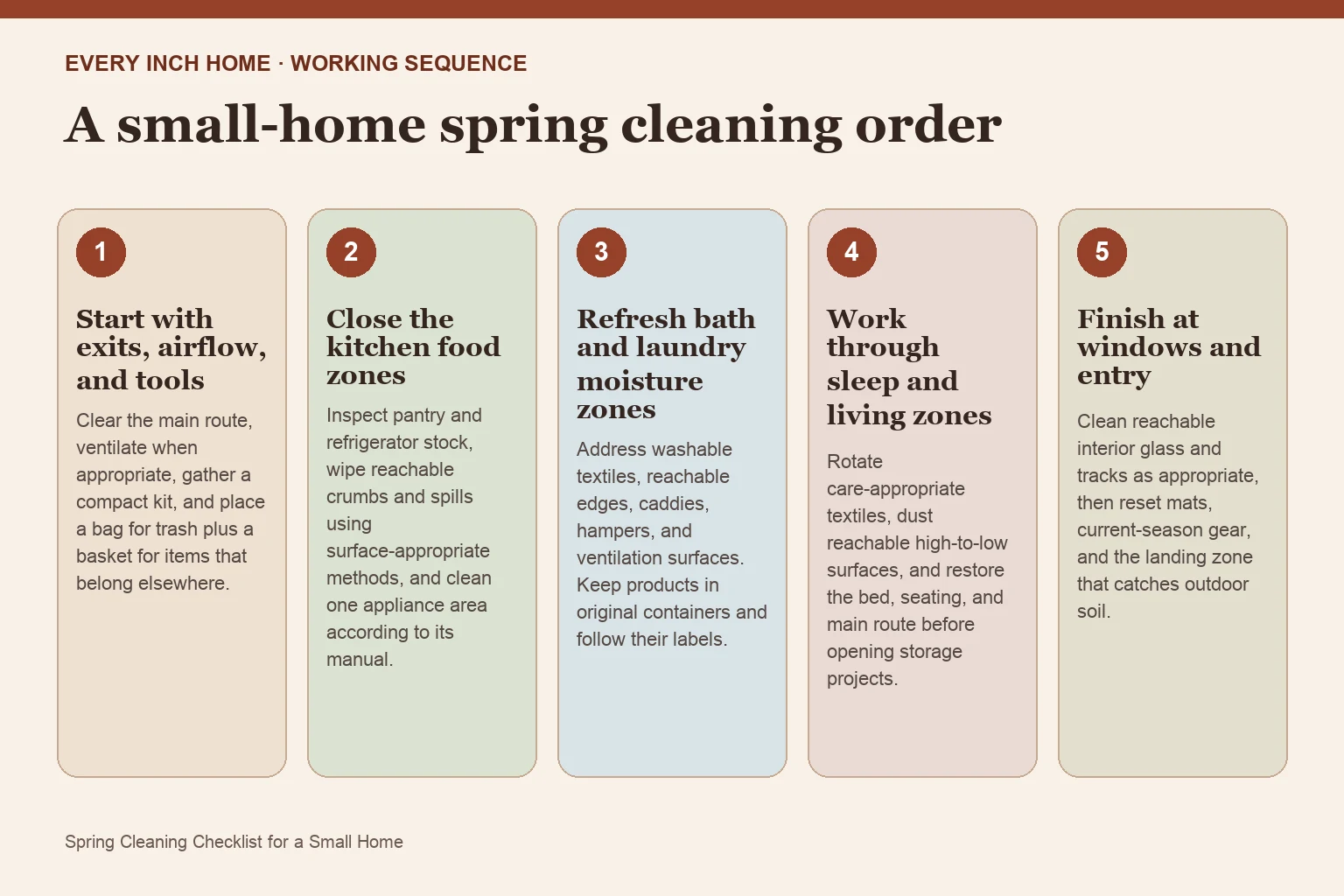
A small-home spring cleaning order
1. Start with exits, airflow, and tools
Clear the main route, ventilate when appropriate, gather a compact kit, and place a bag for trash plus a basket for items that belong elsewhere.
2. Close the kitchen food zones
Inspect pantry and refrigerator stock, wipe reachable crumbs and spills using surface-appropriate methods, and clean one appliance area according to its manual.
3. Refresh bath and laundry moisture zones
Address washable textiles, reachable edges, caddies, hampers, and ventilation surfaces. Keep products in original containers and follow their labels.
4. Work through sleep and living zones
Rotate care-appropriate textiles, dust reachable high-to-low surfaces, and restore the bed, seating, and main route before opening storage projects.
5. Finish at windows and entry
Clean reachable interior glass and tracks as appropriate, then reset mats, current-season gear, and the landing zone that catches outdoor soil.
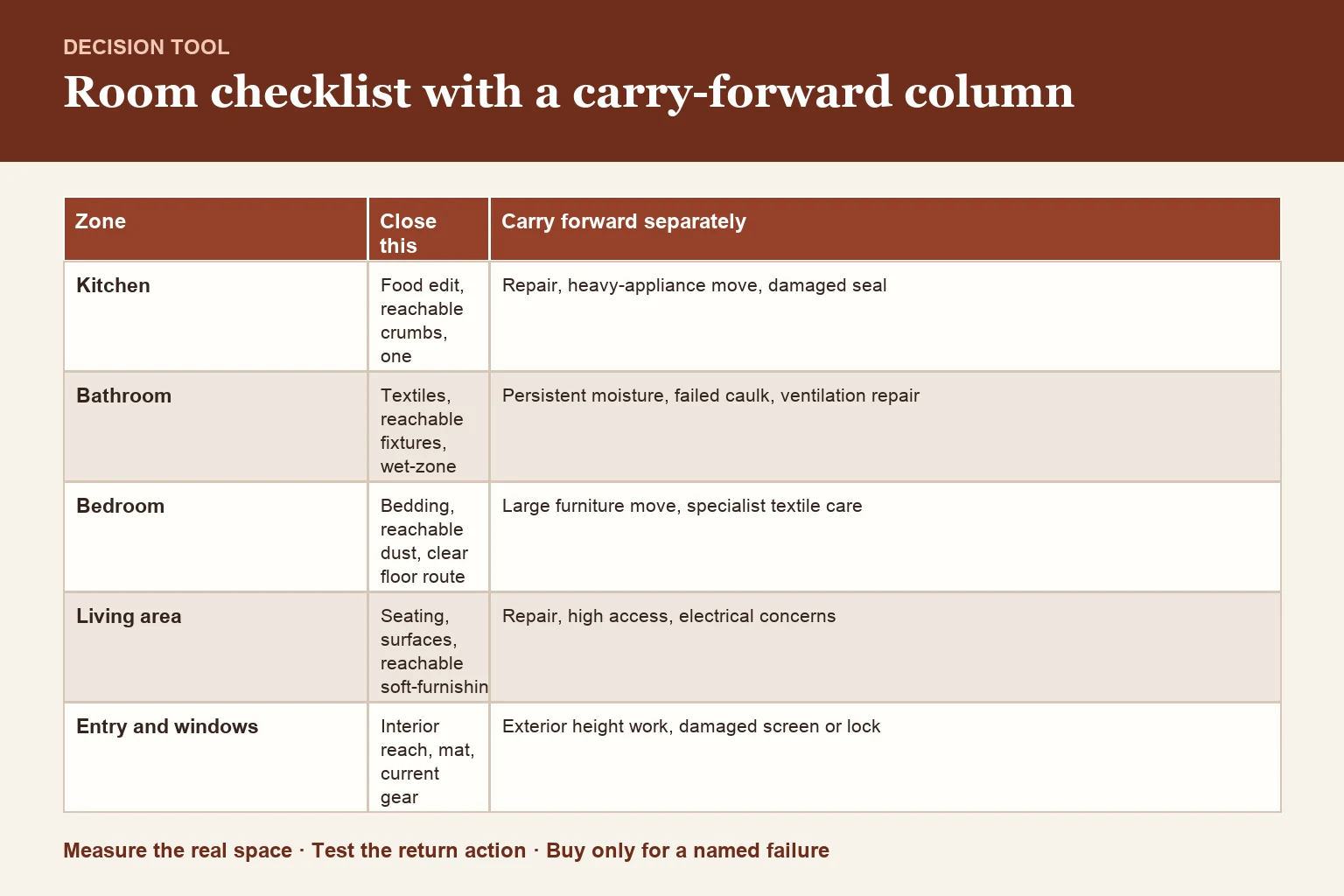
Room checklist with a carry-forward column
| Zone | Close this session | Carry forward separately |
|---|---|---|
| Kitchen | Food edit, reachable crumbs, one appliance zone | Repair, heavy-appliance move, damaged seal |
| Bathroom | Textiles, reachable fixtures, wet-zone edges | Persistent moisture, failed caulk, ventilation repair |
| Bedroom | Bedding, reachable dust, clear floor route | Large furniture move, specialist textile care |
| Living area | Seating, surfaces, reachable soft-furnishing care | Repair, high access, electrical concerns |
| Entry and windows | Interior reach, mat, current gear | Exterior height work, damaged screen or lock |
The no-heroics rule
Do not balance on furniture, mix cleaning products, decant them into drink containers, or move heavy appliances alone. Follow product labels and equipment manuals, keep ventilation appropriate to the product, and stop when a task becomes maintenance, pest treatment, mold remediation, or unsafe access. A carry-forward item is a responsible decision, not a failed checklist.
Close one room before opening the next
At the end of each session, remove trash, return the relocate basket, launder used cloths as appropriate, put products away safely, and restore the room's main function. Date the carry-forward items and give each an owner or next action. This prevents spring cleaning from leaving every room partially dismantled.
Frequently asked questions
What is included in spring cleaning?
It usually combines seasonal inspection with lower-frequency cleaning: airflow, reachable high dust, food zones, textiles, wet-zone edges, windows, and entry gear.
How long does spring cleaning a small home take?
Several bounded sessions are often more practical than one marathon. The time depends on condition, household size, access, and how much maintenance the inspection reveals.
Should I declutter before spring cleaning?
Remove obvious trash and edit only what blocks cleaning. Save large storage projects for separate sessions so the cleaning route can close.