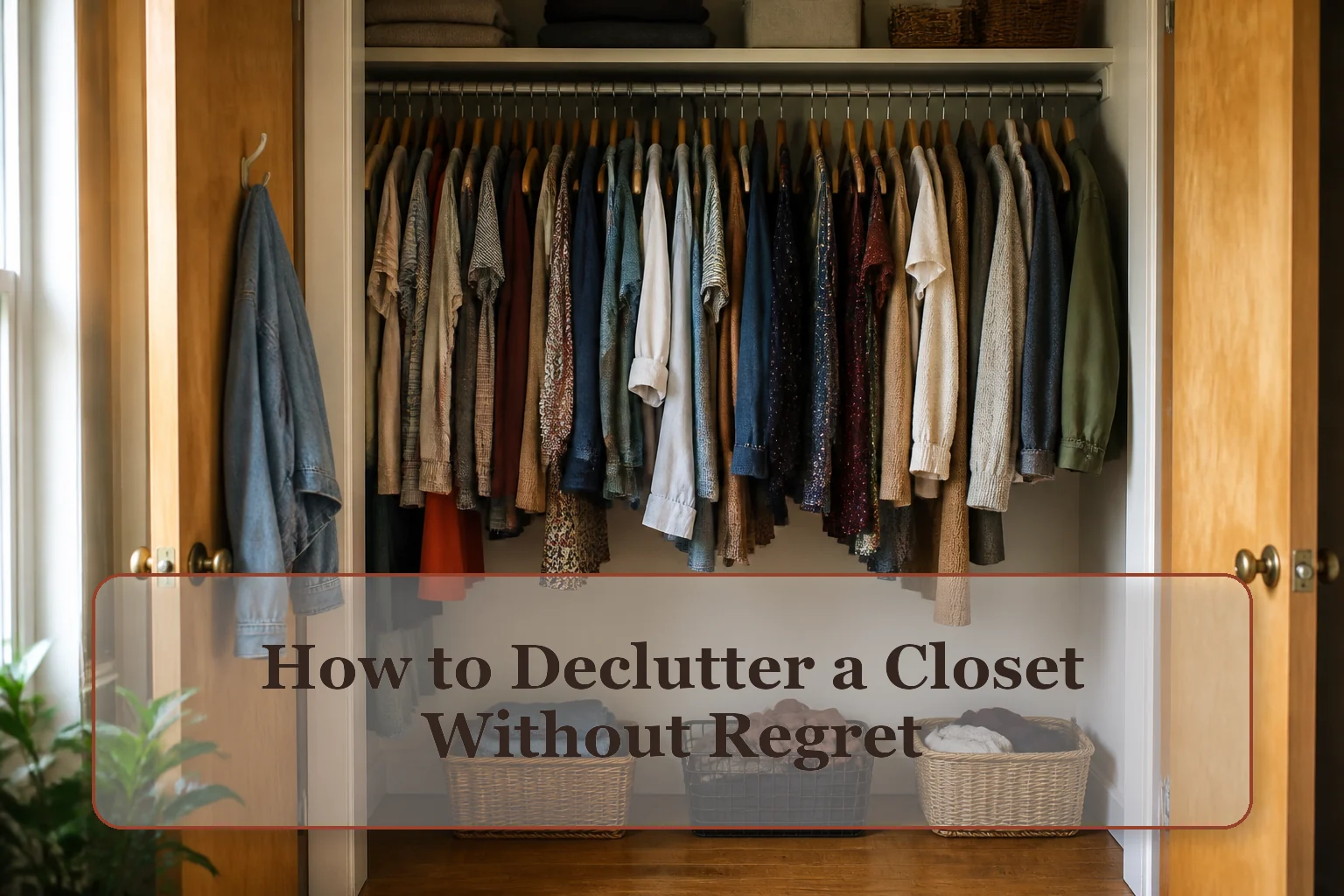
Use the tool: Work toward the wear-fit-condition-replacement card; test it with the real items and route before expanding storage.
Protect wardrobe function before reducing quantity
- Current roles: List the real clothing demands of work, home, weather, care, exercise, and events. Do not edit toward an imaginary lifestyle.
- Laundry cycle: A wardrobe must bridge the household's normal wash rhythm. Counts that ignore climate, uniforms, accessibility, or laundry access are not useful rules.
- Storage boundary: Choose one rod, shelf, or drawer group to edit. The goal is usable spacing and return, not an arbitrary number of garments.
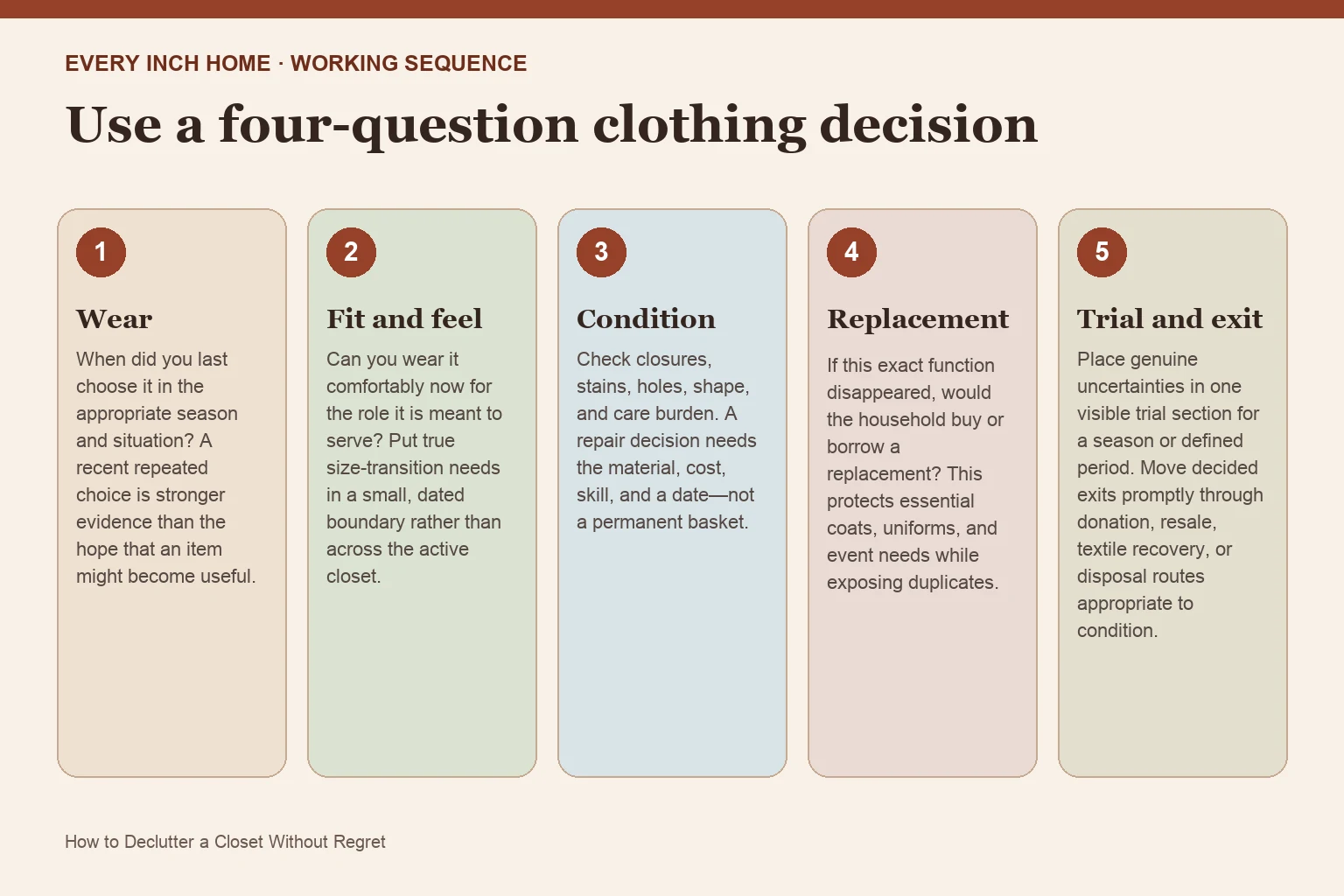
Use a four-question clothing decision
1. Wear
When did you last choose it in the appropriate season and situation? A recent repeated choice is stronger evidence than the hope that an item might become useful.
2. Fit and feel
Can you wear it comfortably now for the role it is meant to serve? Put true size-transition needs in a small, dated boundary rather than across the active closet.
3. Condition
Check closures, stains, holes, shape, and care burden. A repair decision needs the material, cost, skill, and a date—not a permanent basket.
4. Replacement
If this exact function disappeared, would the household buy or borrow a replacement? This protects essential coats, uniforms, and event needs while exposing duplicates.
5. Trial and exit
Place genuine uncertainties in one visible trial section for a season or defined period. Move decided exits promptly through donation, resale, textile recovery, or disposal routes appropriate to condition.
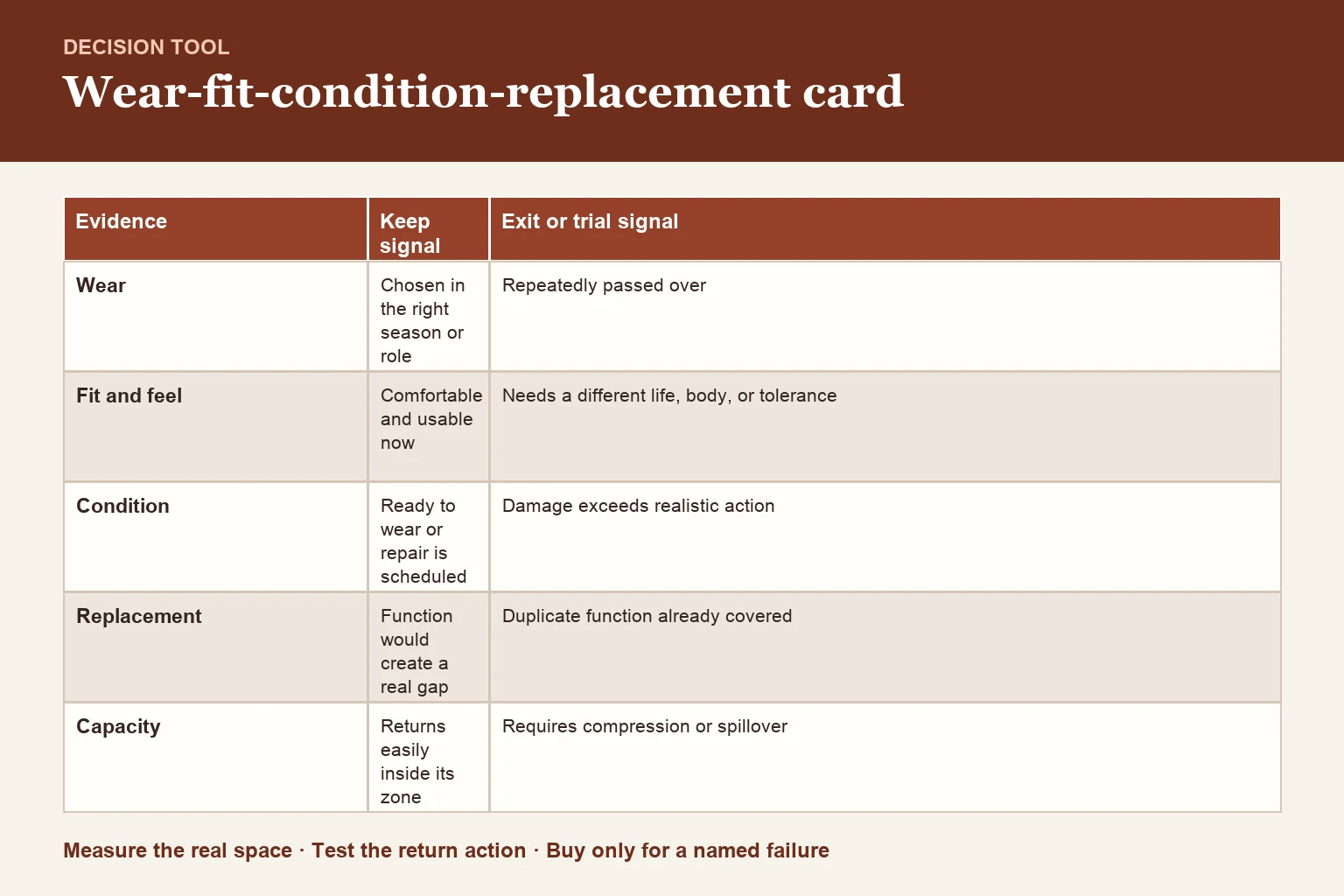
Wear-fit-condition-replacement card
| Evidence | Keep signal | Exit or trial signal |
|---|---|---|
| Wear | Chosen in the right season or role | Repeatedly passed over |
| Fit and feel | Comfortable and usable now | Needs a different life, body, or tolerance |
| Condition | Ready to wear or repair is scheduled | Damage exceeds realistic action |
| Replacement | Function would create a real gap | Duplicate function already covered |
| Capacity | Returns easily inside its zone | Requires compression or spillover |
Use a trial section instead of a maybe pile
A maybe pile removes all context. A small trial section stays inside the closet, faces hangers one direction, and has a review date after the relevant season. When an item is worn, return it normally. At review, unworn pieces have real evidence against them; exceptions should be named by role, not vague possibility.
Close repair and exit routes quickly
Schedule repairs when the decision is made and keep only the number you can address by the date. Confirm local donation or textile-recovery rules before drop-off, and do not donate items a program cannot use. Once exits leave, redistribute hangers and keep a small amount of movement space rather than filling the rod again.
Frequently asked questions
How do I declutter clothes when I am afraid of regret?
Use current-role, wear, fit, condition, and replacement evidence. Put true uncertainties in a small dated trial section through the relevant season.
How many clothes should I keep?
Keep enough for your roles, climate, access needs, and laundry cycle within a closet boundary that remains easy to use. There is no universal count.
What should I do with damaged clothes?
Schedule realistic repair, use a verified textile-recovery route, repurpose only with a real plan, or dispose according to local guidance.