Use the tool: Work toward the bounded staging rules; test it with the real items and route before expanding storage.
Protect the room's three essential jobs
- Sleep: The bed should not be permanent storage. Bedding, sleep essentials, and a safe path take priority over display or overflow.
- Dress: Clean, worn-again, dirty, repair, and leaving clothes need distinct states. A chair cannot successfully represent all five.
- Move: Doors, drawers, and the main route should open without shifting objects. Clear function before deciding on decorative storage.
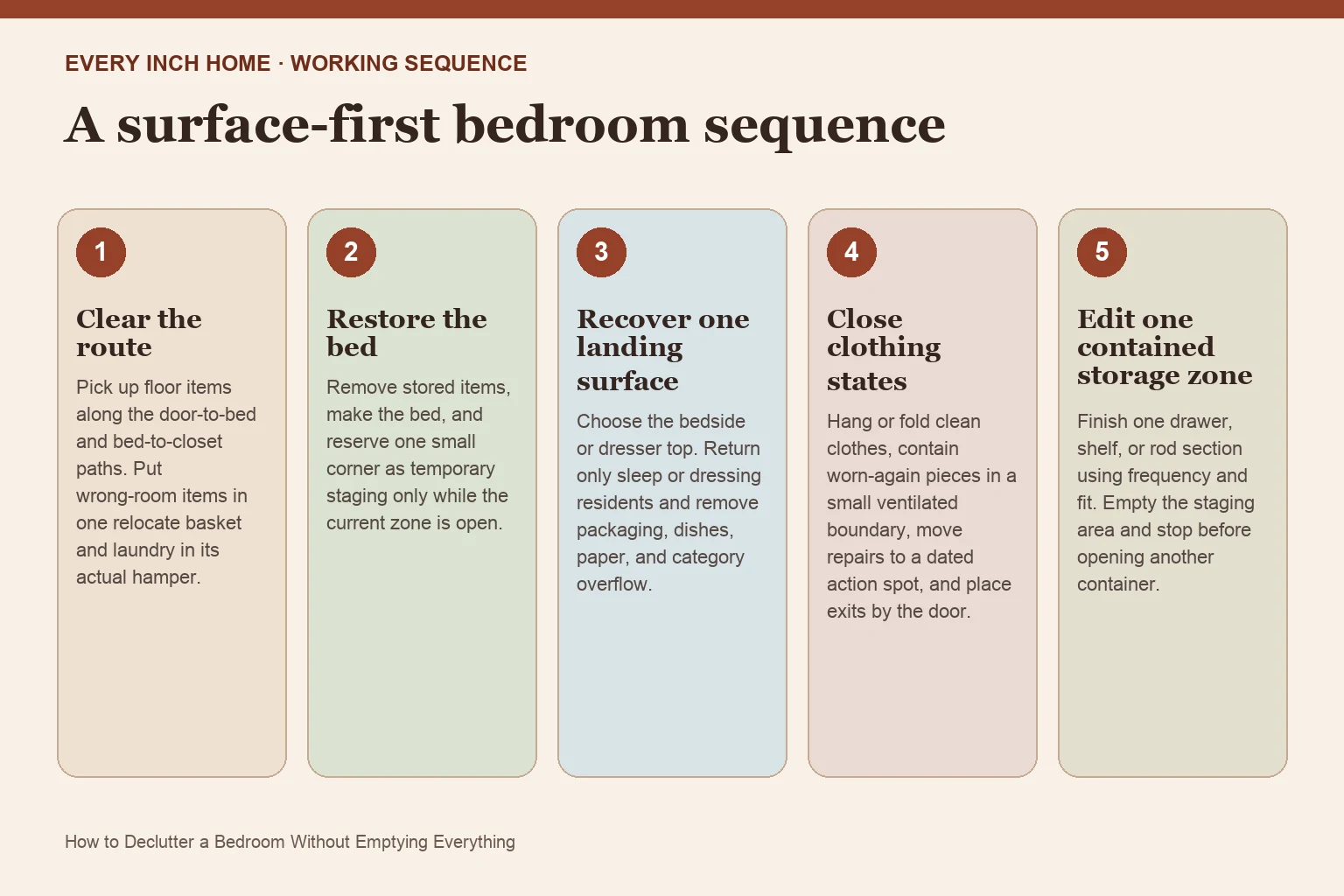
A surface-first bedroom sequence
1. Clear the route
Pick up floor items along the door-to-bed and bed-to-closet paths. Put wrong-room items in one relocate basket and laundry in its actual hamper.
2. Restore the bed
Remove stored items, make the bed, and reserve one small corner as temporary staging only while the current zone is open.
3. Recover one landing surface
Choose the bedside or dresser top. Return only sleep or dressing residents and remove packaging, dishes, paper, and category overflow.
4. Close clothing states
Hang or fold clean clothes, contain worn-again pieces in a small ventilated boundary, move repairs to a dated action spot, and place exits by the door.
5. Edit one contained storage zone
Finish one drawer, shelf, or rod section using frequency and fit. Empty the staging area and stop before opening another container.
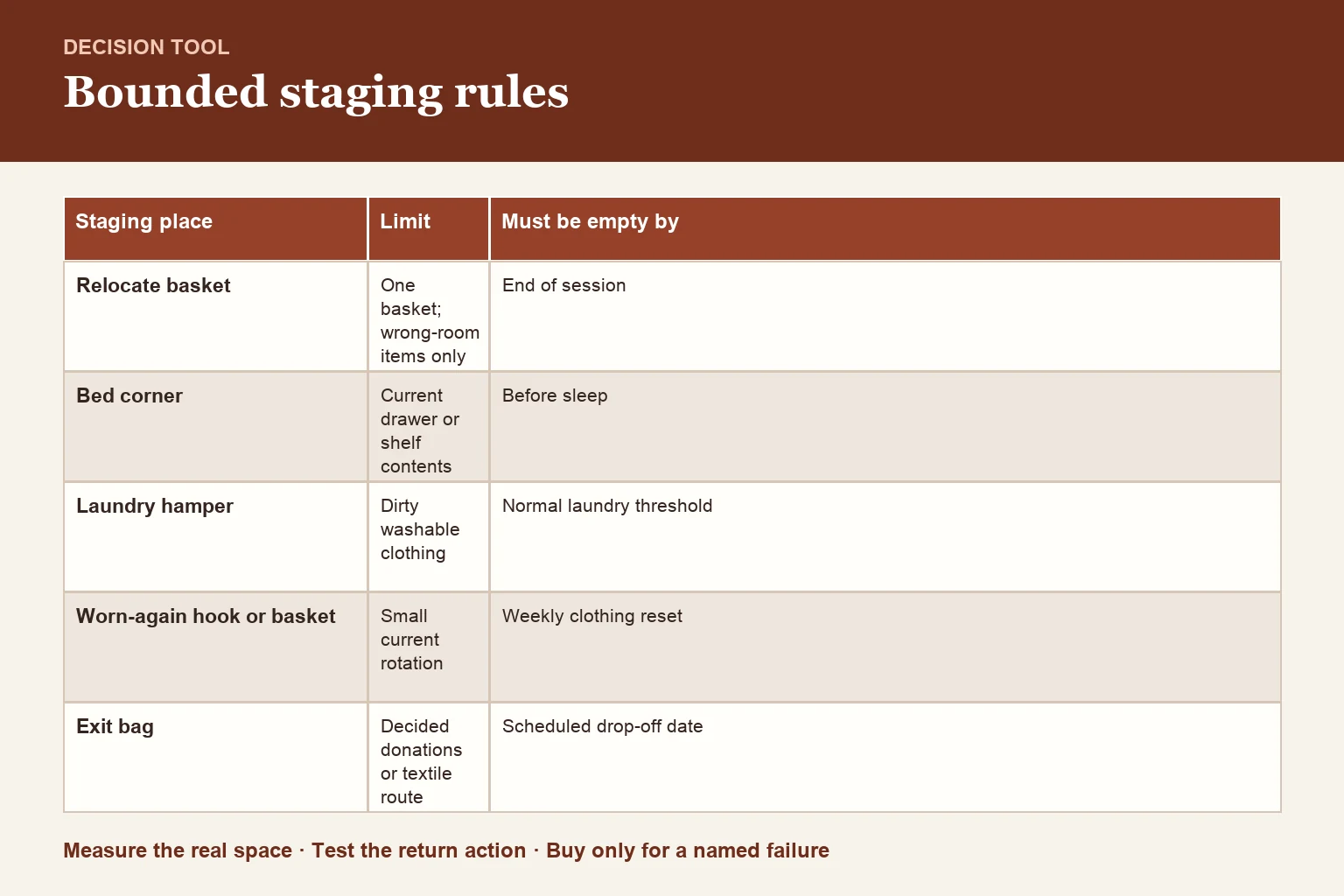
Bounded staging rules
| Staging place | Limit | Must be empty by |
|---|---|---|
| Relocate basket | One basket; wrong-room items only | End of session |
| Bed corner | Current drawer or shelf contents | Before sleep |
| Laundry hamper | Dirty washable clothing | Normal laundry threshold |
| Worn-again hook or basket | Small current rotation | Weekly clothing reset |
| Exit bag | Decided donations or textile route | Scheduled drop-off date |
Do not start with under-bed or sentimental storage
Hidden and emotional categories consume decisions without restoring the room quickly. Begin with routes, bed, surfaces, and current clothing. Once those work, under-bed and archive storage can be evaluated against measured capacity and current life rather than used to hide the active problem.
Use a four-minute bedroom close
Each evening, move dishes and trash out, place dirty clothes in the hamper, return worn-again clothes to their small boundary, clear the route, and reset the bedside surface. If the close regularly exceeds four minutes, the active clothing quantity or number of landing categories is too large for the system.
Frequently asked questions
Where should I start decluttering a messy bedroom?
Clear the route to the bed, restore the bed, and recover one daily landing surface. Those actions return function before deep sorting.
Should I put everything on the bed to declutter?
No. Open only one drawer or shelf at a time and use a small corner as temporary staging that must be cleared before sleep.
What do I do with clothes worn once?
Give them a small ventilated hook, rail section, or basket separate from clean and dirty clothes, then review that boundary weekly.