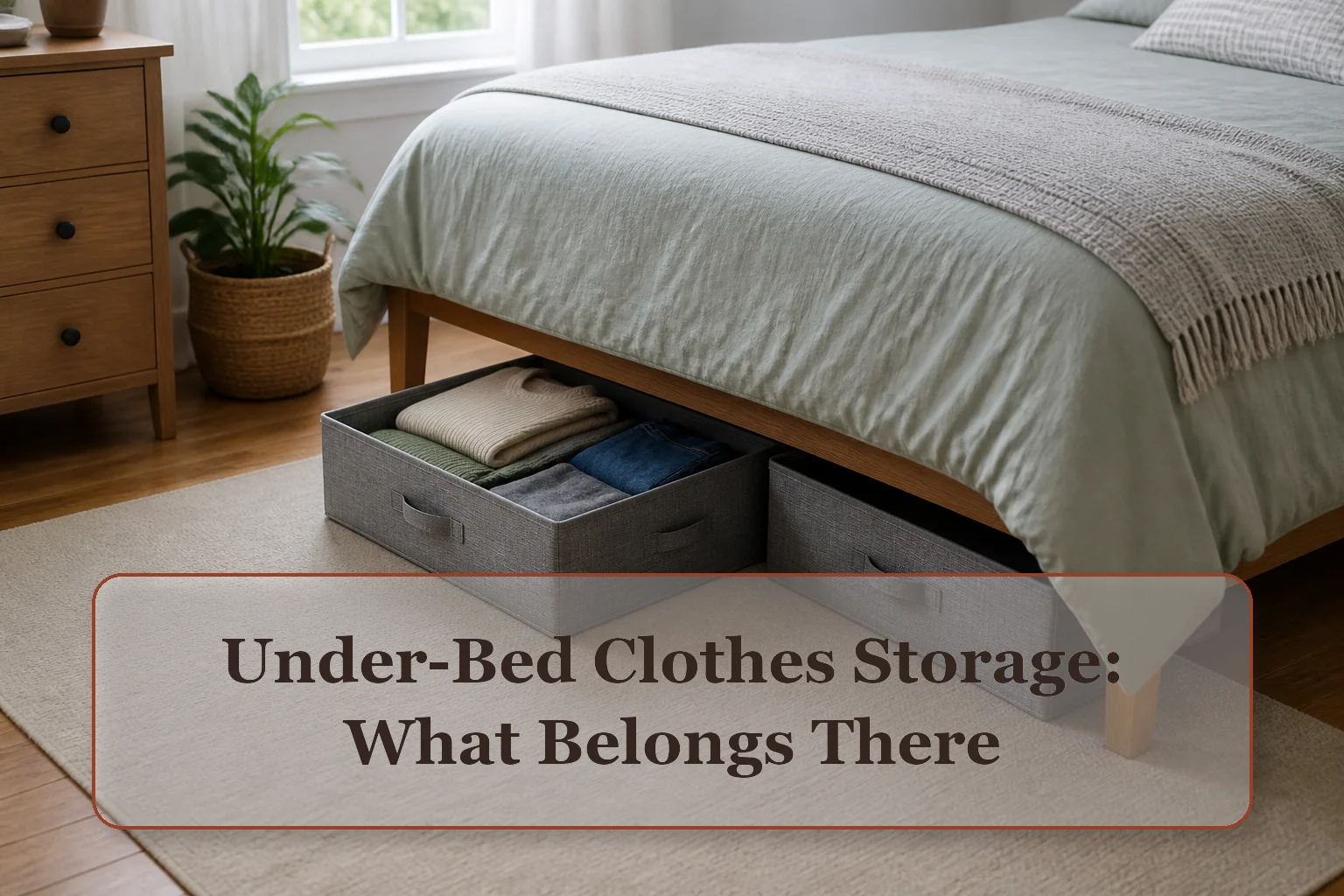
Use the tool: Work toward the clearance, fabric, moisture, and access decision; test it with the real items and route before expanding storage.
Check the under-bed environment first
- Clearance: Measure floor to the lowest frame, slat, center support, and fabric sag—not the tallest visible edge. Include handles, wheels, and lifting clearance.
- Moisture and dust: Inspect for dampness, condensation, pests, floor-cleaning exposure, and airflow. Do not store textiles over an unresolved moisture problem.
- Fabric care: Read garment care and storage guidance. Delicate, structured, leather, fur, or heirloom items may need a different method or professional advice.
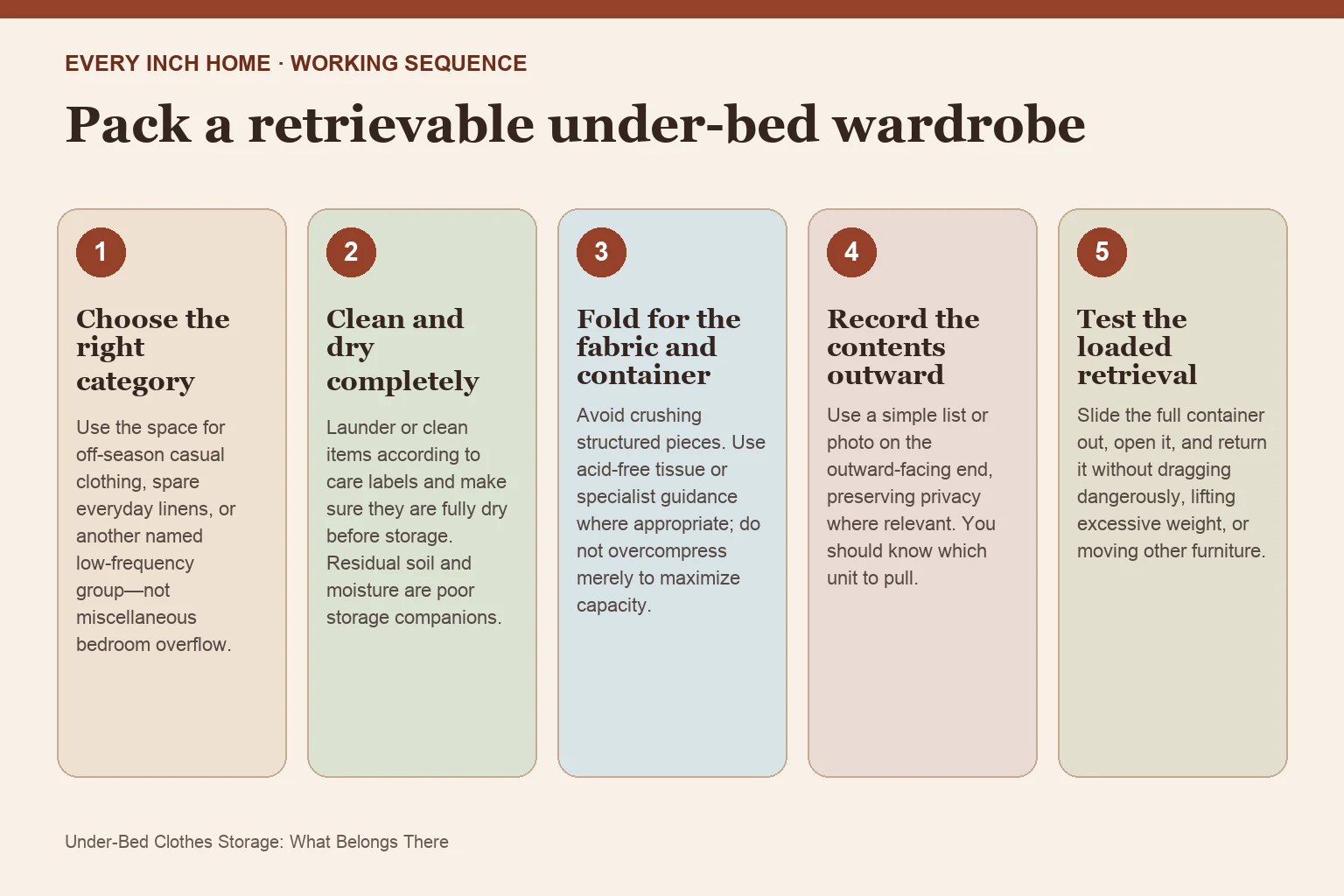
Pack a retrievable under-bed wardrobe
1. Choose the right category
Use the space for off-season casual clothing, spare everyday linens, or another named low-frequency group—not miscellaneous bedroom overflow.
2. Clean and dry completely
Launder or clean items according to care labels and make sure they are fully dry before storage. Residual soil and moisture are poor storage companions.
3. Fold for the fabric and container
Avoid crushing structured pieces. Use acid-free tissue or specialist guidance where appropriate; do not overcompress merely to maximize capacity.
4. Record the contents outward
Use a simple list or photo on the outward-facing end, preserving privacy where relevant. You should know which unit to pull.
5. Test the loaded retrieval
Slide the full container out, open it, and return it without dragging dangerously, lifting excessive weight, or moving other furniture.
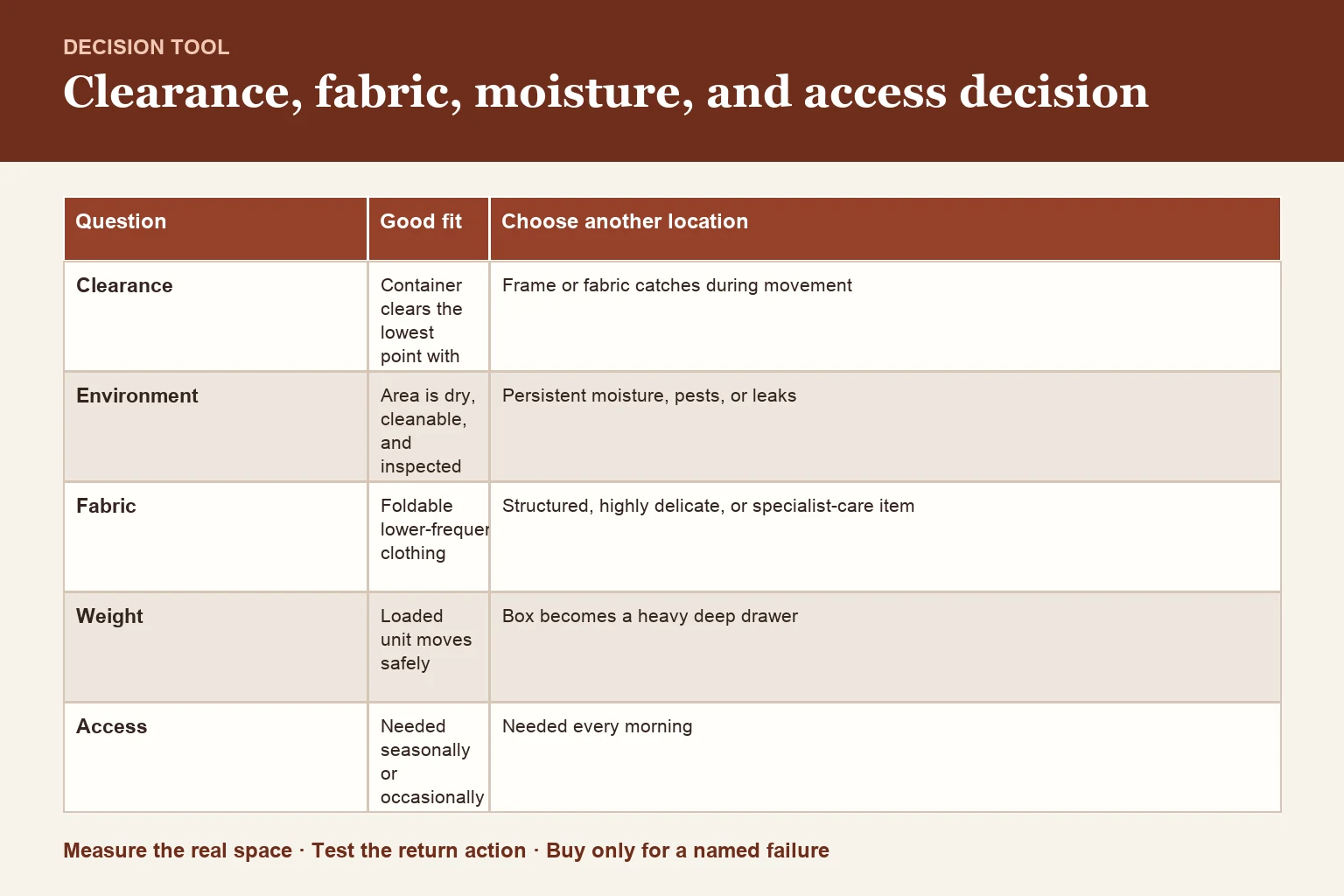
Clearance, fabric, moisture, and access decision
| Question | Good fit | Choose another location |
|---|---|---|
| Clearance | Container clears the lowest point with grip space | Frame or fabric catches during movement |
| Environment | Area is dry, cleanable, and inspected | Persistent moisture, pests, or leaks |
| Fabric | Foldable lower-frequency clothing | Structured, highly delicate, or specialist-care item |
| Weight | Loaded unit moves safely | Box becomes a heavy deep drawer |
| Access | Needed seasonally or occasionally | Needed every morning |
Buying criteria for under-bed containers
Verify external dimensions, internal height, zipper or lid clearance, fabric breathability or seal characteristics, handle strength, wheel suitability for the floor, and the loaded weight you can manage. Soft sides can adapt to slight constraints; rigid boxes protect shape but require exact clearance. Product claims do not replace inspection of your actual environment.
Inspect at every seasonal rotation
Pull every unit out, clean the accessible floor, check containers and textiles for odor, moisture, pests, damage, or compression, and reassess whether the clothes will serve the coming season. Let the area and items dry as appropriate before returning storage; address environmental problems before repacking.
Frequently asked questions
Is it okay to store clothes under the bed?
Yes when the area is dry and inspectable, the clothes are clean and fully dry, the container suits the fabric, and retrieval remains safe.
Should under-bed clothes be in plastic or fabric boxes?
Choose based on moisture, dust, pests, fabric needs, and inspection frequency. Breathable fabric and sealable rigid formats solve different conditions.
What clothes should not go under the bed?
Avoid items needing frequent access and use extra care with structured, delicate, leather, fur, or heirloom pieces; follow garment or specialist guidance.