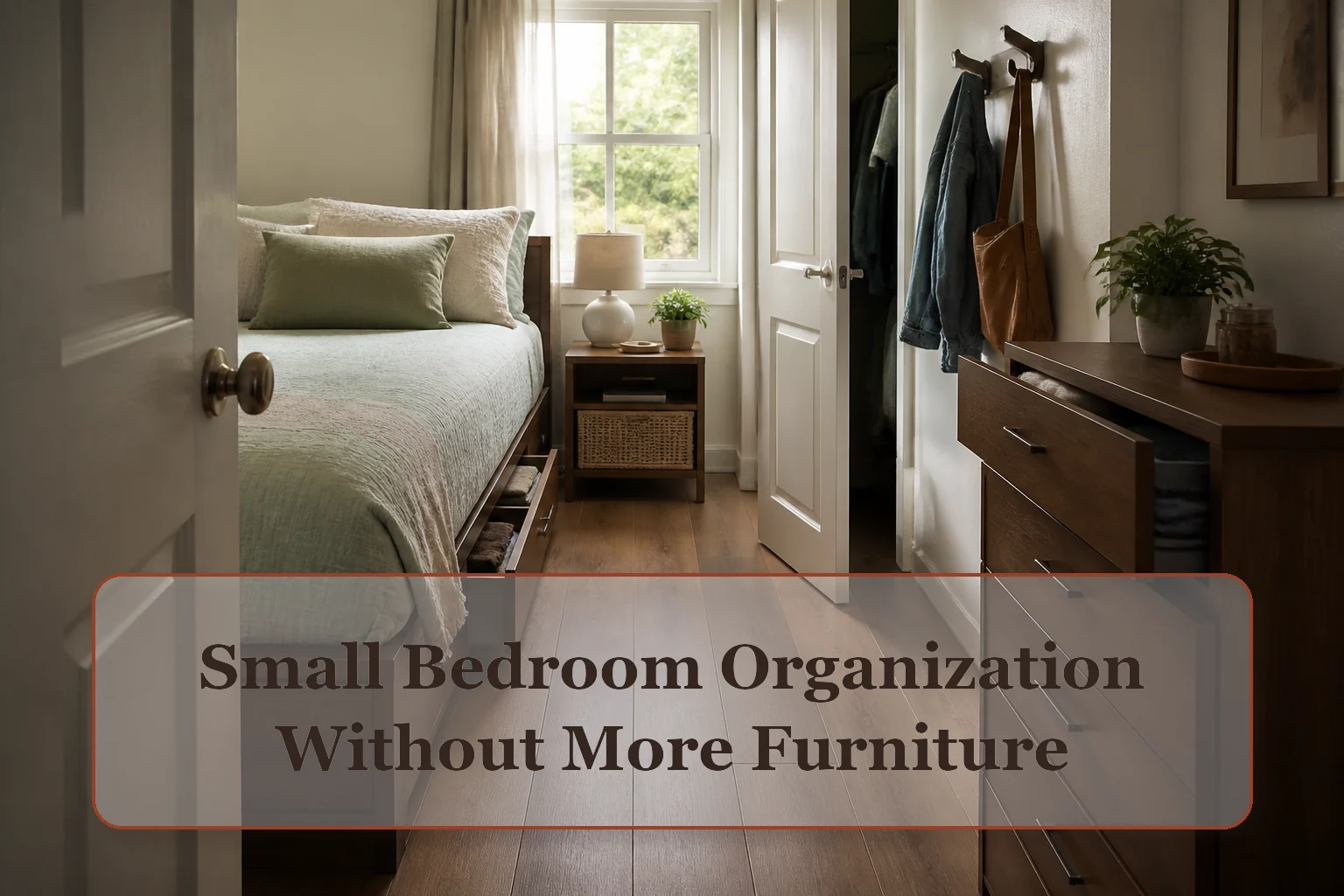
Use the tool: Work toward the furniture veto test; test it with the real items and route before expanding storage.
Map the room with doors and drawers open
- Sleep route: Trace door to bed and bed to bathroom or exit. This path should not depend on moving a hamper, shoes, or a storage box.
- Dress route: Open the closet and dresser simultaneously. Note collisions and where clean, worn-again, dirty, and accessory categories actually travel.
- Clearance: Measure usable floor after doors, drawers, bed linens, vents, and heaters. Empty floor is part of function, not failed storage.
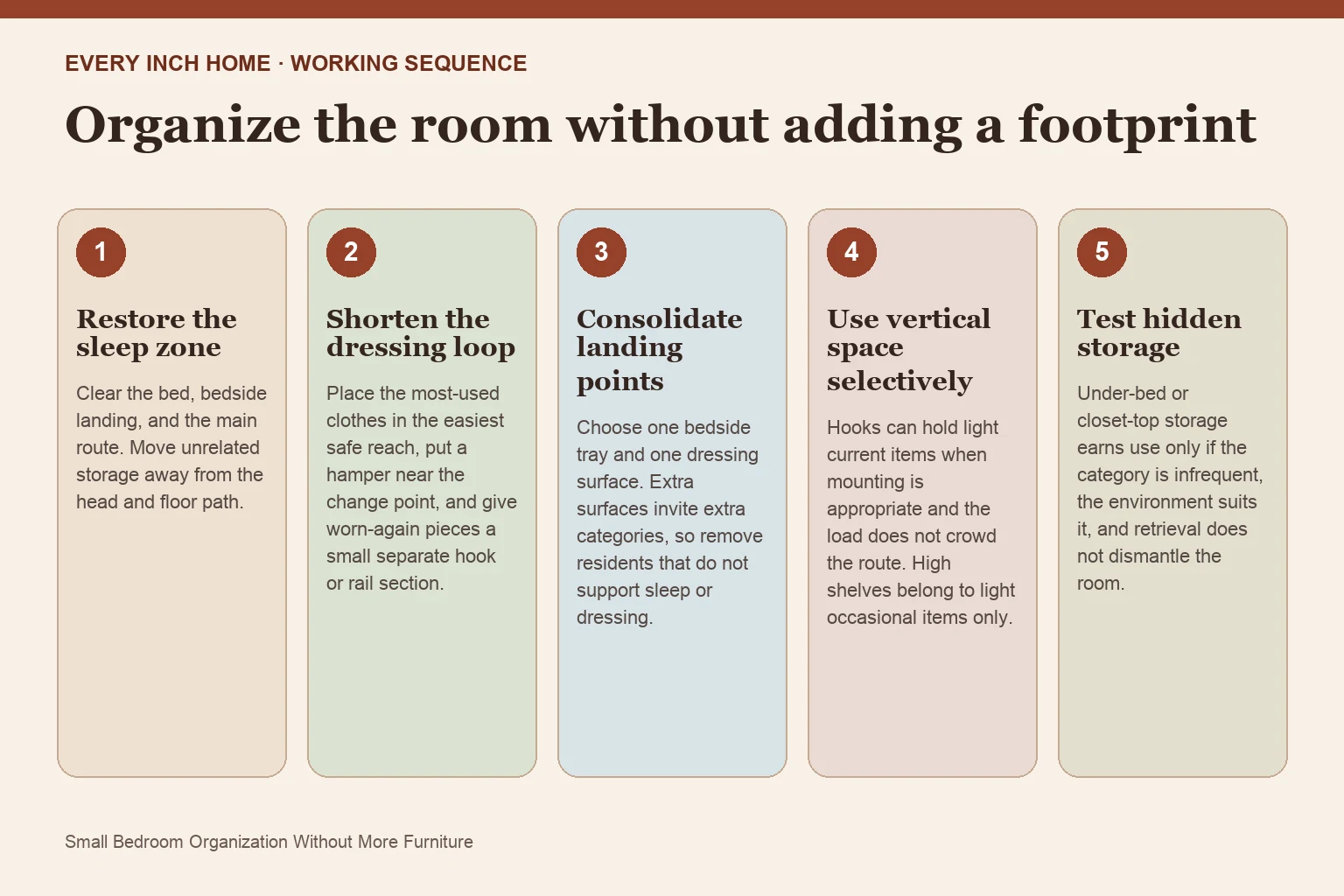
Organize the room without adding a footprint
1. Restore the sleep zone
Clear the bed, bedside landing, and the main route. Move unrelated storage away from the head and floor path.
2. Shorten the dressing loop
Place the most-used clothes in the easiest safe reach, put a hamper near the change point, and give worn-again pieces a small separate hook or rail section.
3. Consolidate landing points
Choose one bedside tray and one dressing surface. Extra surfaces invite extra categories, so remove residents that do not support sleep or dressing.
4. Use vertical space selectively
Hooks can hold light current items when mounting is appropriate and the load does not crowd the route. High shelves belong to light occasional items only.
5. Test hidden storage
Under-bed or closet-top storage earns use only if the category is infrequent, the environment suits it, and retrieval does not dismantle the room.
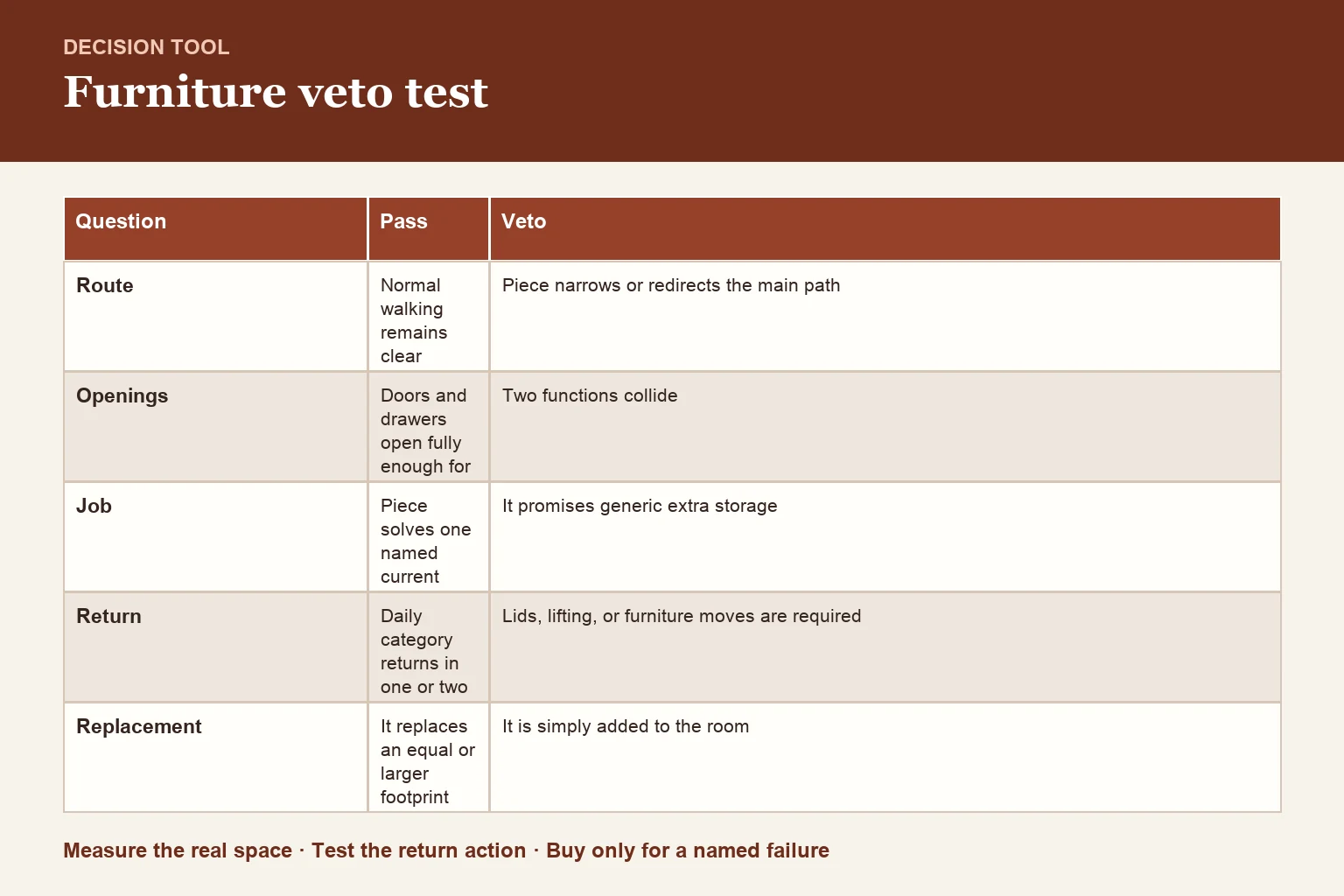
Furniture veto test
| Question | Pass | Veto |
|---|---|---|
| Route | Normal walking remains clear | Piece narrows or redirects the main path |
| Openings | Doors and drawers open fully enough for use | Two functions collide |
| Job | Piece solves one named current need | It promises generic extra storage |
| Return | Daily category returns in one or two motions | Lids, lifting, or furniture moves are required |
| Replacement | It replaces an equal or larger footprint | It is simply added to the room |
Try a floor-tape mockup before buying
Mark the proposed footprint and drawer or door swing with painter’s tape, then live with the outline for several days. Walk the sleep and dress routes, make the bed, open existing storage, and carry laundry. If the outline creates a sidestep or catches bedding, the furniture does not fit even if its listed width does.
Make the room recover from one normal day
At night, clear the sleep route, put laundry in its state, return bedside items, and remove dishes or trash. The reset should not require reorganizing drawers. If categories repeatedly land outside their homes, move the boundary closer or reduce the active quantity rather than adding another basket.
Frequently asked questions
How do I organize a small bedroom with too much stuff?
Restore the sleep and dress routes, define clothing states, recover one landing surface, and edit one storage boundary before considering new furniture.
What furniture is essential in a small bedroom?
The essentials depend on the person, but every piece should support sleep, dressing, or necessary storage without blocking routes and openings.
How can I add storage without making the room smaller?
First improve existing drawer, closet, hook, or under-bed access. Test any new footprint with tape and require it to replace something or solve a named gap.