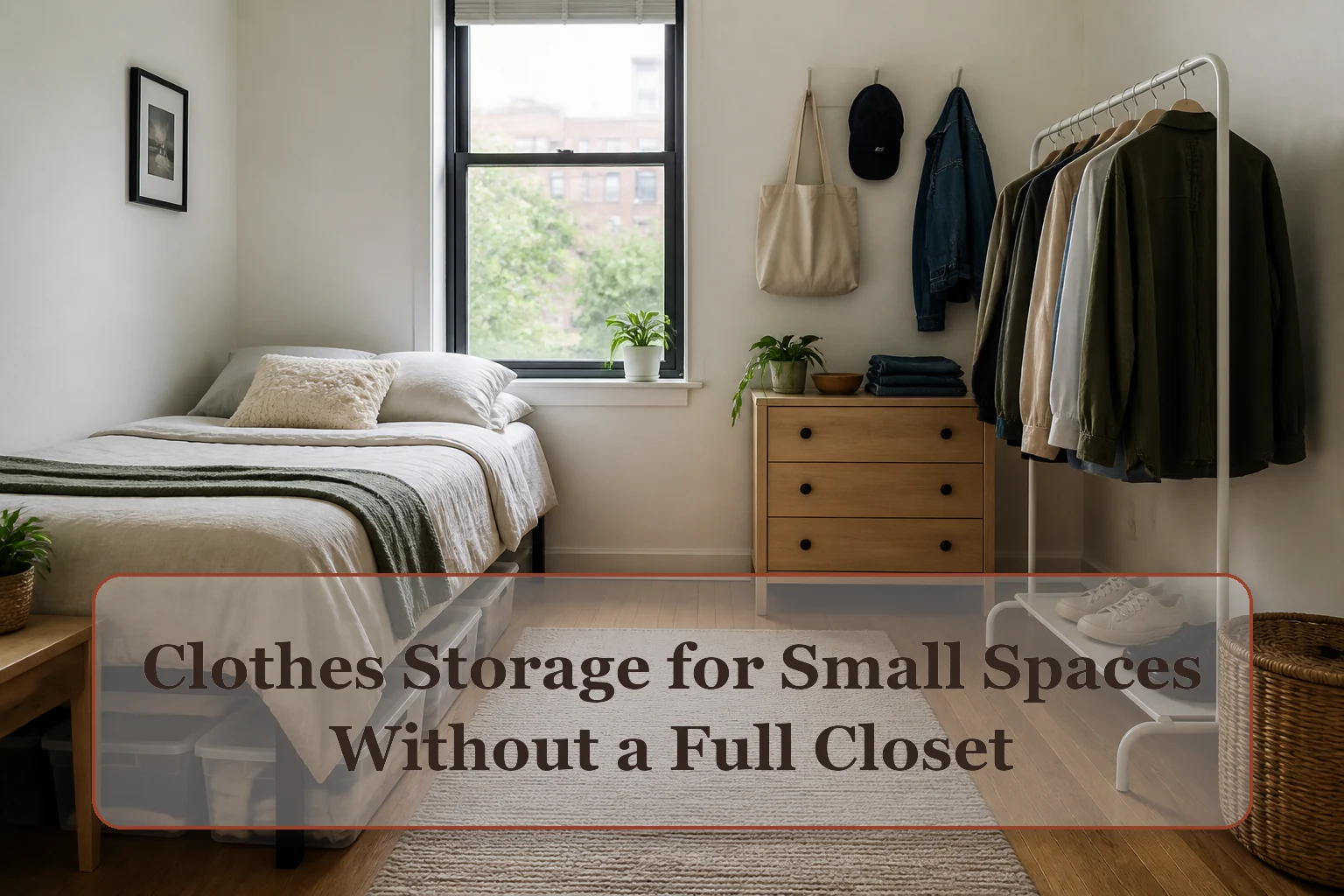
Use the tool: Work toward the quantity, access, and portable-storage map; test it with the real items and route before expanding storage.
Count the clothing states, not just the clothes
- Hang: List pieces that genuinely need hanging for shape, access, or care. A garment rack should not become the default home for every item.
- Fold: Group daily foldable categories by the drawer or shelf volume they need after a normal laundry cycle, not immediately before laundry day.
- In motion: Dirty, worn-again, repair, and outgoing clothes need small distinct routes. They are often the real source of floor and chair piles.
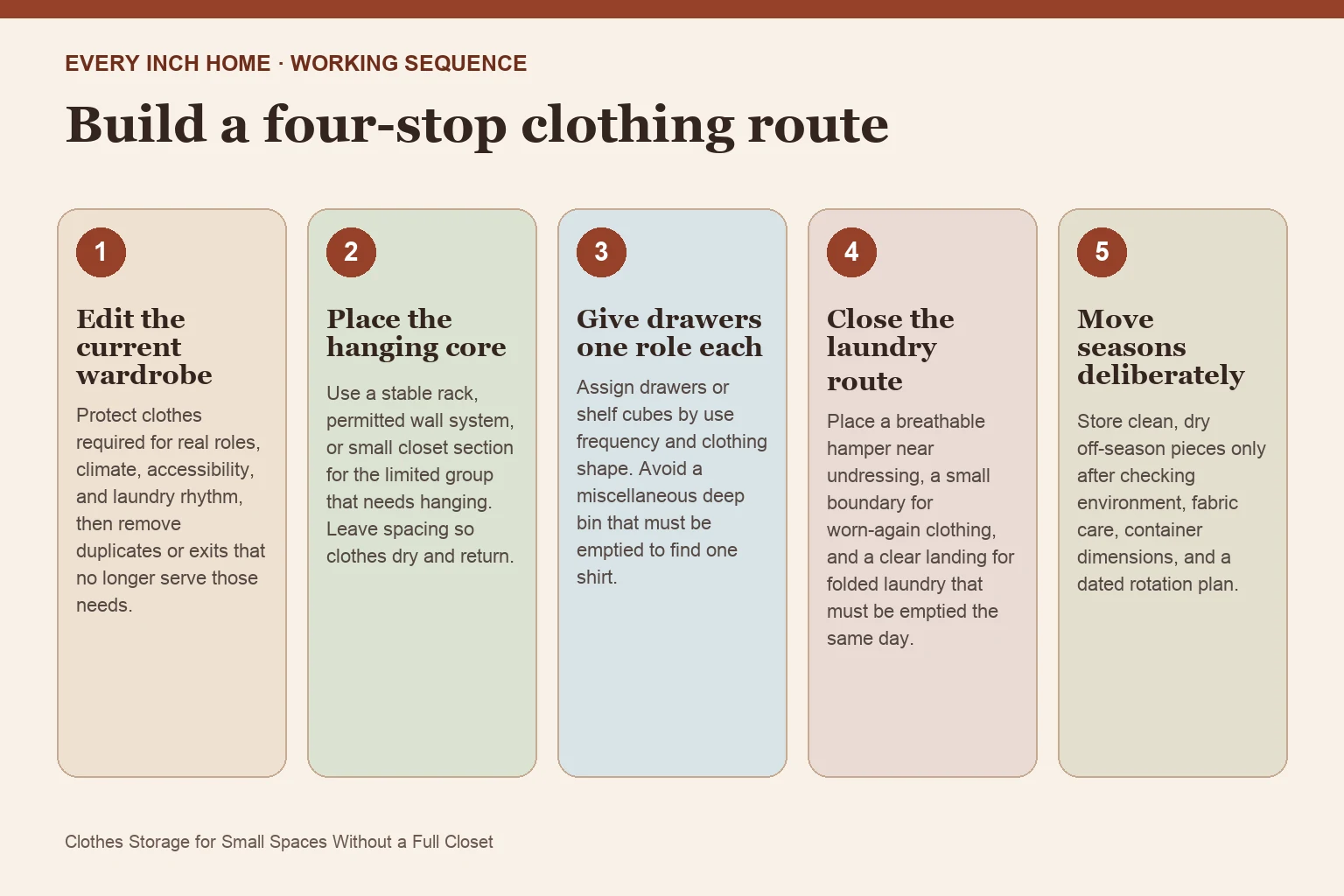
Build a four-stop clothing route
1. Edit the current wardrobe
Protect clothes required for real roles, climate, accessibility, and laundry rhythm, then remove duplicates or exits that no longer serve those needs.
2. Place the hanging core
Use a stable rack, permitted wall system, or small closet section for the limited group that needs hanging. Leave spacing so clothes dry and return.
3. Give drawers one role each
Assign drawers or shelf cubes by use frequency and clothing shape. Avoid a miscellaneous deep bin that must be emptied to find one shirt.
4. Close the laundry route
Place a breathable hamper near undressing, a small boundary for worn-again clothing, and a clear landing for folded laundry that must be emptied the same day.
5. Move seasons deliberately
Store clean, dry off-season pieces only after checking environment, fabric care, container dimensions, and a dated rotation plan.
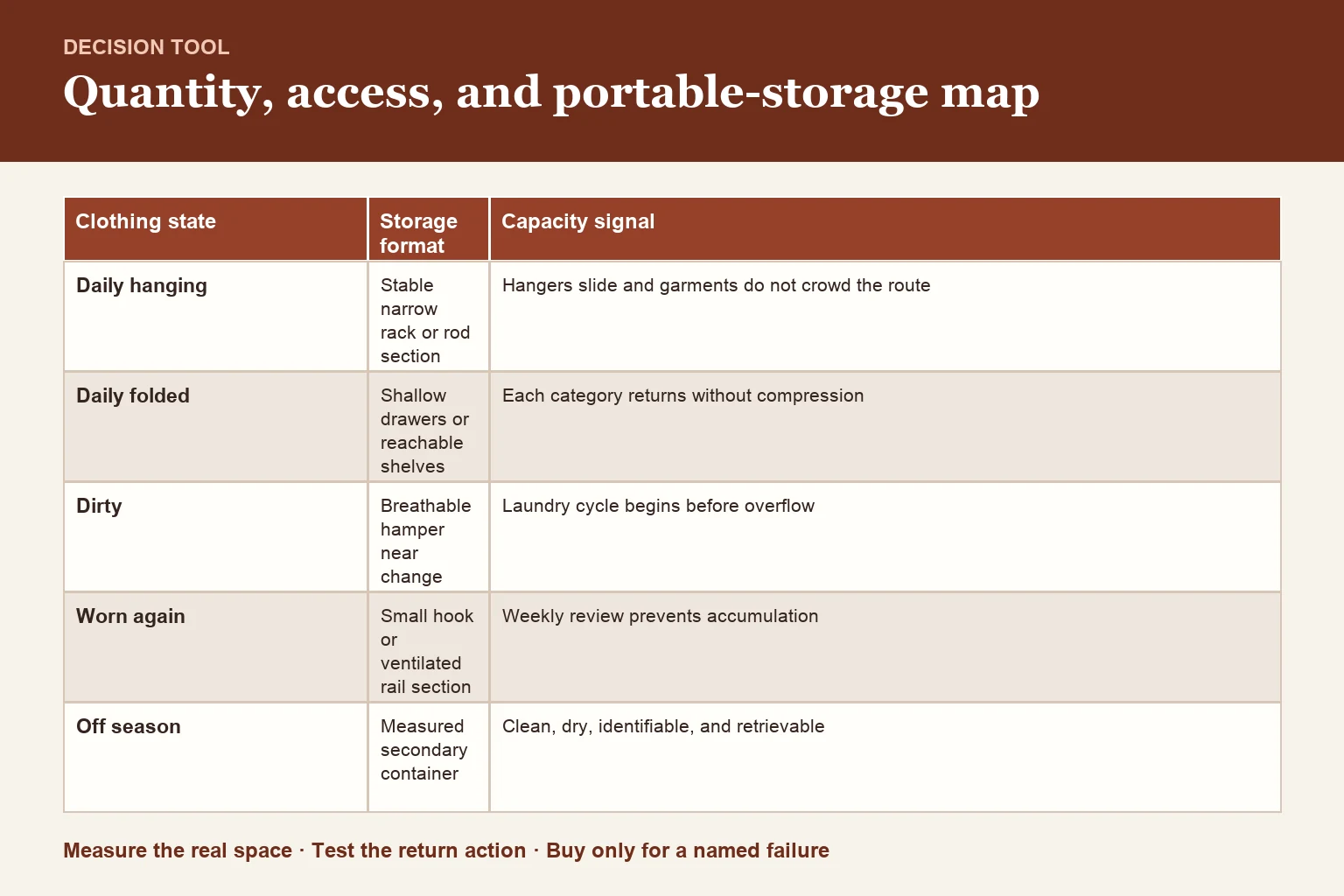
Quantity, access, and portable-storage map
| Clothing state | Storage format | Capacity signal |
|---|---|---|
| Daily hanging | Stable narrow rack or rod section | Hangers slide and garments do not crowd the route |
| Daily folded | Shallow drawers or reachable shelves | Each category returns without compression |
| Dirty | Breathable hamper near change point | Laundry cycle begins before overflow |
| Worn again | Small hook or ventilated rail section | Weekly review prevents accumulation |
| Off season | Measured secondary container | Clean, dry, identifiable, and retrievable |
Buying criteria for portable clothing storage
Check external footprint, loaded stability, wall or floor protection, manufacturer weight limits, garment length, drawer extension, and the full return route. Renter-friendly does not mean load-free: follow installation instructions and lease terms. Prefer formats that can move or be repurposed without becoming several unrelated mini-closets.
Audit the route on laundry day
When a normal load is clean, put it away without pre-clearing space. Record which categories do not fit, which hangers catch, and where folded clothing waits. Edit or change placement at those exact failures. If the system works only when half the wardrobe is being washed, it does not have real capacity.
Frequently asked questions
How do I store clothes without a closet?
Combine a limited hanging zone, shallow folded storage, a closed laundry route, and measured seasonal storage. Give each format a distinct job.
Are garment racks good for small bedrooms?
They can be useful for a small hanging core when stable, correctly loaded, and clear of the route. An overfilled rack creates visual and physical crowding.
Where should worn-again clothes go?
Use a small ventilated hook, rail section, or basket separate from clean and dirty clothes, and review it on a fixed weekly day.