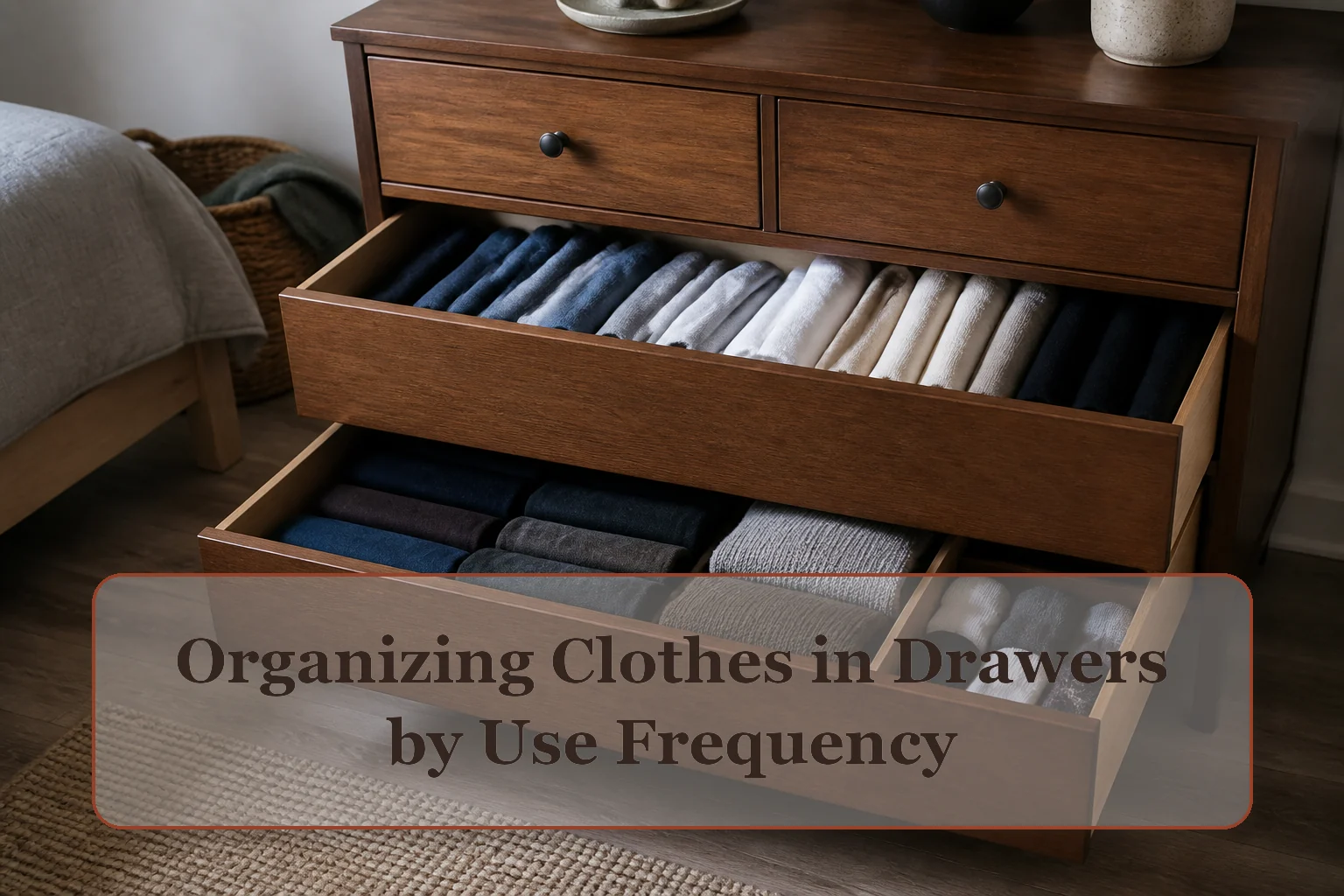
Use the tool: Work toward the drawer-role and folding guide; test it with the real items and route before expanding storage.
Match the method to the drawer and fabric
- Drawer depth: Measure internal width, depth, and usable height below the frame. A fold that stands taller than the opening will snag no matter how tidy it looks.
- Garment behavior: Some knits and T-shirts stand well; thick sweaters and slippery fabrics may be better in short stacks or on a shelf according to care needs.
- Retrieval habit: Notice whether you select by type, outfit, weather, or color. Build the visible order around the choice you actually make.
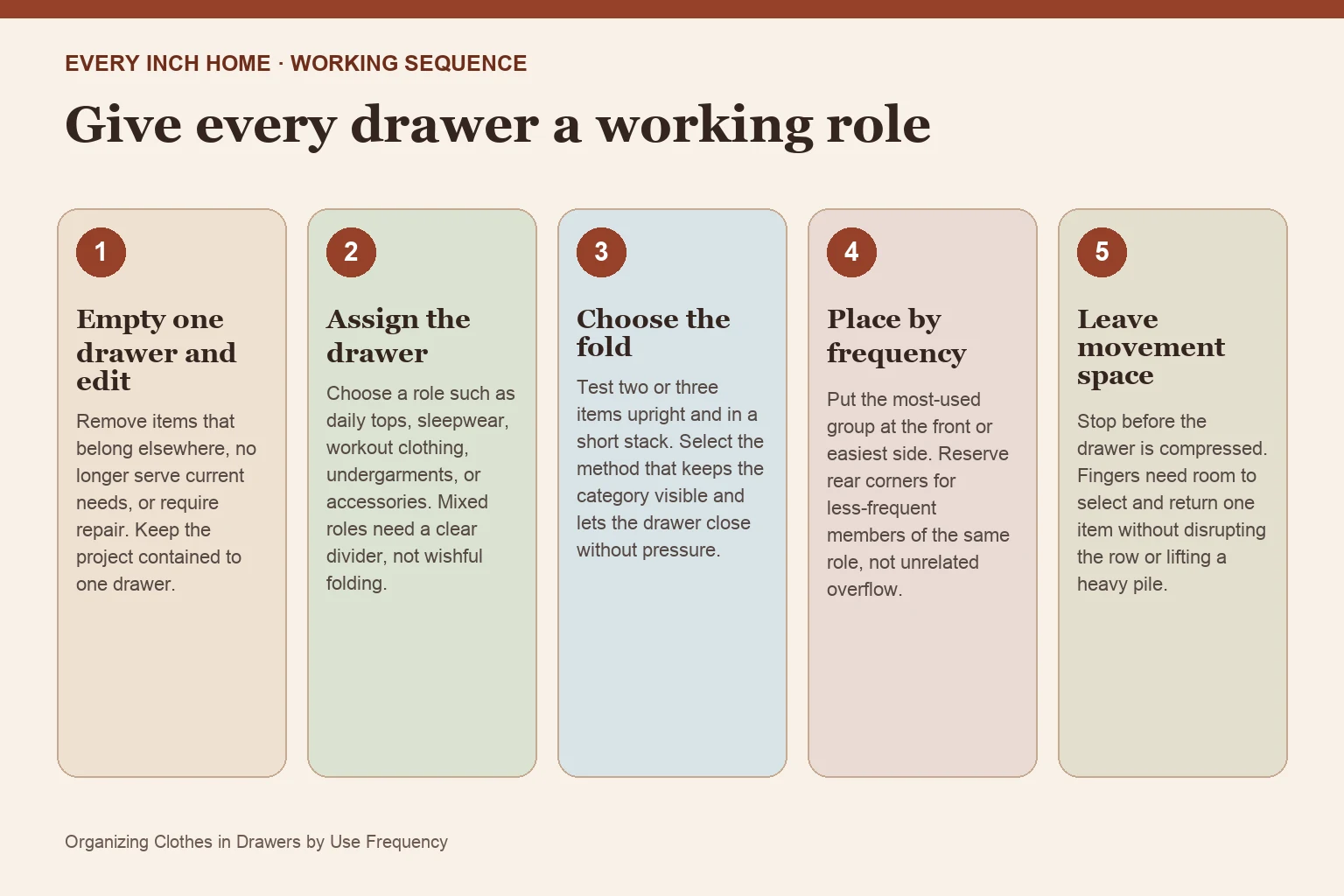
Give every drawer a working role
1. Empty one drawer and edit
Remove items that belong elsewhere, no longer serve current needs, or require repair. Keep the project contained to one drawer.
2. Assign the drawer
Choose a role such as daily tops, sleepwear, workout clothing, undergarments, or accessories. Mixed roles need a clear divider, not wishful folding.
3. Choose the fold
Test two or three items upright and in a short stack. Select the method that keeps the category visible and lets the drawer close without pressure.
4. Place by frequency
Put the most-used group at the front or easiest side. Reserve rear corners for less-frequent members of the same role, not unrelated overflow.
5. Leave movement space
Stop before the drawer is compressed. Fingers need room to select and return one item without disrupting the row or lifting a heavy pile.
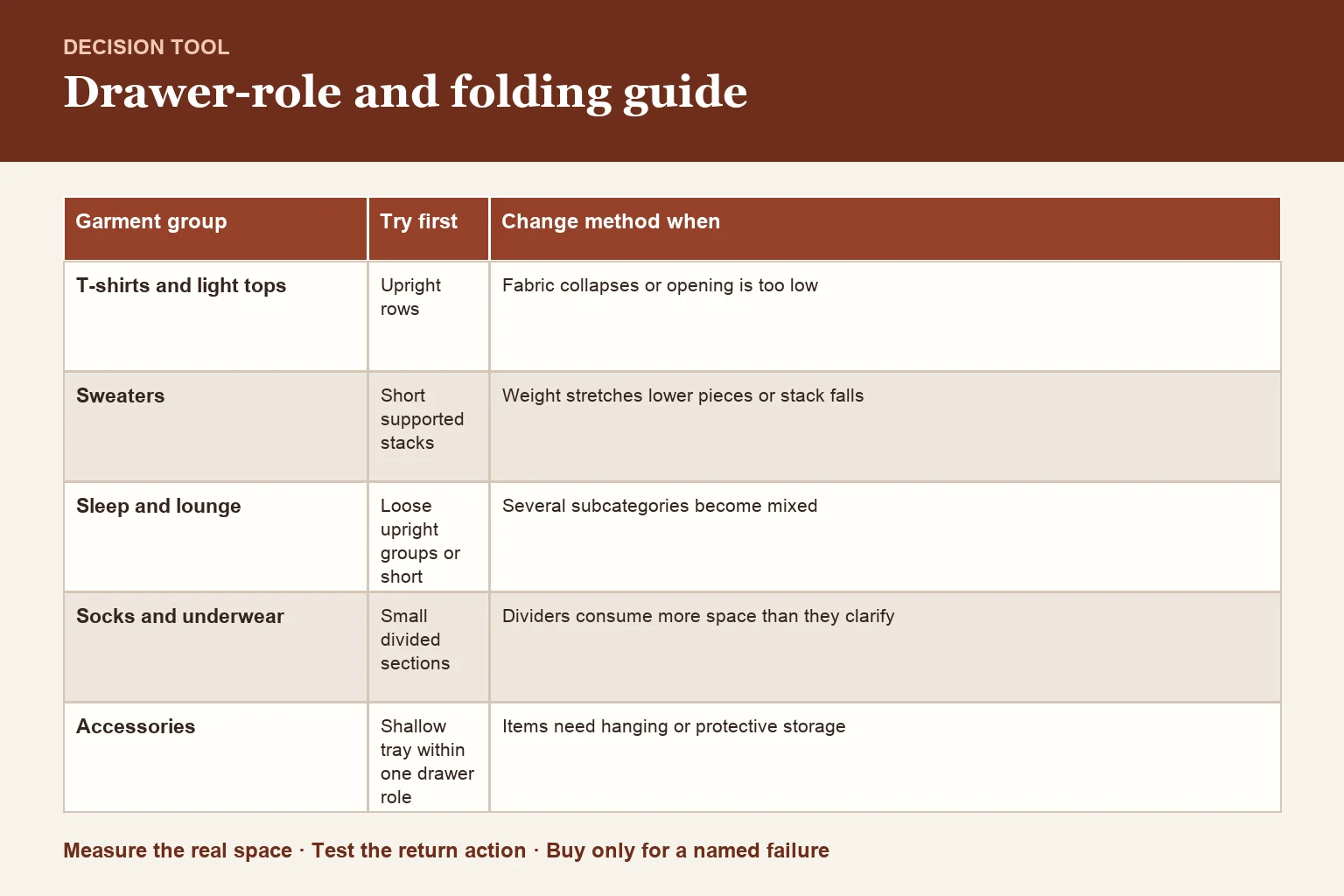
Drawer-role and folding guide
| Garment group | Try first | Change method when |
|---|---|---|
| T-shirts and light tops | Upright rows | Fabric collapses or opening is too low |
| Sweaters | Short supported stacks | Weight stretches lower pieces or stack falls |
| Sleep and lounge | Loose upright groups or short stacks | Several subcategories become mixed |
| Socks and underwear | Small divided sections | Dividers consume more space than they clarify |
| Accessories | Shallow tray within one drawer role | Items need hanging or protective storage |
When drawer organizers are worth buying
A divider helps when a small category repeatedly spreads or when two roles must share one drawer. Measure internal dimensions and account for sloped sides, tracks, and handle screws. Test with cardboard first. Skip a full insert that forces every item into compartments smaller than the garments.
Use the clean-laundry fit test
Put away a normal clean load when the rest of the wardrobe is present. If one category will not fit without compression, edit it or expand its assigned drawer only by deliberately reducing another role. Straightening a row every week is less effective than correcting the capacity mismatch once.
Frequently asked questions
Is it better to roll or fold clothes in drawers?
Use the method that suits the fabric, drawer height, and retrieval habit. Upright folding improves visibility for many light garments; rolling can distort or waste space in some drawers.
How do I keep clothes from falling over in drawers?
Use shorter rows, a simple divider, or a small box as a movable bookend, and leave enough space to remove one item cleanly.
What should go in the top dresser drawer?
Reserve the easiest drawer for frequently used small or daily categories, adjusted for household accessibility and privacy needs.