Use the tool: Work toward the blanket count, access, fold, and airflow matrix; test it with the real items and route before expanding storage.
Count blankets by current job
- In use: Identify throws reached for during a normal week. These need a one-motion return near seating.
- Guest or seasonal: Name the bed, person, or season each backup serves. Anonymous extras are not an organizing category.
- Care and airflow: Check care labels, pets, humidity, floor contact, and whether the storage lets textiles stay clean and completely dry.
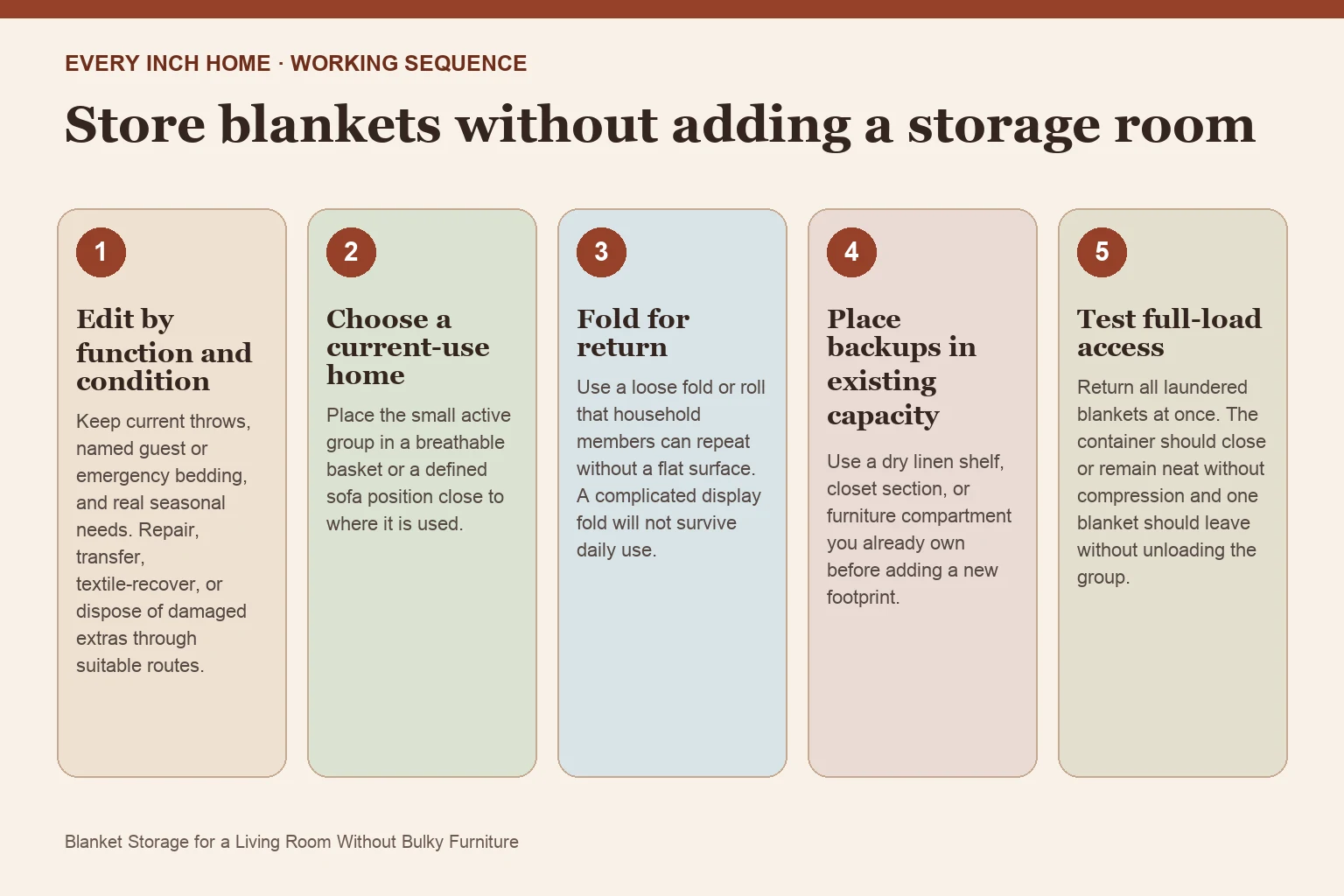
Store blankets without adding a storage room
1. Edit by function and condition
Keep current throws, named guest or emergency bedding, and real seasonal needs. Repair, transfer, textile-recover, or dispose of damaged extras through suitable routes.
2. Choose a current-use home
Place the small active group in a breathable basket or a defined sofa position close to where it is used.
3. Fold for return
Use a loose fold or roll that household members can repeat without a flat surface. A complicated display fold will not survive daily use.
4. Place backups in existing capacity
Use a dry linen shelf, closet section, or furniture compartment you already own before adding a new footprint.
5. Test full-load access
Return all laundered blankets at once. The container should close or remain neat without compression and one blanket should leave without unloading the group.
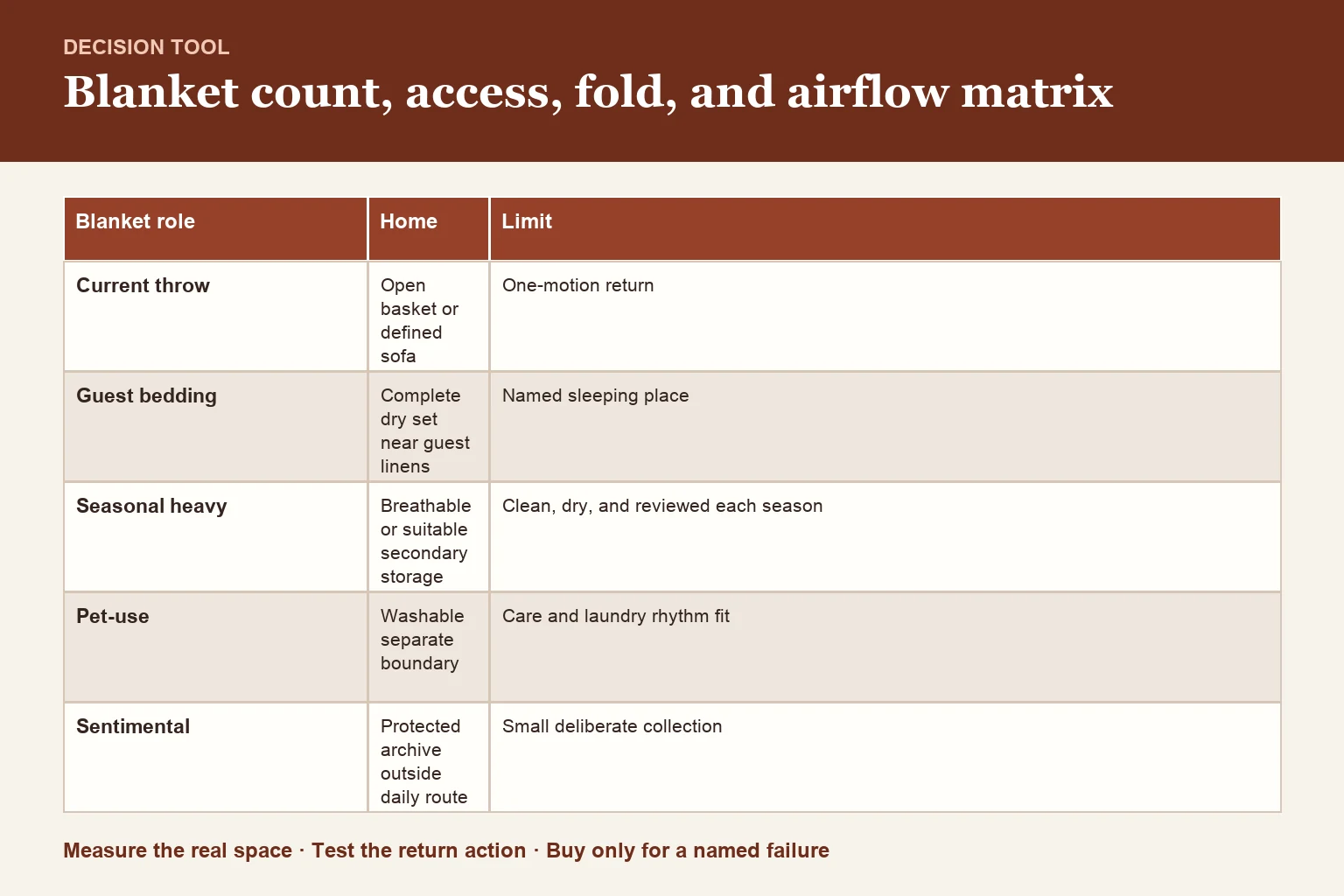
Blanket count, access, fold, and airflow matrix
| Blanket role | Home | Limit |
|---|---|---|
| Current throw | Open basket or defined sofa position | One-motion return |
| Guest bedding | Complete dry set near guest linens | Named sleeping place |
| Seasonal heavy | Breathable or suitable secondary storage | Clean, dry, and reviewed each season |
| Pet-use | Washable separate boundary | Care and laundry rhythm fit |
| Sentimental | Protected archive outside daily route | Small deliberate collection |
Before buying a basket, ladder, or storage bench
Measure the folded blanket volume, container opening, loaded weight, airflow, floor clearance, and the walking route. A ladder uses wall and leaning clearance and may not suit every household. A bench is justified only when seating is also needed and manufacturer load, hinge, and ventilation guidance fit the use.
Reset current throws, rotate the rest
At the end of the evening, return the current blanket using the easy fold and keep food or damp textiles out of the basket. At seasonal change, clean according to care labels, dry fully, inspect storage, and swap the active group rather than stacking another season in the living room.
Frequently asked questions
What is the best way to store blankets in a living room?
Keep a small active group in a breathable, easy-return basket or existing compartment and put clean dry backups in secondary linen storage.
Are blanket ladders practical?
They provide visible one-motion access but use wall and floor clearance and may pose household-specific stability or climbing concerns. Evaluate the route and users.
Can blankets be stored in an ottoman?
Yes when the compartment is clean, dry, appropriate for textiles, and easy to inspect, and the ottoman's structure and primary use remain suitable.