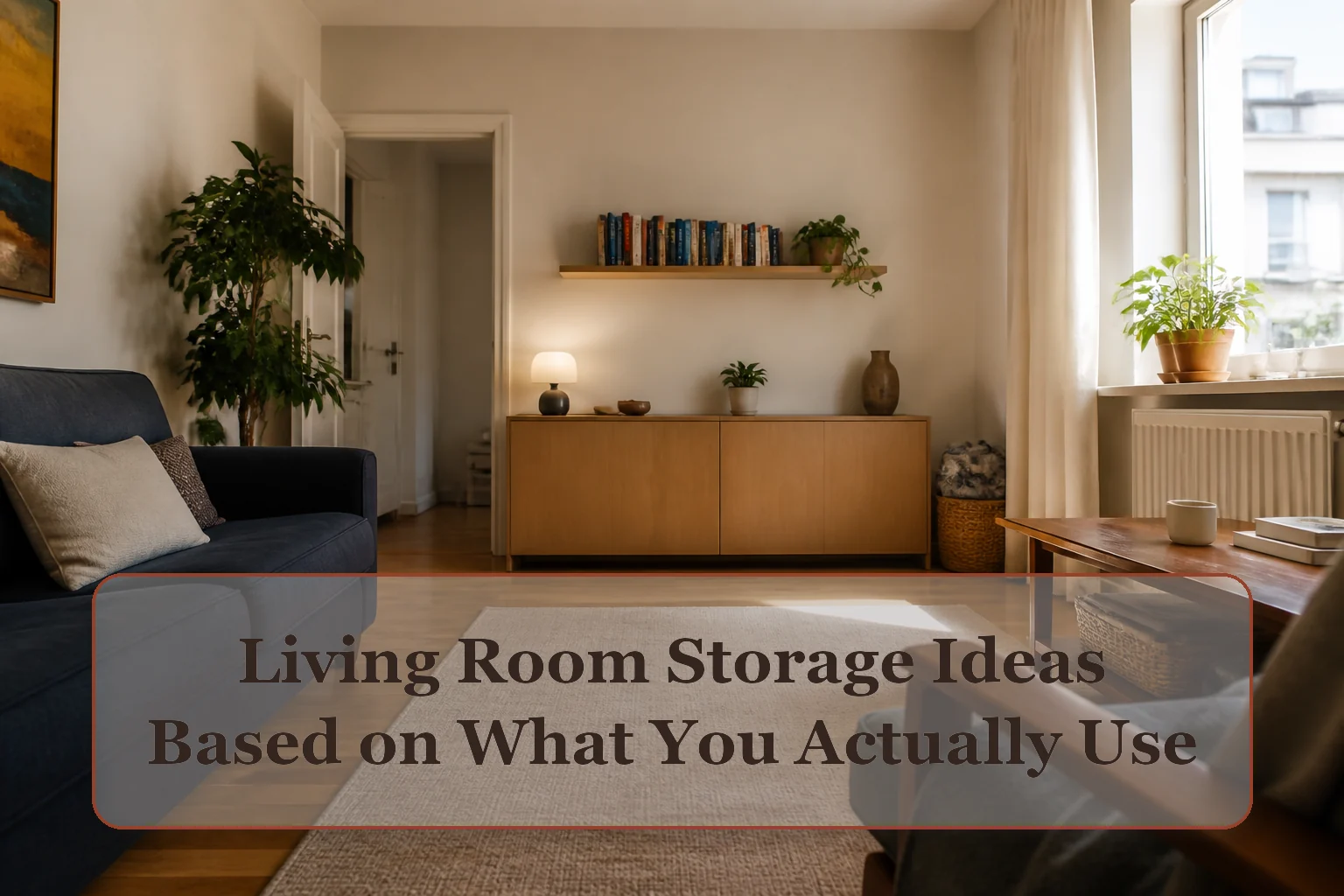
Use the tool: Work toward the open-closed and route map; test it with the real items and route before expanding storage.
Inventory activities before objects
- Daily: Record reading, television, play, conversation, exercise, homework, hobbies, or pet care that occurs most days. These activities need the shortest setup and return.
- Weekly: Games, craft, hosting, and exercise equipment may need accessible closed storage without occupying prime surfaces every day.
- Rare or wrong-room: Archives, bulk supplies, and unrelated household overflow should not claim shared-room furniture simply because a cabinet has space.
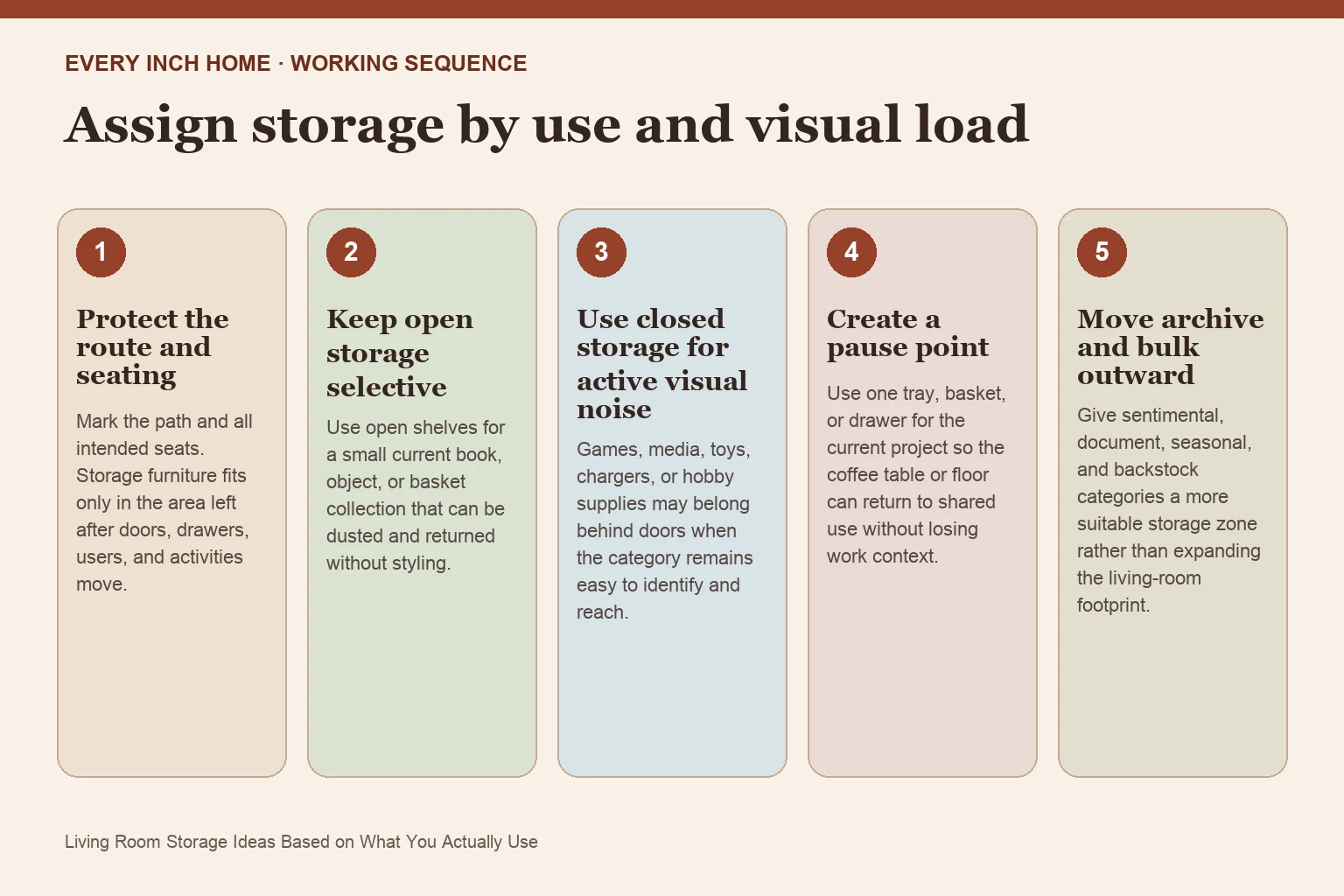
Assign storage by use and visual load
1. Protect the route and seating
Mark the path and all intended seats. Storage furniture fits only in the area left after doors, drawers, users, and activities move.
2. Keep open storage selective
Use open shelves for a small current book, object, or basket collection that can be dusted and returned without styling.
3. Use closed storage for active visual noise
Games, media, toys, chargers, or hobby supplies may belong behind doors when the category remains easy to identify and reach.
4. Create a pause point
Use one tray, basket, or drawer for the current project so the coffee table or floor can return to shared use without losing work context.
5. Move archive and bulk outward
Give sentimental, document, seasonal, and backstock categories a more suitable storage zone rather than expanding the living-room footprint.
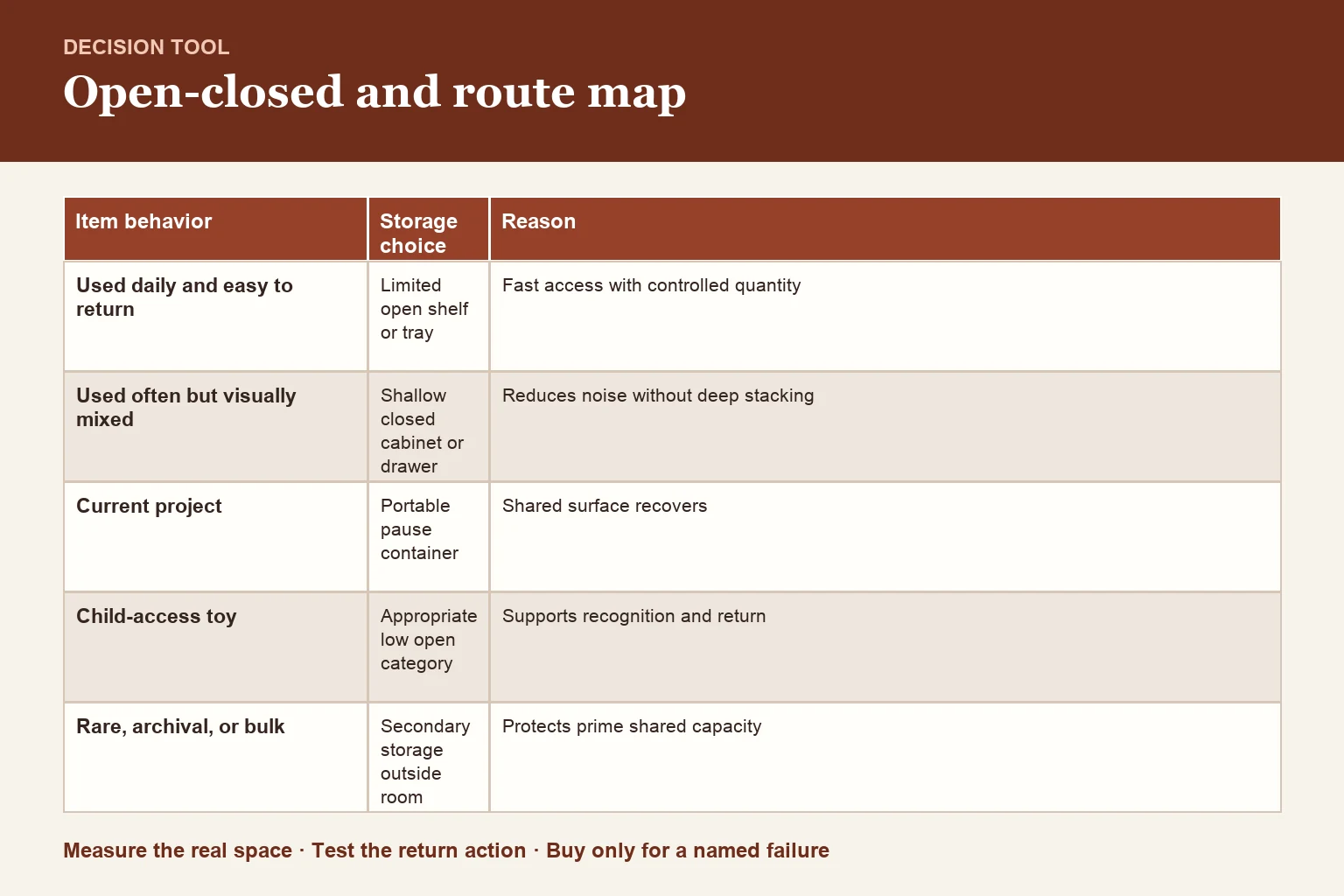
Open-closed and route map
| Item behavior | Storage choice | Reason |
|---|---|---|
| Used daily and easy to return | Limited open shelf or tray | Fast access with controlled quantity |
| Used often but visually mixed | Shallow closed cabinet or drawer | Reduces noise without deep stacking |
| Current project | Portable pause container | Shared surface recovers |
| Child-access toy | Appropriate low open category | Supports recognition and return |
| Rare, archival, or bulk | Secondary storage outside room | Protects prime shared capacity |
Storage furniture must replace or solve
Before buying, tape the footprint and every open door or drawer, then use the room normally. Measure the real category volume, shelf weight guidance, ventilation around electronics, anchoring requirements, outlet and heater clearance, and the path. A new unit should replace a less useful piece or solve a named category failure.
Test the room after a normal evening
Return remotes, books, toys, blankets, and active work, then clear drinkware and the main surface. Note the categories that lack a direct home or require unloading. Adjust those exact zones. The goal is not an always-empty room; it is a shared room that can close without a sorting project.
Frequently asked questions
What storage is best for a small living room?
Use a measured mix: limited open storage for attractive frequent items, shallow closed storage for active visual noise, and secondary storage for rare categories.
Should living-room storage be open or closed?
Choose by item behavior and return. Open storage improves visibility but needs a lower quantity; closed storage calms visual noise but should not hide deep mixtures.
How do I add storage without crowding the room?
Protect routes and activity footprints first, tape-test any new furniture, and require it to replace a piece or solve a specific category failure.