Use the tool: Work toward the bathroom frequency matrix; test it with the real items and route before expanding storage.
Read the room and the labels first
- Ventilation: Use the exhaust fan or open-air route when appropriate to the product directions. Do not assume a strong smell is proof of effectiveness.
- Surface compatibility: Identify stone, metal, grout, acrylic, wood, and coated fixtures before applying a product. Follow both the product label and the fixture or surface care guidance.
- Product separation: Keep products in original labeled containers and never mix cleaners. The U.S. Environmental Protection Agency and CDC both emphasize label directions and safe handling.
The bathroom cleaning order
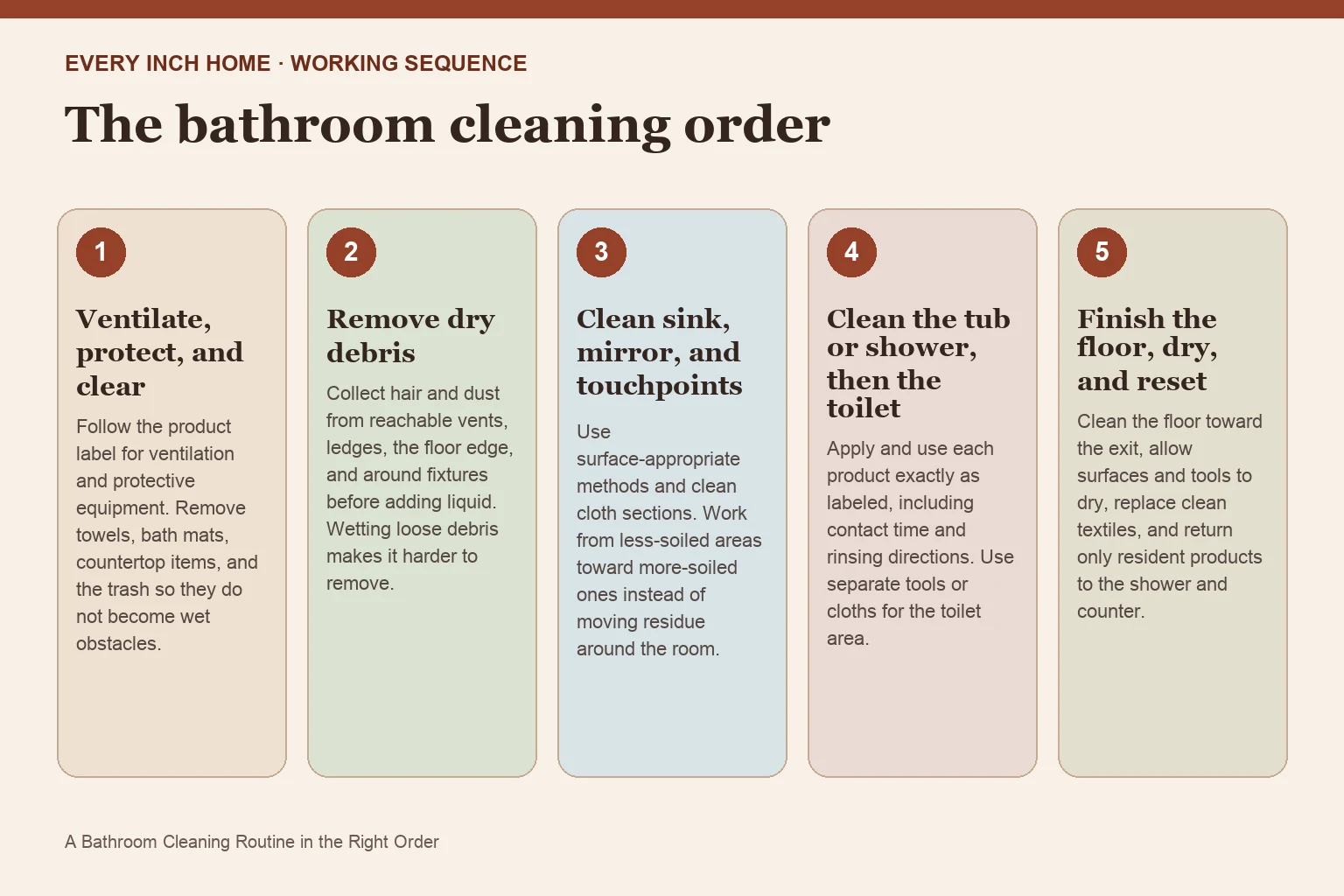
1. Ventilate, protect, and clear
Follow the product label for ventilation and protective equipment. Remove towels, bath mats, countertop items, and the trash so they do not become wet obstacles.
2. Remove dry debris
Collect hair and dust from reachable vents, ledges, the floor edge, and around fixtures before adding liquid. Wetting loose debris makes it harder to remove.
3. Clean sink, mirror, and touchpoints
Use surface-appropriate methods and clean cloth sections. Work from less-soiled areas toward more-soiled ones instead of moving residue around the room.
4. Clean the tub or shower, then the toilet
Apply and use each product exactly as labeled, including contact time and rinsing directions. Use separate tools or cloths for the toilet area.
5. Finish the floor, dry, and reset
Clean the floor toward the exit, allow surfaces and tools to dry, replace clean textiles, and return only resident products to the shower and counter.
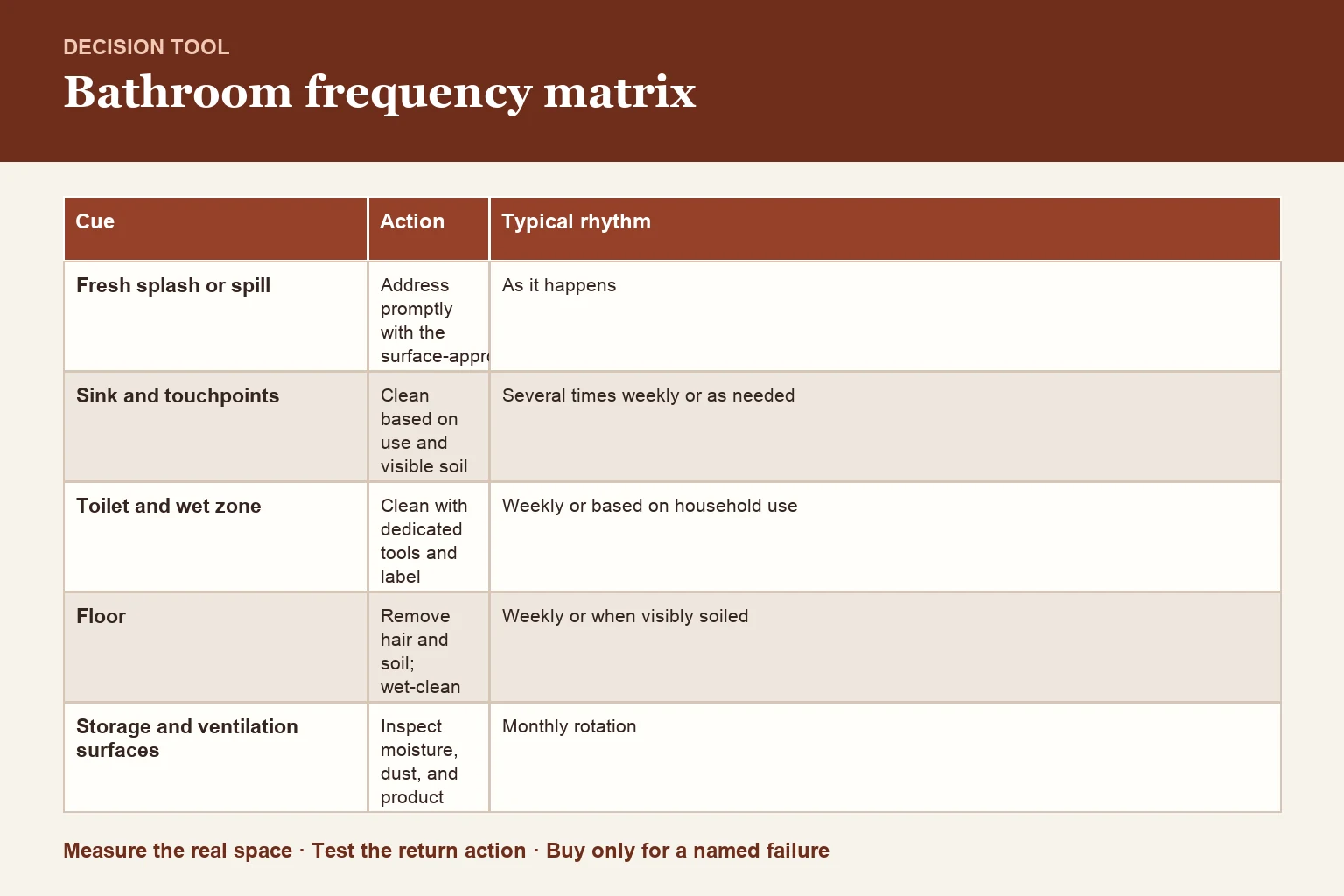
Bathroom frequency matrix
| Cue | Action | Typical rhythm |
|---|---|---|
| Fresh splash or spill | Address promptly with the surface-appropriate method | As it happens |
| Sink and touchpoints | Clean based on use and visible soil | Several times weekly or as needed |
| Toilet and wet zone | Clean with dedicated tools and label directions | Weekly or based on household use |
| Floor | Remove hair and soil; wet-clean as appropriate | Weekly or when visibly soiled |
| Storage and ventilation surfaces | Inspect moisture, dust, and product buildup | Monthly rotation |
Cleaning and disinfecting are not interchangeable
Routine cleaning removes soil and may be sufficient for many ordinary household situations. When disinfection is appropriate, first follow the product label, including the named surface, preparation, contact time, ventilation, protective equipment, and rinsing instructions. See the official CDC cleaning and disinfecting guidance and EPA explanation of product labels.
Store the kit dry and outside the wet route
Rinse tools only as their care instructions allow, launder or dry cloths appropriately, close product caps, and return cleaners to secure storage away from children and pets. Do not store a crowded caddy where shower spray keeps it damp. Note leaks, failed seals, or persistent moisture for maintenance rather than repeatedly cleaning the symptom.
Frequently asked questions
What order should I clean a bathroom in?
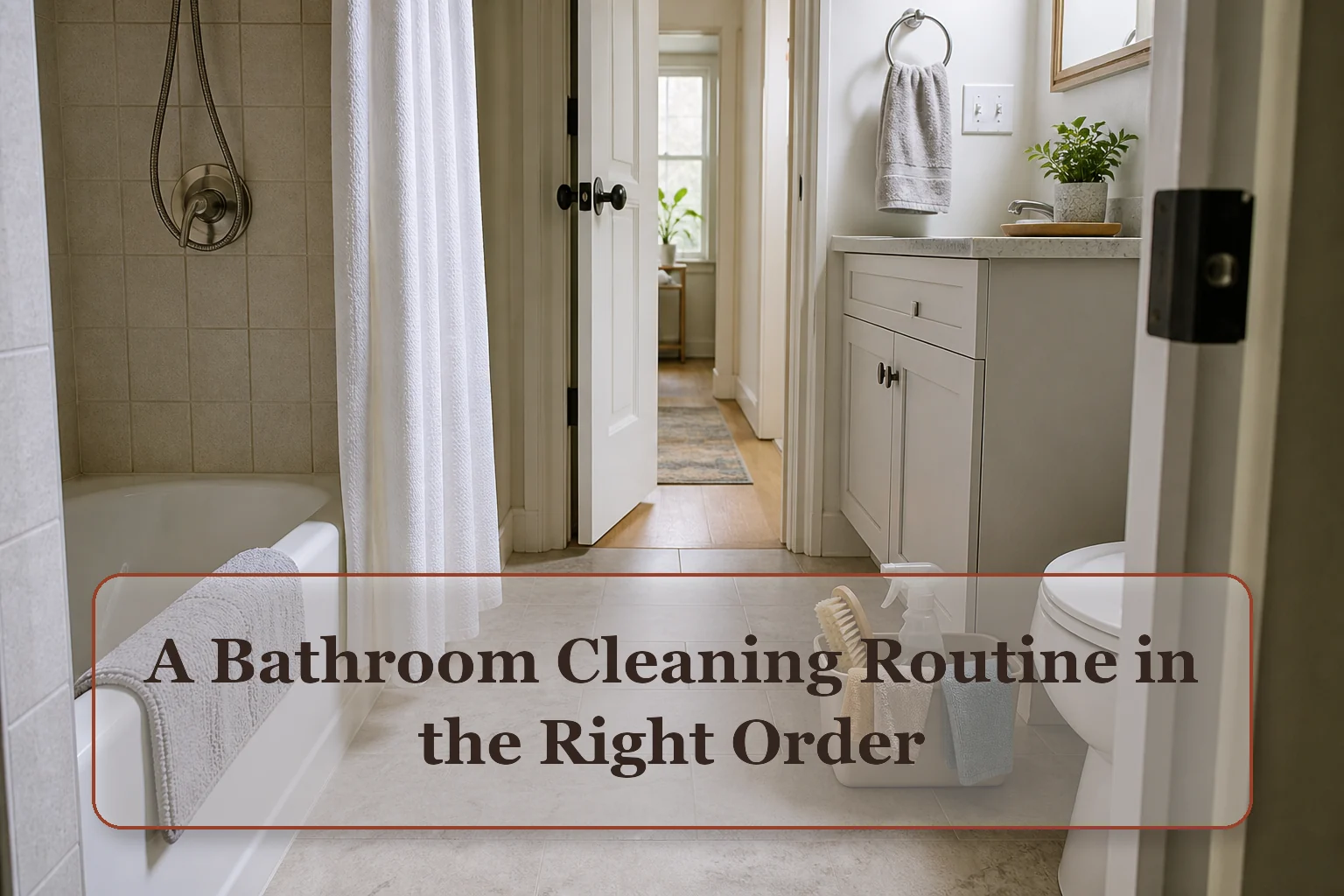
Prepare and clear, remove dry debris, clean less-soiled upper and touch surfaces, clean the wet zone, handle the toilet with dedicated tools, then finish the floor and dry the room.
Can I mix bathroom cleaning products?
No. Keep products in their original containers and use one product exactly as labeled. Mixing cleaners can create dangerous reactions.
How often should a bathroom be cleaned?
Respond to spills and hygiene needs promptly, then use a weekly or use-based routine for fixtures, toilet, wet zone, and floor. Household size and ventilation change the frequency.