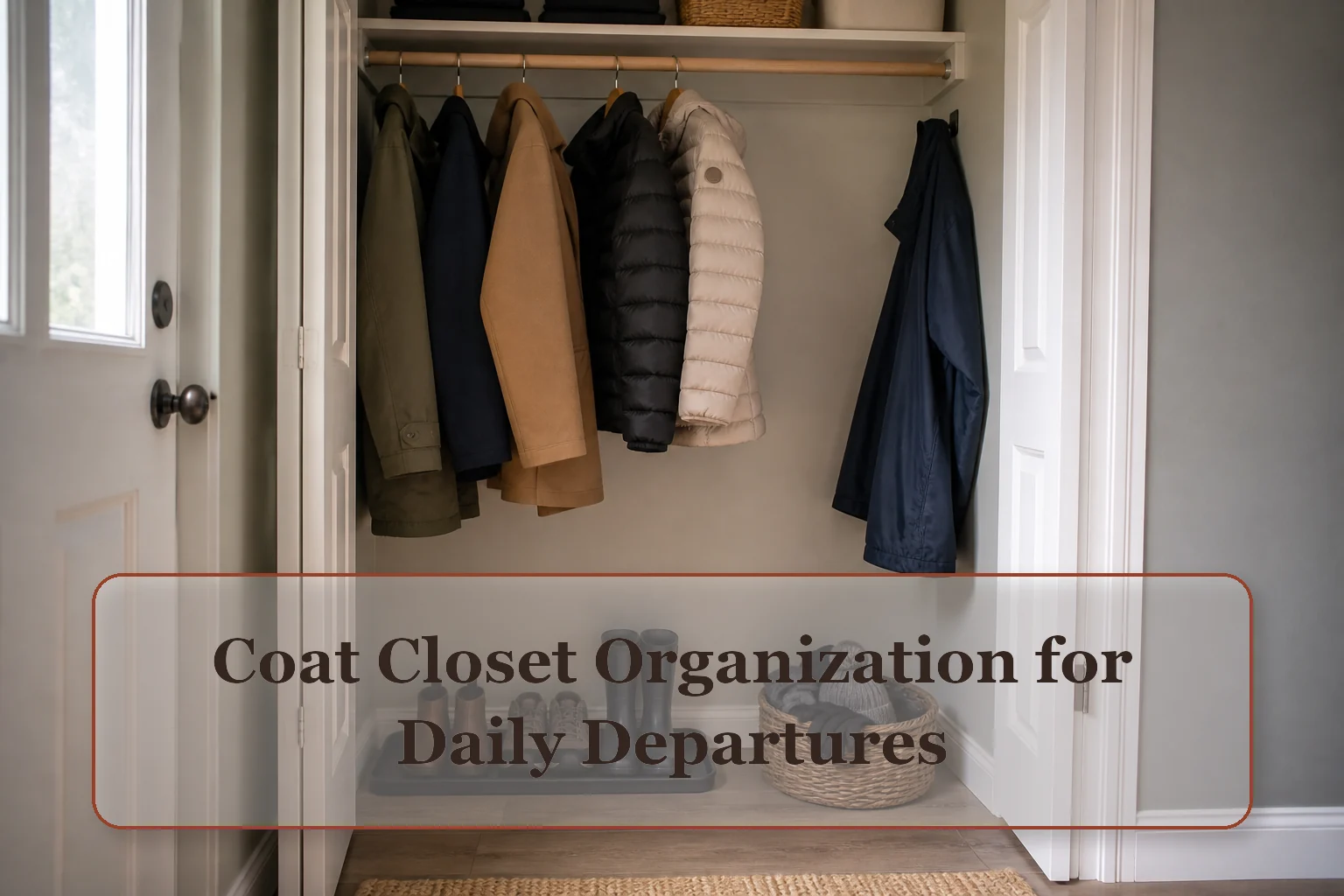
Use the tool: Work toward the household-member and wet-dry route map; test it with the real items and route before expanding storage.
Inventory one real departure
- People: List what each household member reaches for on an ordinary day, including accessibility or child-height needs. Shared piles fail because they hide ownership.
- Weather: Separate current daily gear, storm or specialty gear, and off-season pieces. The closet does not need every climate in prime reach at once.
- Wet route: Choose where raincoats, umbrellas, boots, and snow gear can drain or dry without transferring moisture to dry coats or the closet wall.
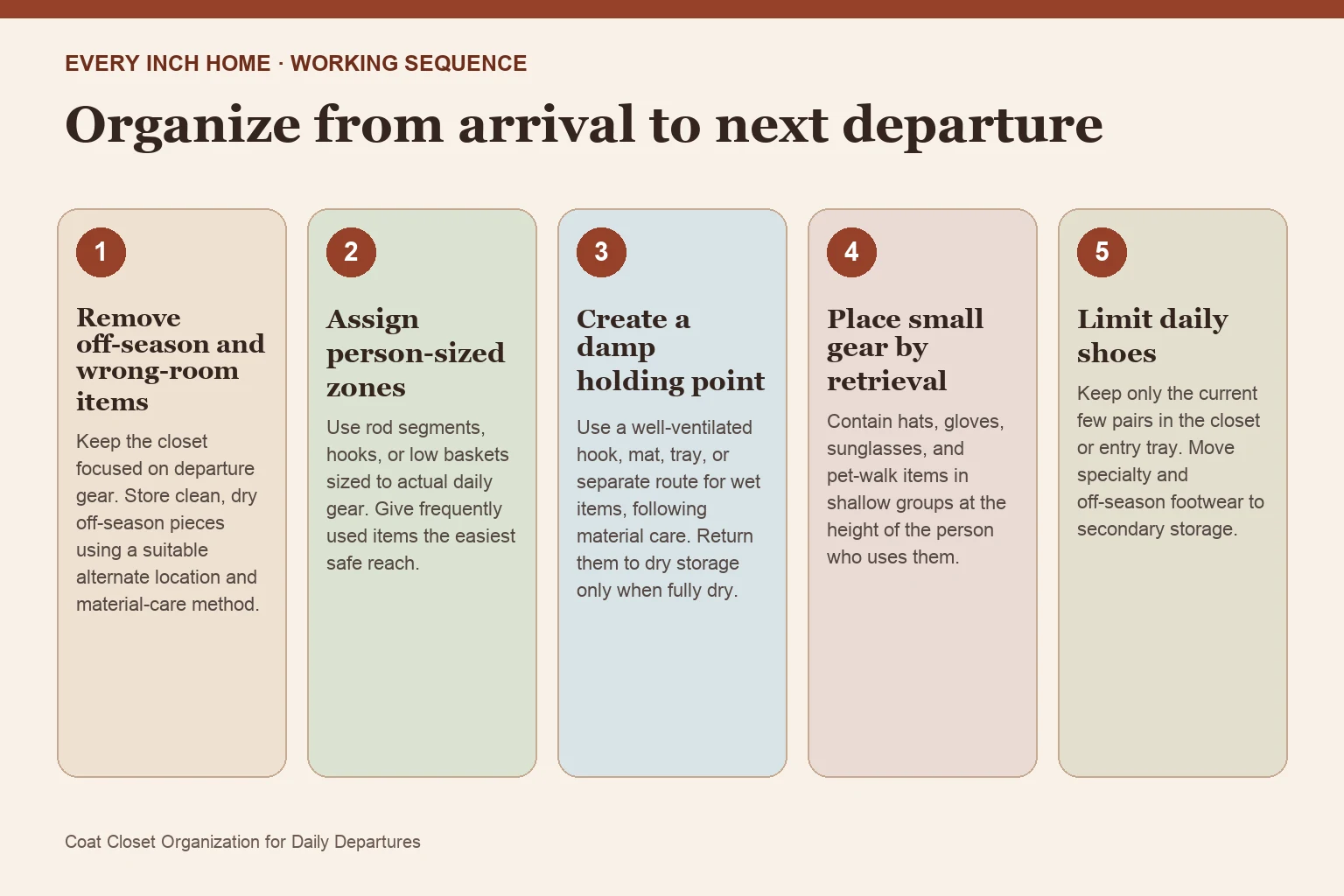
Organize from arrival to next departure
1. Remove off-season and wrong-room items
Keep the closet focused on departure gear. Store clean, dry off-season pieces using a suitable alternate location and material-care method.
2. Assign person-sized zones
Use rod segments, hooks, or low baskets sized to actual daily gear. Give frequently used items the easiest safe reach.
3. Create a damp holding point
Use a well-ventilated hook, mat, tray, or separate route for wet items, following material care. Return them to dry storage only when fully dry.
4. Place small gear by retrieval
Contain hats, gloves, sunglasses, and pet-walk items in shallow groups at the height of the person who uses them.
5. Limit daily shoes
Keep only the current few pairs in the closet or entry tray. Move specialty and off-season footwear to secondary storage.
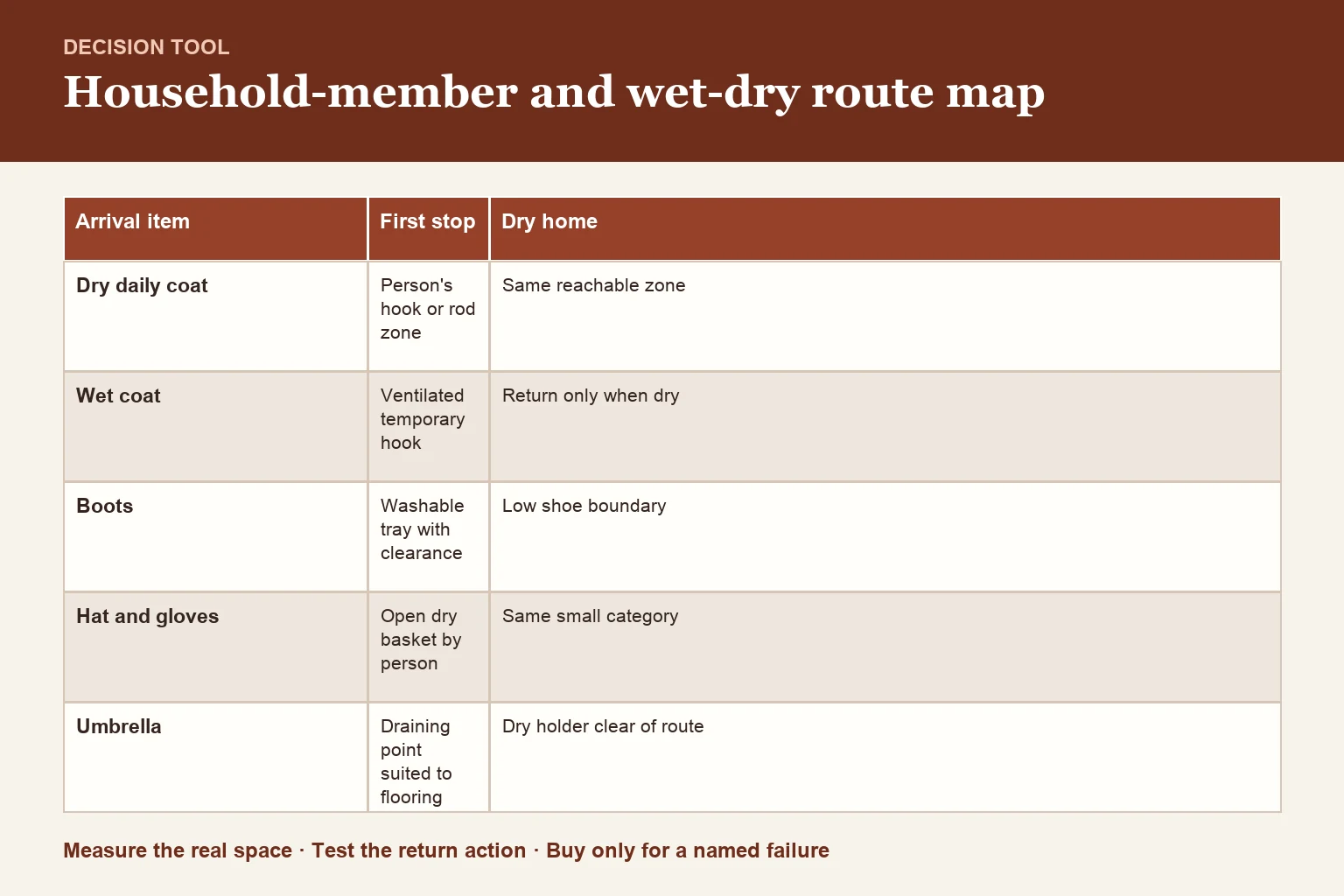
Household-member and wet-dry route map
| Arrival item | First stop | Dry home |
|---|---|---|
| Dry daily coat | Person's hook or rod zone | Same reachable zone |
| Wet coat | Ventilated temporary hook | Return only when dry |
| Boots | Washable tray with clearance | Low shoe boundary |
| Hat and gloves | Open dry basket by person | Same small category |
| Umbrella | Draining point suited to flooring | Dry holder clear of route |
Hardware must match the loaded gear
Before adding hooks, door storage, or a second rod, total the likely wet-season load and verify the product rating, wall or door material, fasteners, clearance, and lease terms. Adhesive or over-door products still have limits and can affect finishes or door closure. Follow installation instructions exactly.
Run a two-minute weather changeover
When the forecast or season changes, remove gear that will not be used, return dry pieces, clear the tray, reunite glove pairs, and check pockets. This small changeover protects prime access and prevents the closet from holding several inactive seasons at once.
Frequently asked questions
How do I organize a small coat closet?
Keep current-season gear only, assign household zones, separate wet and dry routes, contain small accessories, and cap daily shoes.
Where should wet coats go?
Use a ventilated temporary point that protects nearby surfaces and dry clothing; follow fabric care and return the coat only after it is fully dry.
Can I add hooks inside a coat closet?
Yes when the hardware suits the surface, load, clearance, and lease. Verify ratings and installation rather than estimating from the hook size.