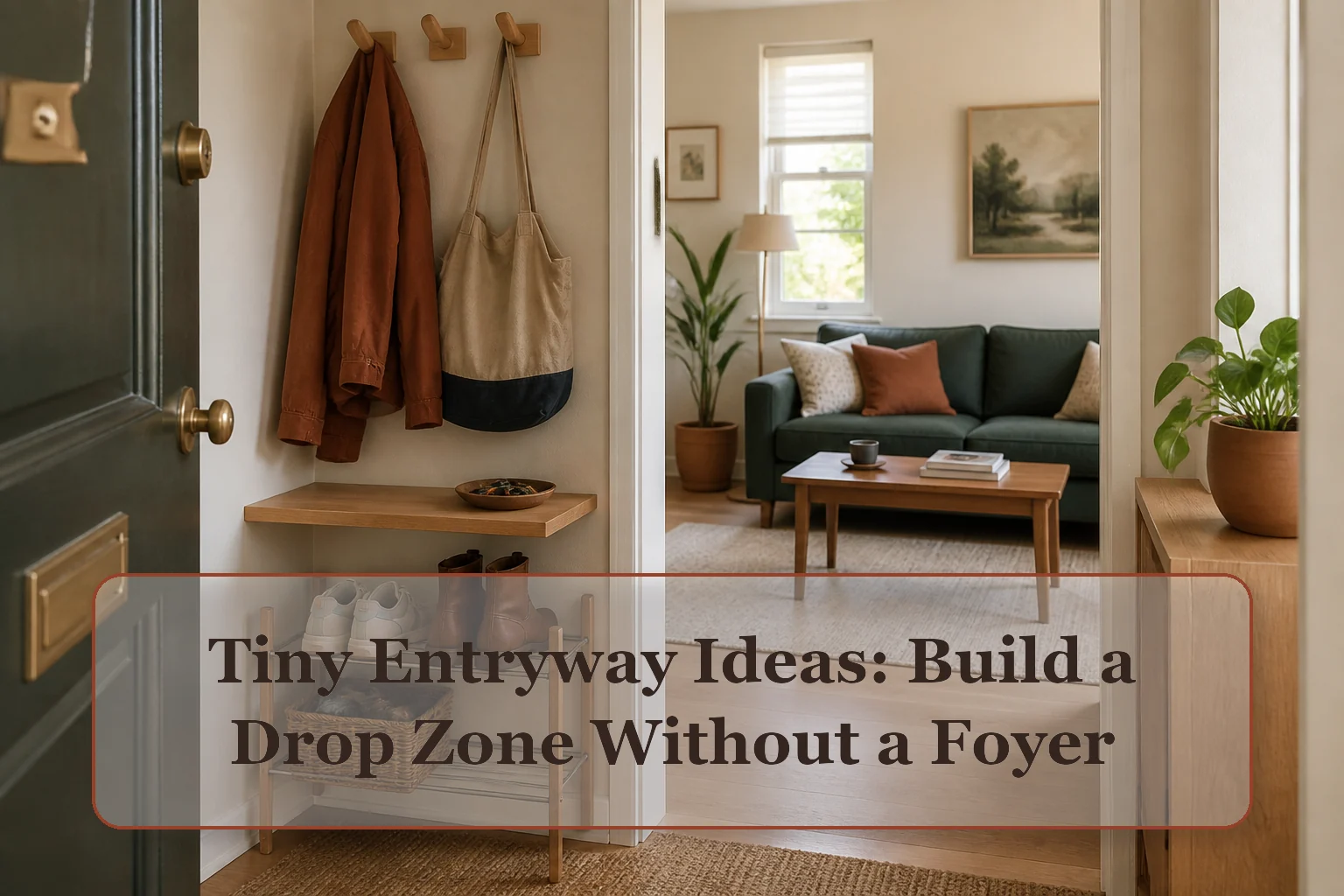
Inventory one normal arrival: keys, bag, shoes, coat, mail, pet gear, umbrella, or anything else that repeatedly lands near the door. The drop zone should serve those items—not every possible outdoor item.
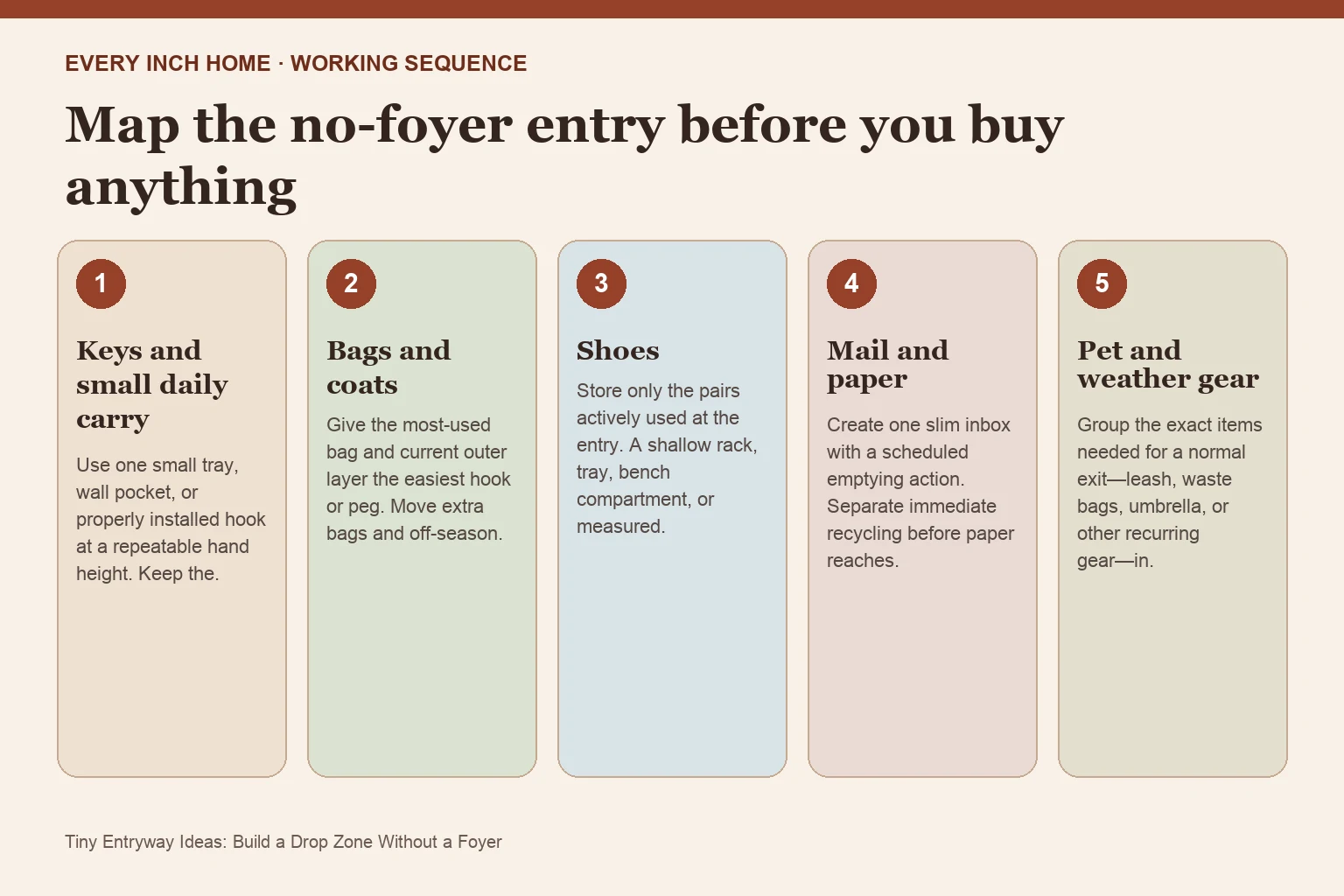
Map the no-foyer entry before you buy anything
- Open the door fully and mark its path.
- Walk in carrying a normal bag or groceries and note where your hand naturally reaches.
- Measure the available wall, corner, or back-of-door area.
- Check switches, vents, radiators, trim, outlets, and nearby furniture.
- Keep the route through the door and into the room unobstructed.
If there is no safe floor footprint, start on the wall or in a nearby living-room cabinet. The drop zone does not need to sit exactly beside the door; it needs to be easier than the clutter landing place.
Tiny entryway ideas by arrival item
Keys and small daily carry
Use one small tray, wall pocket, or properly installed hook at a repeatable hand height. Keep the boundary small. It is a daily departure station, not a miscellaneous drawer without a drawer.
Bags and coats
Give the most-used bag and current outer layer the easiest hook or peg. Move extra bags and off-season coats to a closet or another storage zone. Check hook rating, wall or door material, installation instructions, and lease requirements.
Shoes
Store only the pairs actively used at the entry. A shallow rack, tray, bench compartment, or measured floor boundary can work if it does not narrow the path or interfere with the door. Return occasional shoes to the closet.
Mail and paper
Create one slim inbox with a scheduled emptying action. Separate immediate recycling before paper reaches the main room when practical. The inbox should hold a short decision queue, not archived documents.
Pet and weather gear
Group the exact items needed for a normal exit—leash, waste bags, umbrella, or other recurring gear—in one hook, pocket, or basket. Keep wet items in a place that can dry according to their material and avoid placing hazards in a walking route.
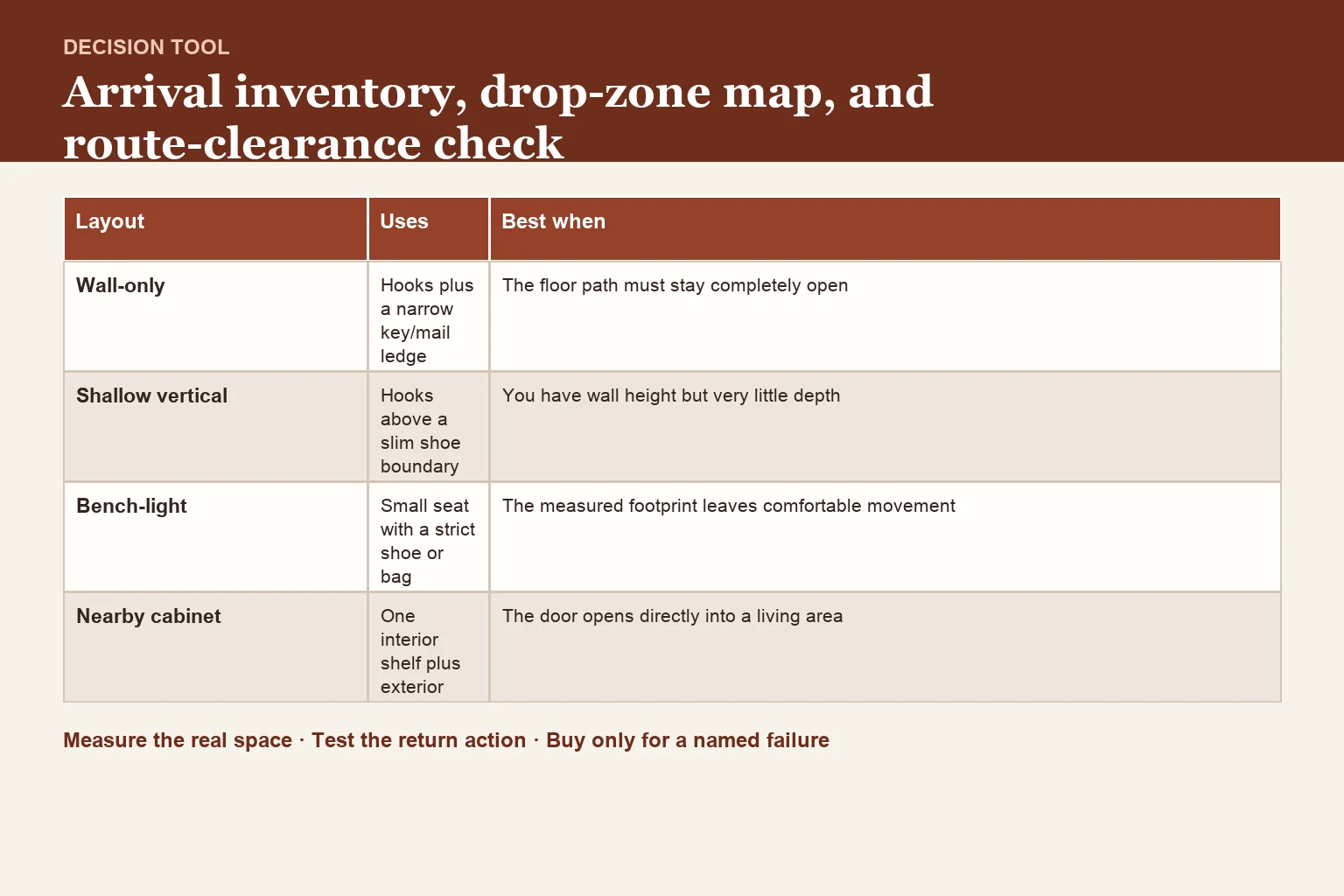
Four drop-zone layouts for a space without a foyer
| Layout | Uses | Best when |
|---|---|---|
| Wall-only | Hooks plus a narrow key/mail ledge | The floor path must stay completely open |
| Shallow vertical | Hooks above a slim shoe boundary | You have wall height but very little depth |
| Bench-light | Small seat with a strict shoe or bag compartment | The measured footprint leaves comfortable movement |
| Nearby cabinet | One interior shelf plus exterior daily hook | The door opens directly into a living area |
The one-in, one-out reset
When a current-use coat, pair of shoes, or bag enters the entry zone, move the previous one back to its longer-term home. This is not a rule for every possession; it is a capacity guard for the small set of items allowed to live at the door.
A five-minute entryway reset
- Return keys and daily carry to their departure point.
- Move extra shoes, bags, and coats to longer-term storage.
- Process or move mail from the slim inbox.
- Dry or relocate wet weather gear appropriately.
- Clear the door and walking path.
- Move items waiting to leave the home to the next real stop.
Frequently asked questions
How do I create an entryway when the door opens into the living room?
Use a wall, corner, shallow cabinet, or the back of a compatible door to define an arrival zone. Repeat materials or colors from the room, but let the route—not the decor—set the boundary.
How deep should entryway furniture be?
There is no universal depth. Measure the open door, carrying path, nearby furniture, and people using the route; choose a piece only if normal movement remains comfortable.
What should stay in a tiny entryway?
Only the current daily arrival and departure items: a small key/mail action point, the most-used bag or coat, active shoes, and other recurring gear that fits the boundary.