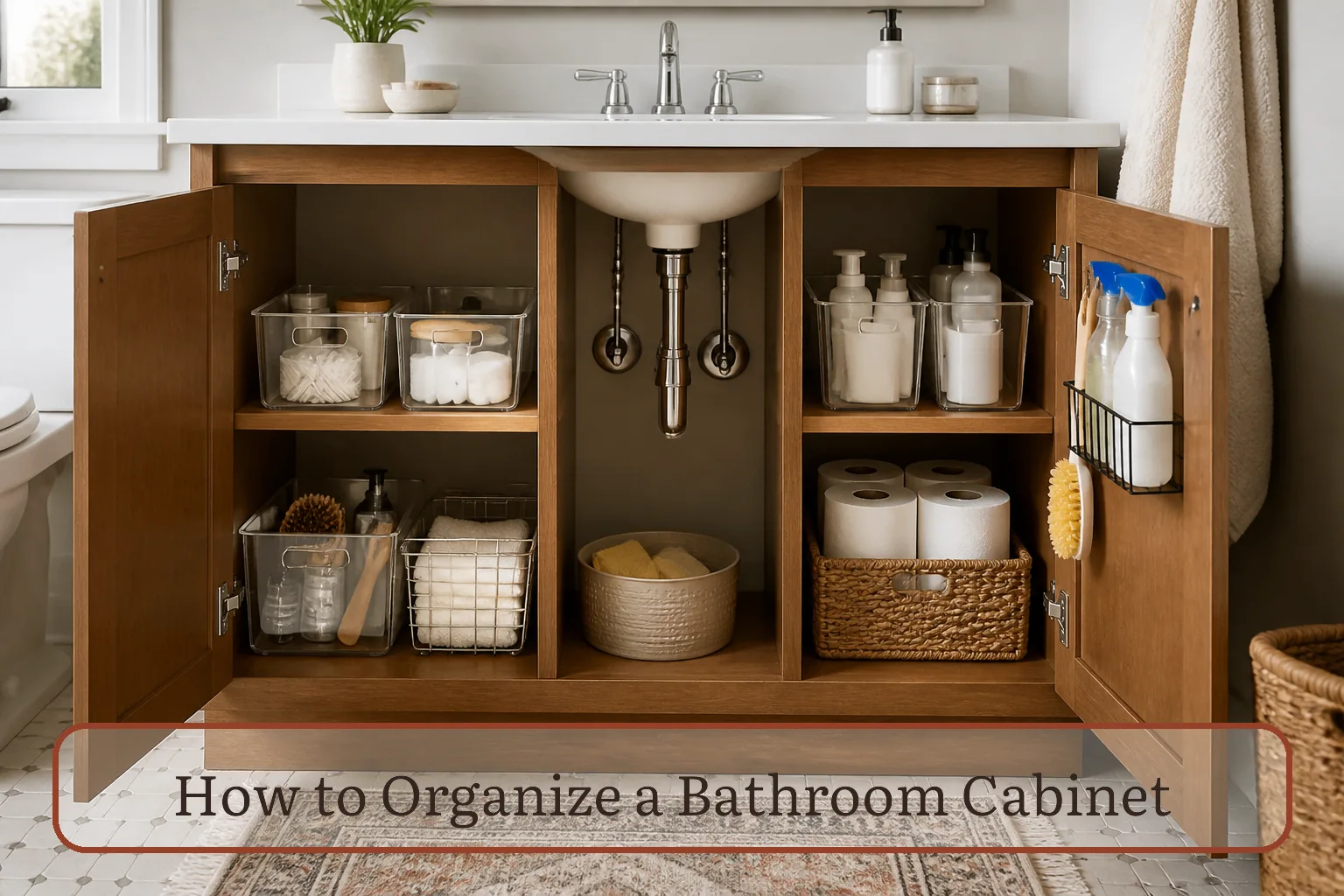
Separate the cabinet from its riskiest contents
A bathroom cabinet can hold toiletries, paper goods, grooming tools, and limited backstock, but not every bathroom product belongs together. Medicine follows its own label for temperature, moisture, light, refrigeration, and access; a humid room is often a poor default. Household cleaners, drain products, razors, and other hazards require secure storage appropriate to children or vulnerable people in the home.
CPSC advises using cabinet latches or locks to keep children from accessing medicines and household cleaners and notes that child-resistant packaging is not childproof. Keep hazardous products in their original containers, resecure closures, and store them away from food and medicine. If the only under-sink cabinet cannot be made secure and dry, relocate those products rather than disguising them in decorative bottles.
Bathroom-cabinet item routing table
| Item group | Best cabinet condition | Keep or relocate rule | Visible warning |
|---|---|---|---|
| Daily toiletries | Dry, easy-reach bin with labels facing up or forward | Keep one open product per function plus a true shared item | Leaking pump, cracked cap, or changed product |
| Cosmetics and skin care | Dry zone protected from temperature extremes and shower spray | Mark the open date when useful; follow maker storage and period-after-opening guidance | FDA says discard cosmetics that change color or smell |
| Medicines and medicated products | Whatever secure temperature/moisture location the drug label specifies | Relocate when the bathroom does not meet the label or access requirement | Unreadable label, expired date, damaged packaging, or uncertain identity |
| Cleaning chemicals | Locked, upright, original containers in a compatible dry tray | Relocate if the cabinet cannot prevent child access or protect packages | Leak, corrosion, swelling, fumes, or missing label |
| Electric grooming tools | Completely dry bin away from plumbing and wet products | Unplug, cool, and store with cord loose according to the product guide | Damaged cord, hot tool, water exposure, or blocked ventilation |
| Paper and textile supplies | Upper dry shelf with room for air and retrieval | Keep only the quantity that fits without touching pipes or floor | Dampness, staining, pest evidence, or persistent odor |
Measure usable space around hinges and plumbing
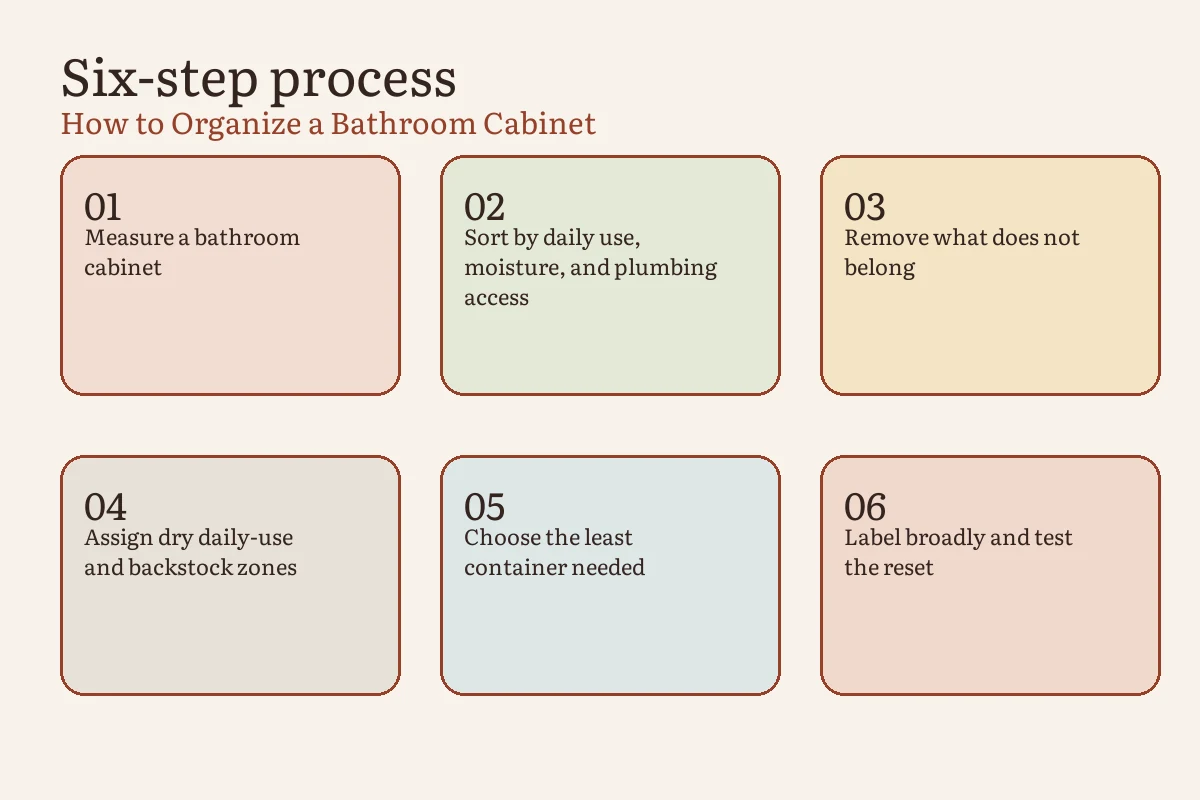
Measure inside width, depth, and height with the door closed, then subtract hinge projection, door hardware, pipes, disposal or electrical components, shelf supports, and the hand space needed to lift a bin. Under a sink, photograph the shutoff valves, trap, supply lines, drain joints, and cabinet floor. These features form a no-storage access zone.
Use painter’s tape to outline the available footprint before buying bins. Test the tallest pump bottle and the widest grooming tool. A container is too deep when front items hide leaks and back items; it is too heavy when the intended user cannot lift it without striking a pipe. Clear or open-front bins help only if labels and small drips remain visible.
Sort one section through five exits
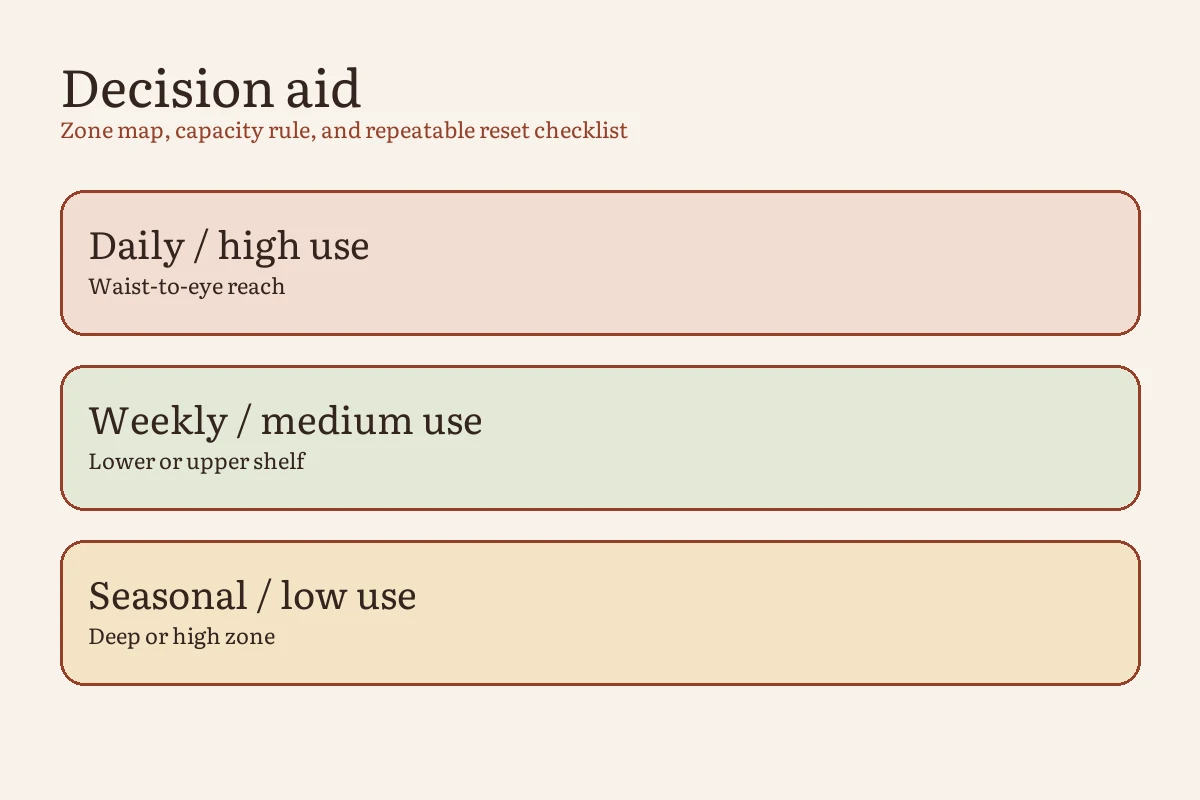
- Daily use: products used most mornings or evenings and safe to store in this location.
- Occasional use: items used weekly or for a specific grooming task; place them higher or farther back in a lift-out kit.
- Backup: one sealed replacement for a product the household reliably finishes. Store surplus elsewhere rather than turning the bathroom into inventory.
- Relocate: medicines, heat-sensitive cosmetics, hazardous cleaners, hot or wet electric tools, bulk towels, and anything owned by another room.
- Discard or resolve: empty packages, broken tools, leaking products, expired drugs, changed cosmetics, and unknown items. Follow the label, manufacturer, FDA medicine-disposal guidance, and local hazardous-waste rules; do not pour products together.
Finish that section before opening the next. This keeps labels attached, prevents incompatible products from mixing on the floor, and leaves the sink usable during the project.
Give daily routines one lift-out kit each
Create a morning kit, evening kit, hair kit, or shaving kit only when the contents are regularly used together. One person should be able to lift the container, complete the routine, and return it without unpacking other categories. Stand bottles upright and preserve every ingredient, use, warning, and expiration label.
A turntable can work for short bottles on a square shelf, but measure its rotating diameter and the tallest product first. It fails when tall pumps strike the shelf above or when a back corner becomes unusable. Drawer units need room to open fully without hitting a cabinet door, pipe, or opposite wall. Choose the mechanism after the motion test.
| Storage problem | Possible organizer | Pass test | Failure signal |
|---|---|---|---|
| Small items disappear behind bottles | Shallow open tray or low divider | Every item is visible and retrievable from the front | The tray becomes a mixed catchall |
| A routine uses several products | One lift-out task kit | It can be removed without hitting hinges or plumbing | It is too heavy or contains unrelated backups |
| Short bottles waste shelf height | Stable shelf riser rated for the load | Lower labels remain visible and upper items cannot fall | Riser blocks the door or creates an unstable stack |
| Under-sink pipes divide the cabinet | Two shallow side bins with an open center | Valves, trap, joints, and cabinet floor can be inspected | A bin must bend a supply line or conceal moisture |
| Backstock crowds open products | One labeled backup bin on a separate shelf | Capacity is fixed at one replacement per proven-use item | Duplicates expire or the bin prevents daily retrieval |
| Children can reach a hazard | Correctly installed lock plus relocation when needed | Device reengages after every use and adults can operate it | The product remains accessible through a gap or weak latch |
Make leaks easy to detect
Under a sink, keep the cabinet floor visible around plumbing. A shallow waterproof tray can contain a small product drip, but it should not cover the whole floor or trap water from a leaking pipe. Inspect supply connections, shutoffs, and the trap during the weekly reset. Swelling, staining, softness, corrosion, or musty odor requires source repair and drying, not a larger organizer.
Do not fasten organizers into a cabinet wall without checking for pipes, wiring, mirror backing, and suitable structure. Removable side bins and tension-free shelves are often safer than drilling in an unknown wet-wall cavity. Any plumbing, electrical, ventilation, or structural change belongs with the qualified trade and applicable code.
Use condition and label dates for cosmetics
FDA notes that U.S. law does not require cosmetics to display an expiration date and that shelf life varies with product, use, and storage. Moisture, temperature change, light, air, and repeated applicator contact can affect a product. Keep containers clean and tightly closed, protect them from temperature extremes, and mark the opening date if it helps follow the maker’s guidance.
Discard cosmetics that change color or smell, and stop using a product after an unexpected reaction. Do not add water or saliva to revive dried mascara, share makeup, or let daily convenience override a product warning. Sunscreens, acne treatments, and some other bathroom items may be drugs or drug-cosmetic combinations, so their labeled expiration and storage directions have different legal significance.
The weekly cabinet check
- Return each routine kit and remove products that migrated from another room.
- Close caps, stand bottles upright, and wipe a small product drip using its label directions.
- Confirm locks and latches engage and hazardous products remain in original containers.
- Look under and behind bins for moisture, swelling, corrosion, pests, or changed products.
- Keep plumbing, shutoffs, outlets, vents, and the cabinet floor accessible and visible.
Frequently asked questions
What should go under the bathroom sink?
Use the dry side areas for a small number of compatible daily or cleaning products, in secure original containers where required. Keep the center and floor around valves, supply lines, drain joints, and the trap visible. Avoid paper goods, medicines, electric tools, or bulk backstock where a leak could damage them.
How many backup toiletries should I keep?
Start with one sealed replacement for each product the household consistently finishes. Increase only when the measured bin fits, the product remains within its labeled shelf life, and the extra stock does not hide open products or plumbing.
Should family members share one bathroom bin?
Share by routine only for genuinely shared products. Separate personal prescriptions, razors, eye cosmetics, and items with different safety or hygiene requirements. A named lift-out kit is often easier to return than a deep bin holding everyone’s unrelated products.
Sources and editorial method
Every Inch Home created the routing table, five-exit sort, organizer tests, and weekly cabinet check for this guide. Child-access and original-container boundaries were checked against current CPSC guidance; cosmetic shelf-life and condition advice was checked against current FDA guidance. Product labels and local medicine, chemical, electrical, plumbing, and waste rules control.