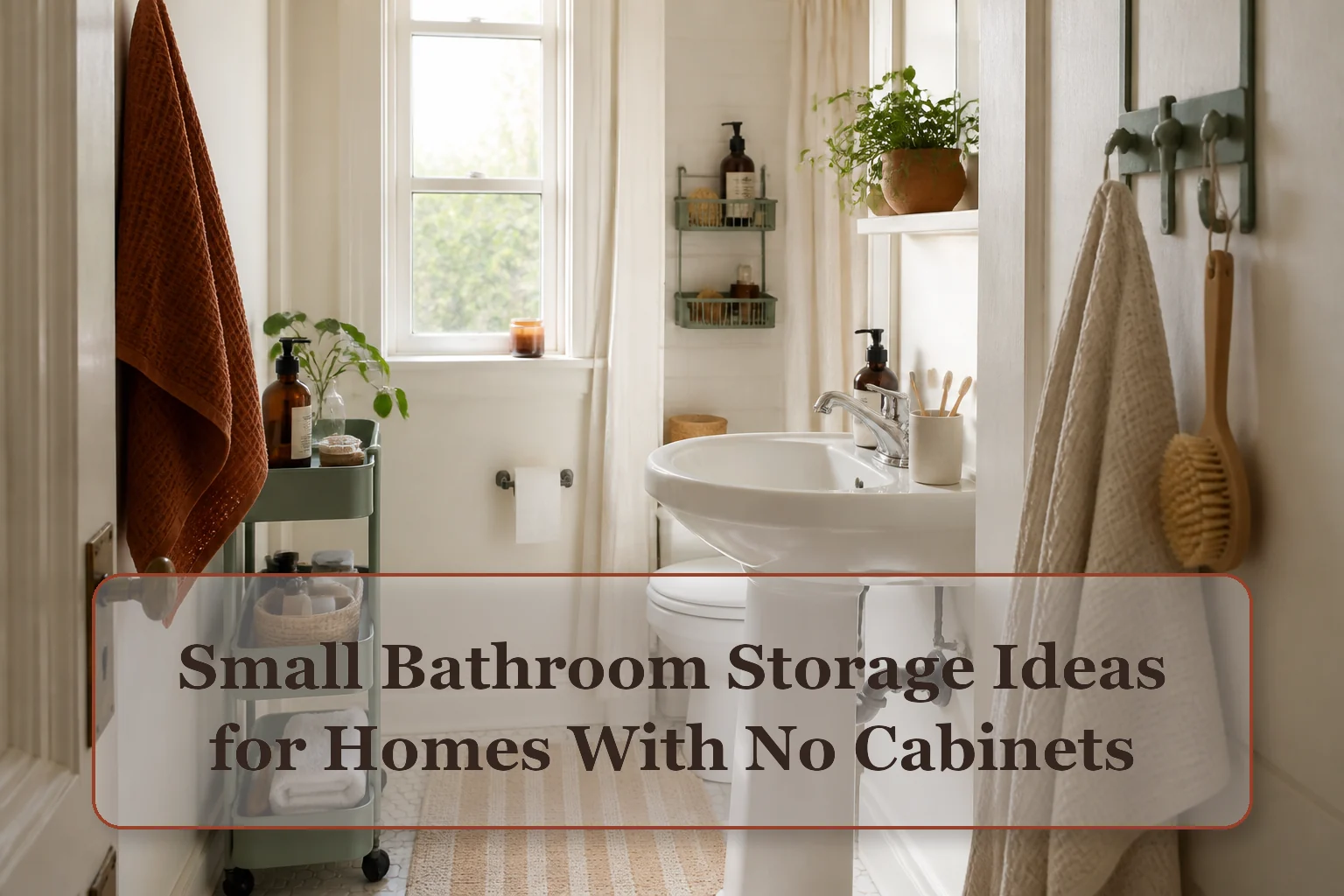
Start with four zones: sink reach, shower reach, dry backup, and cleaning. Each item should belong to one zone before you choose a shelf, cart, basket, hook, or over-door solution.
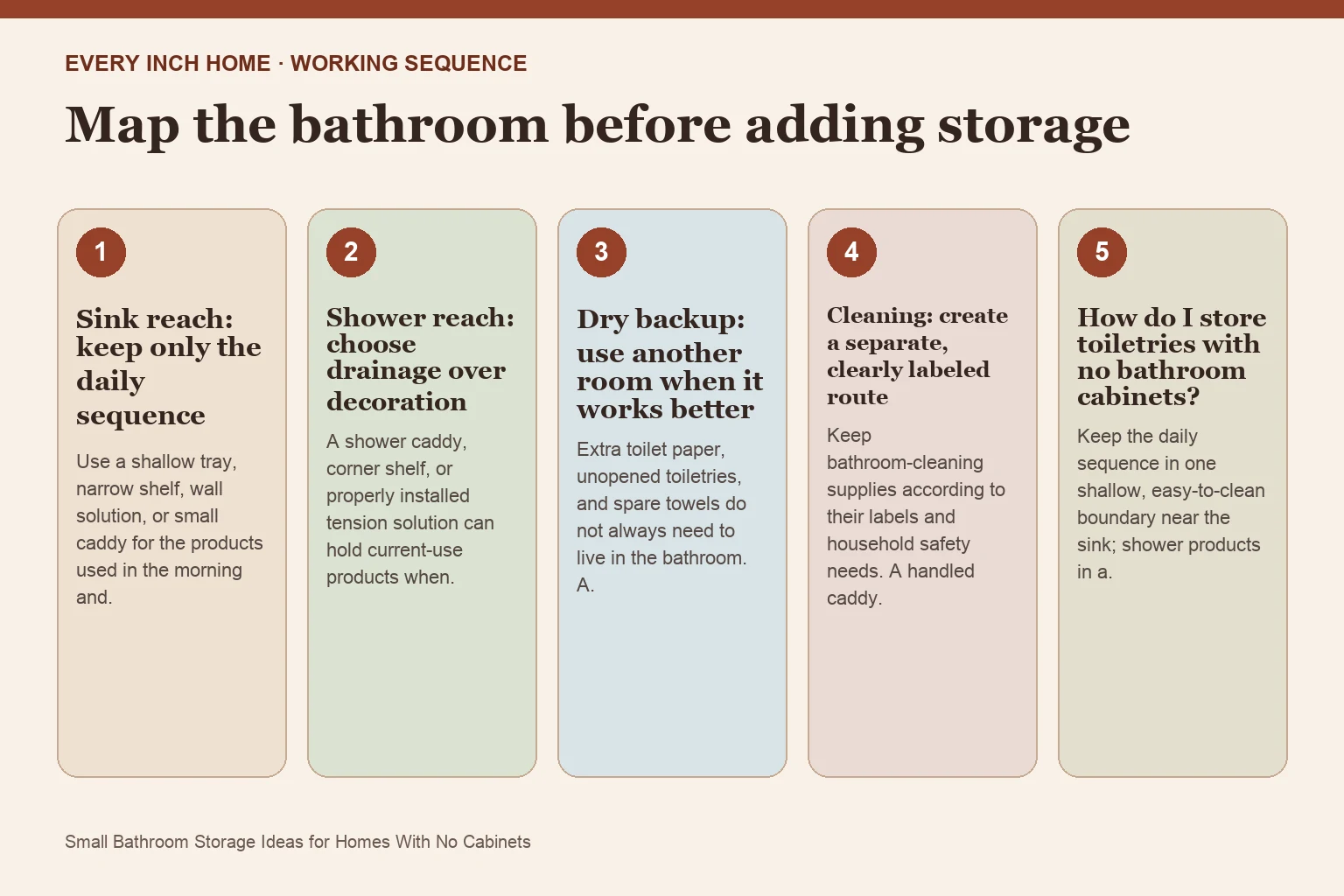
Map the bathroom before adding storage
- Open the door fully and mark the swing or sliding path.
- Check the walking and standing space needed at the sink, toilet, and shower or tub.
- Note damp, splash-prone, warm, or poorly ventilated areas.
- Measure usable wall, over-toilet, beside-sink, and door space.
- Check pipes, outlets, switches, vents, tile, and lease restrictions.
Small bathroom storage ideas by zone
Sink reach: keep only the daily sequence
Use a shallow tray, narrow shelf, wall solution, or small caddy for the products used in the morning and evening. Keep the category bounded so the sink edge remains usable and easy to clean. Move backups and occasional grooming tools out of prime reach.
Shower reach: choose drainage over decoration
A shower caddy, corner shelf, or properly installed tension solution can hold current-use products when it is compatible with the enclosure and manufacturer directions. Avoid overloading fixtures or creating containers that trap water. Keep only current products in the wettest zone.
Dry backup: use another room when it works better
Extra toilet paper, unopened toiletries, and spare towels do not always need to live in the bathroom. A nearby linen shelf, closet basket, or bedroom storage zone may protect limited bathroom capacity. Follow each product’s storage label, especially for medicines and items affected by heat or moisture.
Cleaning: create a separate, clearly labeled route
Keep bathroom-cleaning supplies according to their labels and household safety needs. A handled caddy stored elsewhere can preserve bathroom space and reduce open chemical storage. Do not mix household cleaners, and keep products in original labeled containers.
No-cabinet storage options to consider
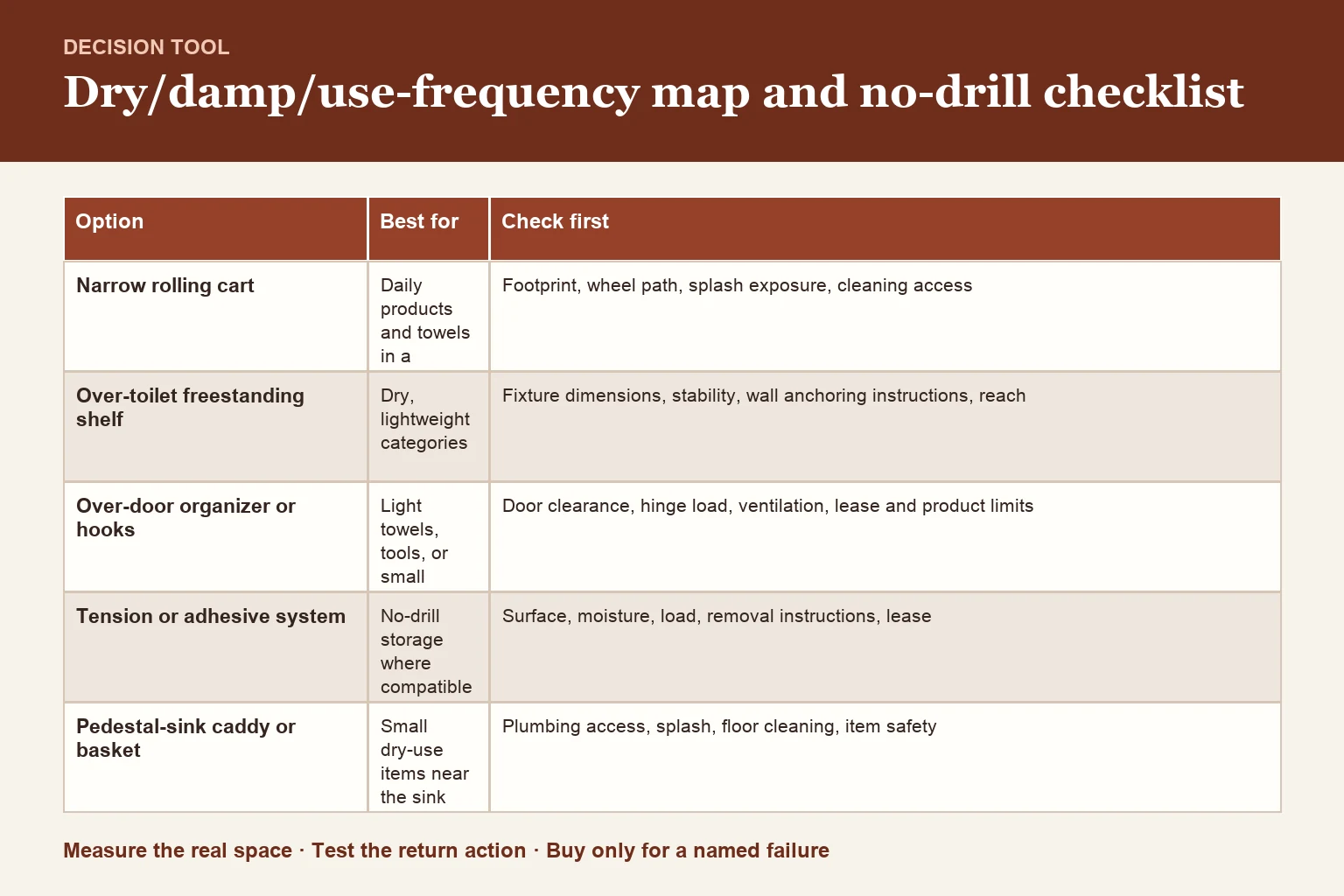
| Option | Best for | Check first |
|---|---|---|
| Narrow rolling cart | Daily products and towels in a movable boundary | Footprint, wheel path, splash exposure, cleaning access |
| Over-toilet freestanding shelf | Dry, lightweight categories | Fixture dimensions, stability, wall anchoring instructions, reach |
| Over-door organizer or hooks | Light towels, tools, or small categories | Door clearance, hinge load, ventilation, lease and product limits |
| Tension or adhesive system | No-drill storage where compatible | Surface, moisture, load, removal instructions, lease |
| Pedestal-sink caddy or basket | Small dry-use items near the sink | Plumbing access, splash, floor cleaning, item safety |
| Nearby out-of-room basket | Backups and occasional items | A clear return route and product storage directions |
The no-drill decision checklist
- Name the category and its maximum boundary.
- Measure the product and the space with doors and fixtures in use.
- Check the wall, tile, door, or fixture material.
- Read the storage product’s load, moisture, installation, and removal instructions.
- Confirm lease rules before attaching anything.
- Test whether the solution can be cleaned around and reset easily.
What should not default to open bathroom storage
Medicines, products with specific temperature or moisture directions, chemicals, sharp tools, and items that need child- or pet-resistant storage require more than visual organization. Follow the product label and your household’s safety needs; the bathroom may not be the right storage location.
Frequently asked questions
How do I store toiletries with no bathroom cabinets?
Keep the daily sequence in one shallow, easy-to-clean boundary near the sink; shower products in a draining wet-zone solution; and backups in a dry nearby location.
Are over-the-toilet shelves safe?
They can be useful when correctly sized, stable, installed according to manufacturer instructions, and appropriate for the wall and household. Keep heavy or hazardous items out of difficult reach.
How can renters add bathroom storage without drilling?
Consider measured freestanding, over-door, tension, or compatible removable solutions after checking the surface, moisture, load, product instructions, and lease.