
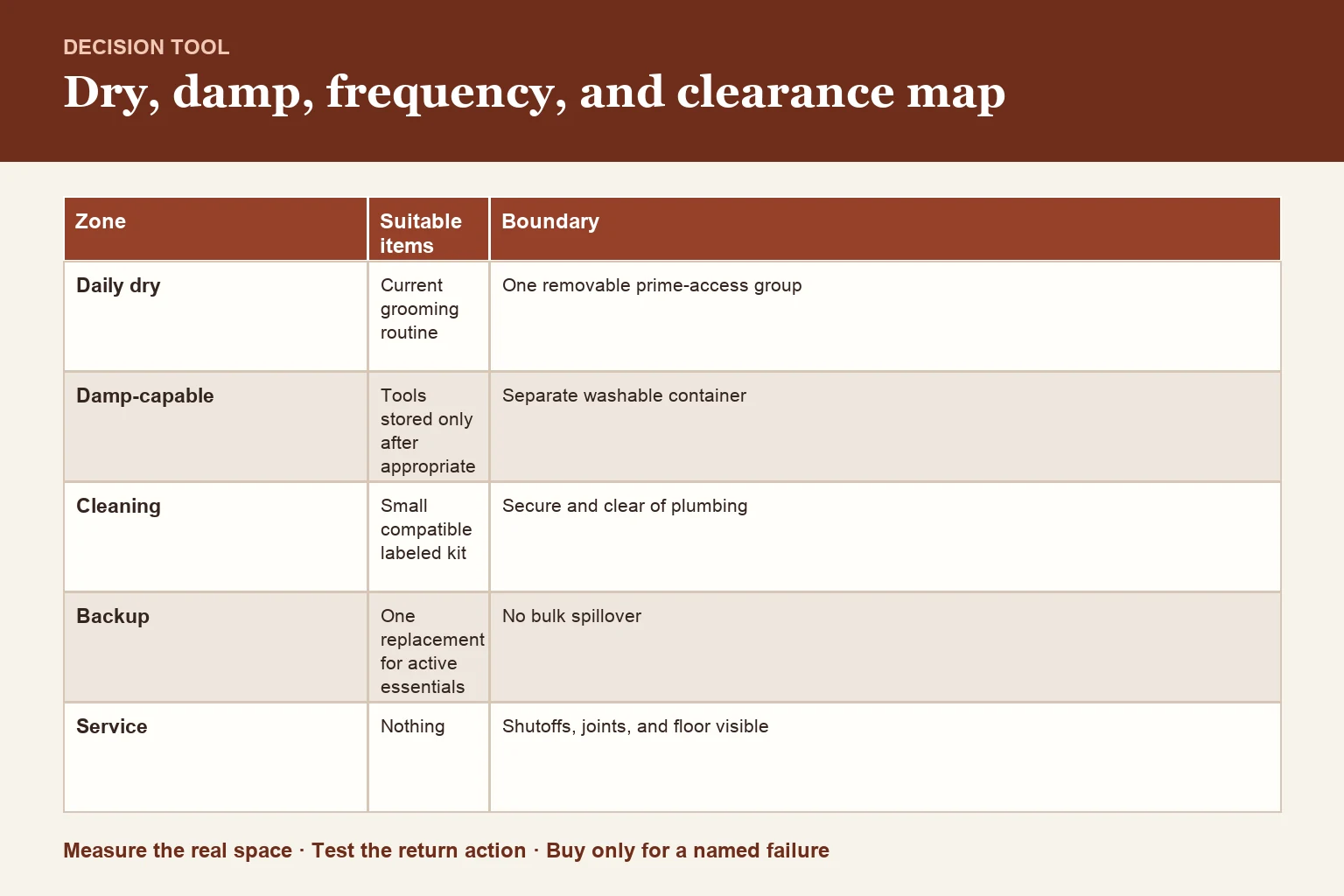
Use the tool: Work toward the dry, damp, frequency, and clearance map; test it with the real items and route before expanding storage.
Divide the vanity into service and storage space
- Service envelope: Mark shutoffs, trap, supply lines, hinges, outlets, and the floor beneath joints. This space must remain visible and reachable.
- Moisture pattern: Check splash, condensation, slow-drying tools, and any current leak evidence. Storage cannot solve persistent moisture or plumbing problems.
- Use frequency: Separate daily grooming, weekly routines, cleaning tools, and backups. Only the first group deserves prime reach.
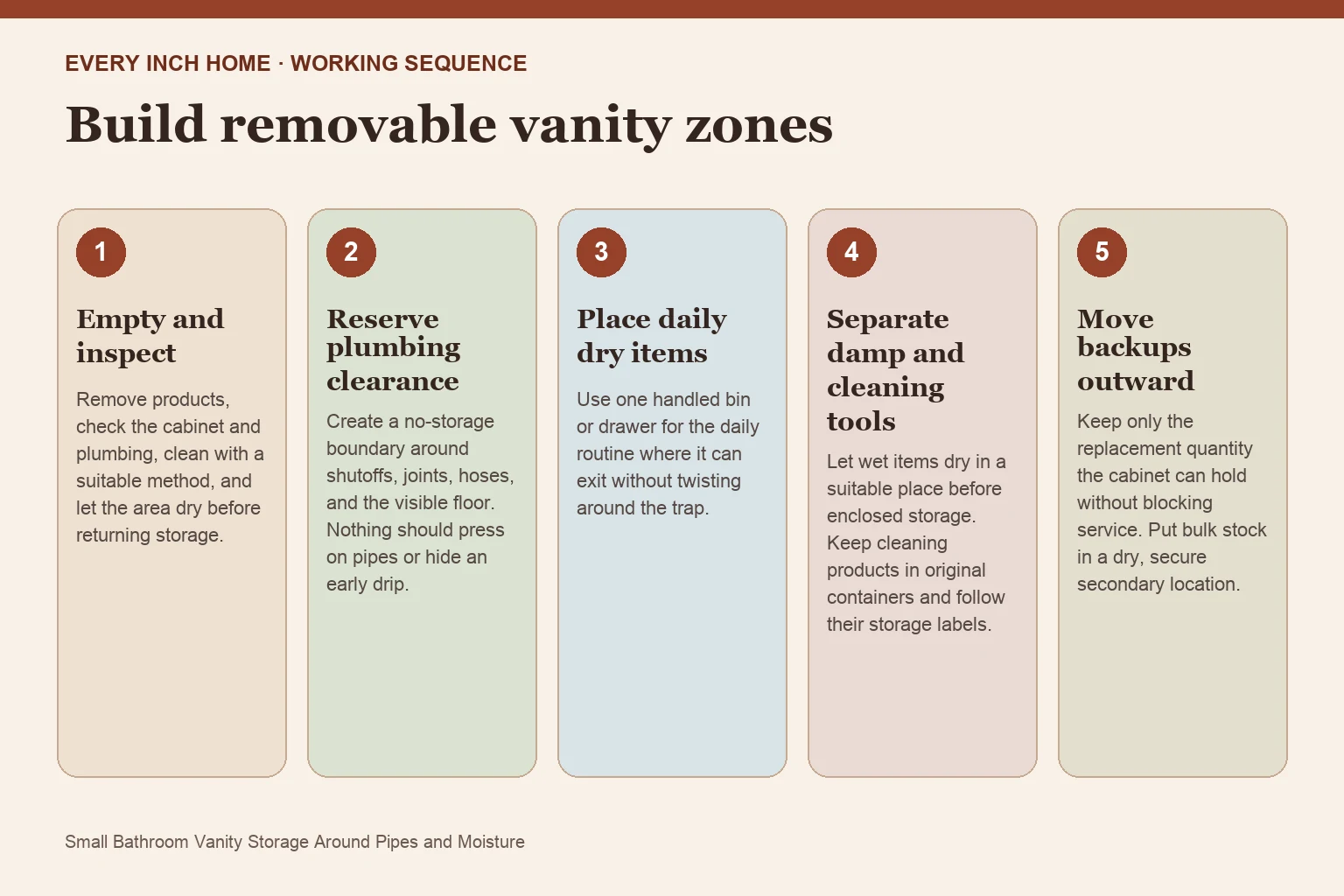
Build removable vanity zones
1. Empty and inspect
Remove products, check the cabinet and plumbing, clean with a suitable method, and let the area dry before returning storage.
2. Reserve plumbing clearance
Create a no-storage boundary around shutoffs, joints, hoses, and the visible floor. Nothing should press on pipes or hide an early drip.
3. Place daily dry items
Use one handled bin or drawer for the daily routine where it can exit without twisting around the trap.
4. Separate damp and cleaning tools
Let wet items dry in a suitable place before enclosed storage. Keep cleaning products in original containers and follow their storage labels.
5. Move backups outward
Keep only the replacement quantity the cabinet can hold without blocking service. Put bulk stock in a dry, secure secondary location.
Dry, damp, frequency, and clearance map
| Zone | Suitable items | Boundary |
|---|---|---|
| Daily dry | Current grooming routine | One removable prime-access group |
| Damp-capable | Tools stored only after appropriate drying | Separate washable container |
| Cleaning | Small compatible labeled kit | Secure and clear of plumbing |
| Backup | One replacement for active essentials | No bulk spillover |
| Service | Nothing | Shutoffs, joints, and floor visible |
Choose organizers by the pipe-shaped gap
Measure left and right rectangles separately, plus the door opening, hinge intrusion, pipe height, and lift path. Modular small bins often fit better than one large U-shaped unit, but every piece should leave quickly. Verify product materials and dimensions; avoid permanent installations that block service.
Inspect before refilling products
Once a month, remove the bins, check for moisture, damage, expired or deteriorated products, and packaging leaks, then wipe and dry the cabinet. Return only the active routine and capped backups. Treat persistent dampness, swelling, odor, corrosion, or active leaks as maintenance issues.
Frequently asked questions
What should go in a bathroom vanity?
Keep daily dry grooming items, a small appropriately stored cleaning kit, and limited backups while preserving plumbing and moisture inspection.
How do I organize a vanity around pipes?
Measure the separate usable rectangles, reserve a service envelope, and use small removable bins that lift out without touching plumbing.
Can towels be stored under a bathroom sink?
Only when the cabinet is reliably dry, clean, and inspectable. In many small bathrooms, a separate dry shelf or linen zone is a safer, easier route.