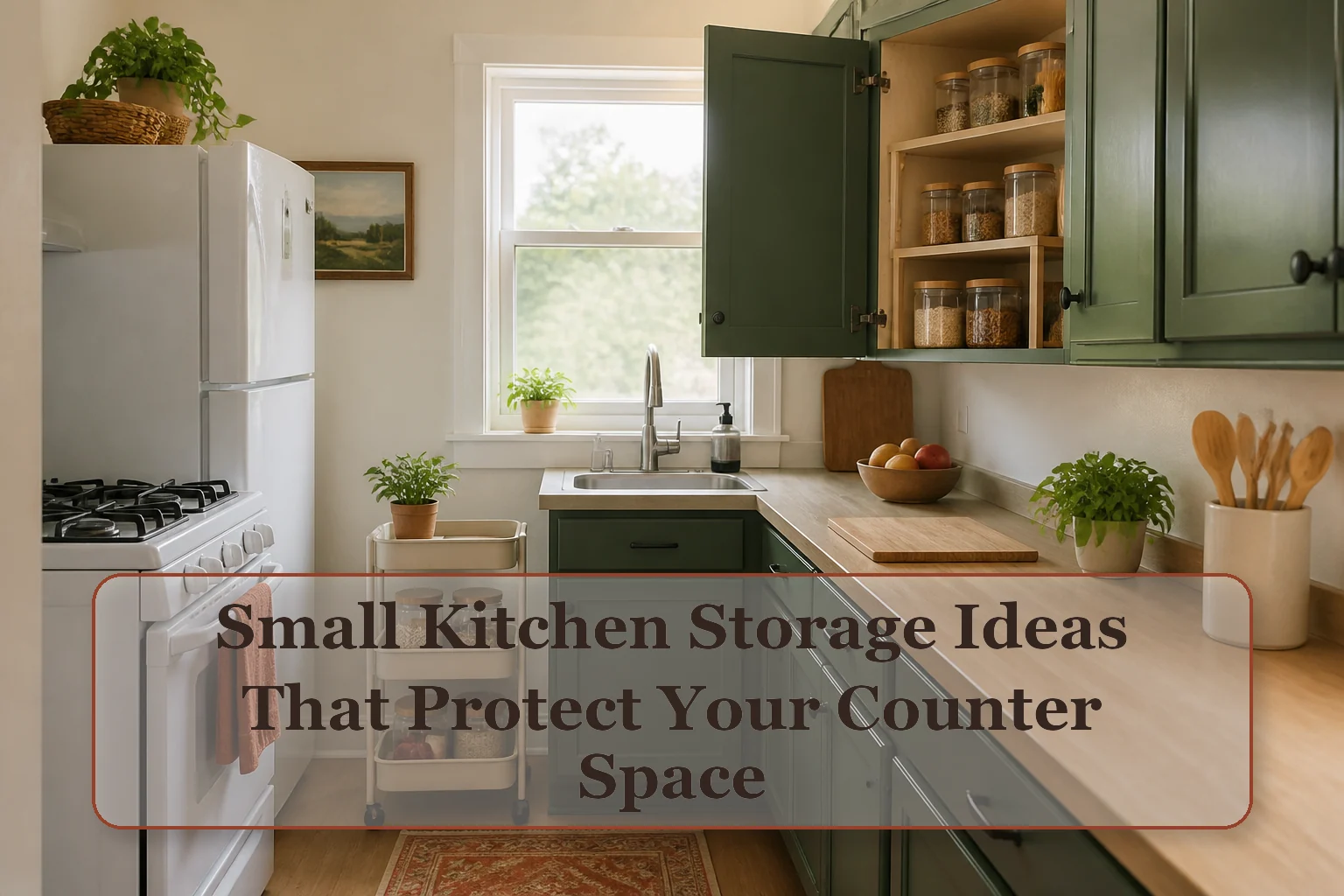
Three kitchen priorities: a clear prep zone, an easy dish route, and food/tool storage you can see and return without unpacking a stack.
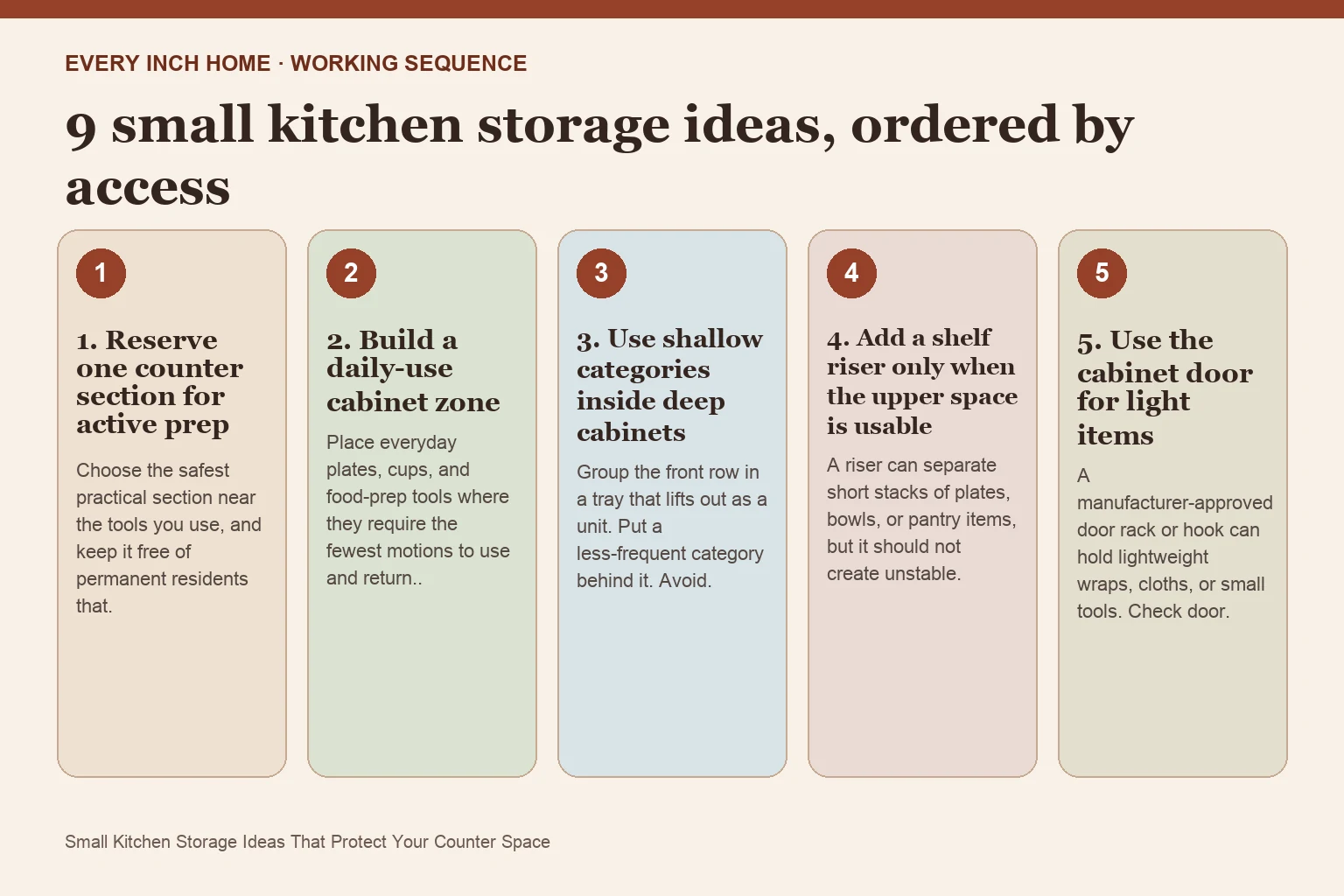
9 small kitchen storage ideas, ordered by access
1. Reserve one counter section for active prep
Choose the safest practical section near the tools you use, and keep it free of permanent residents that can live elsewhere. A clear working area is more valuable than displaying every frequently used appliance.
2. Build a daily-use cabinet zone
Place everyday plates, cups, and food-prep tools where they require the fewest motions to use and return. Move serving pieces, duplicates, and occasional appliances away from this premium zone.
3. Use shallow categories inside deep cabinets
Group the front row in a tray that lifts out as a unit. Put a less-frequent category behind it. Avoid random two-deep storage, which turns the front item into a door blocking everything else.
4. Add a shelf riser only when the upper space is usable
A riser can separate short stacks of plates, bowls, or pantry items, but it should not create unstable towers. Measure interior width, depth, height, hinges, and the item you need to lift out.
5. Use the cabinet door for light items
A manufacturer-approved door rack or hook can hold lightweight wraps, cloths, or small tools. Check door thickness, hinge clearance, closing space, weight rating, and lease rules before mounting anything.
6. Create a no-pantry food zone
Assign one cabinet, cart, or shelf to food rather than scattering packages across every gap. Group by meal action—breakfast, cooking basics, snacks, baking—if that is how you reach for it. Keep expiration and package instructions visible.
7. Store occasional appliances outside the work triangle
If an appliance is used rarely, it does not need counter priority. A lower cabinet, high shelf, nearby dining storage, or another safe dry location may work better. Keep weight and retrieval effort in mind.
8. Use a slim cart only if it has a parking place
A cart can add food, appliance, or serving storage without permanent construction. Measure both the parked footprint and the route needed to roll it out. It should not block a doorway, cabinet, appliance ventilation, or cooking movement.
9. Keep a small open-capacity shelf
Food inventory changes. Leave enough room in one high-change zone for normal groceries or a container waiting to be returned. Packing every shelf to its limit makes the first new item a counter item.
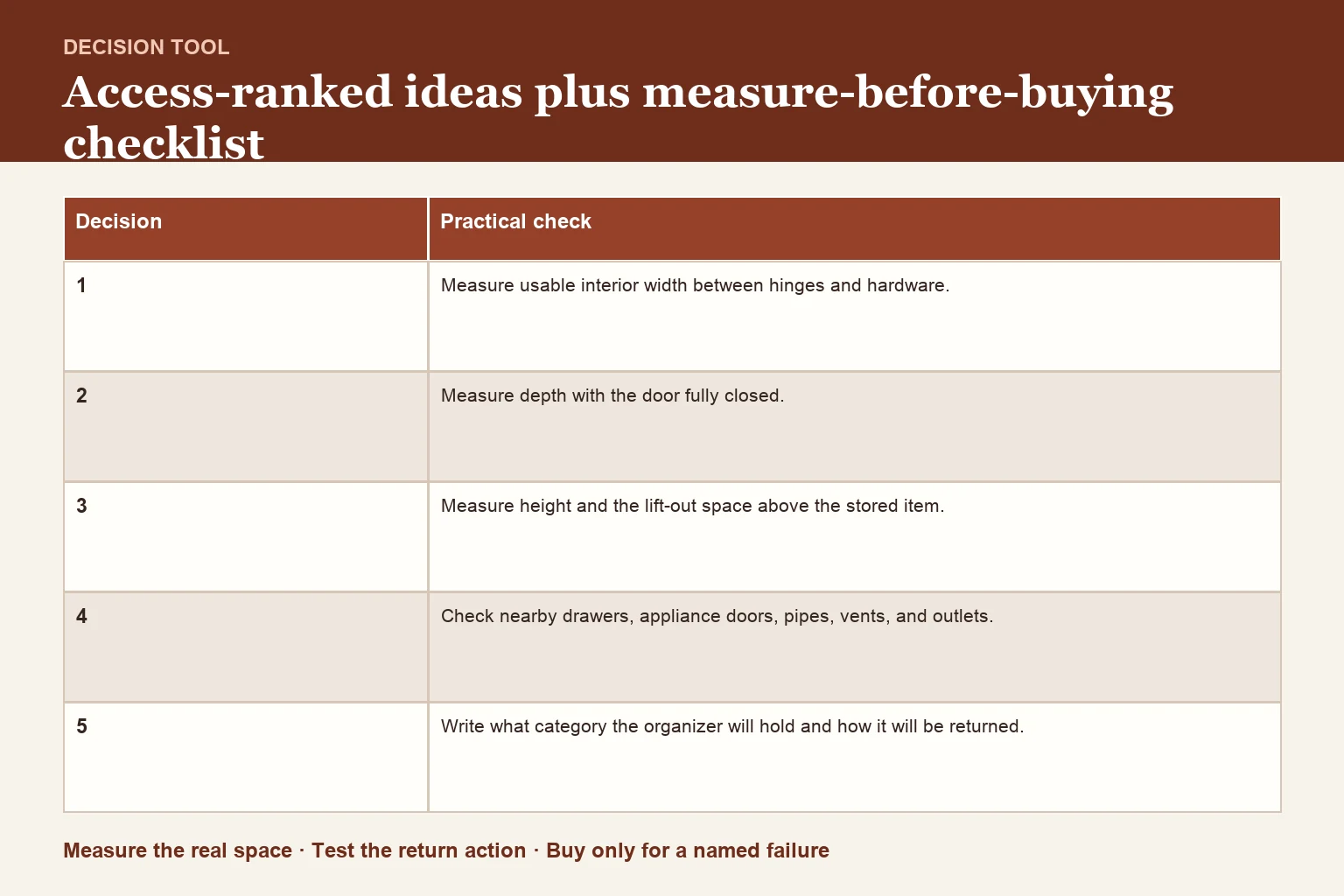
Measure before you buy a kitchen organizer
- Measure usable interior width between hinges and hardware.
- Measure depth with the door fully closed.
- Measure height and the lift-out space above the stored item.
- Check nearby drawers, appliance doors, pipes, vents, and outlets.
- Write what category the organizer will hold and how it will be returned.
- Confirm load, mounting, cleaning, and lease requirements.
Choose what earns counter space
An item may stay if it is used often, supports the counter’s main job, fits without crowding prep, and has a quick reset. Everything else should compete for a cabinet, shelf, cart, or another room—not for the last clear work surface. Use the full five-question kitchen-counter test when the surface keeps filling again.
Frequently asked questions
How do I organize a small kitchen with no pantry?
Create one visible food zone in a cabinet, cart, or shelf; group it by use; place daily ingredients in easiest reach; and limit backup inventory to the measured capacity.
Should I use open shelving in a small kitchen?
Only if it fits the wall, lease, load, cleaning effort, and items you need to store. Open shelves are not automatically easier; they keep contents visible but also exposed.
Where should rarely used kitchen appliances go?
Choose a safe, dry location where the appliance’s weight and shape can be retrieved without moving daily items. Keep manufacturer storage guidance and ventilation needs in mind.