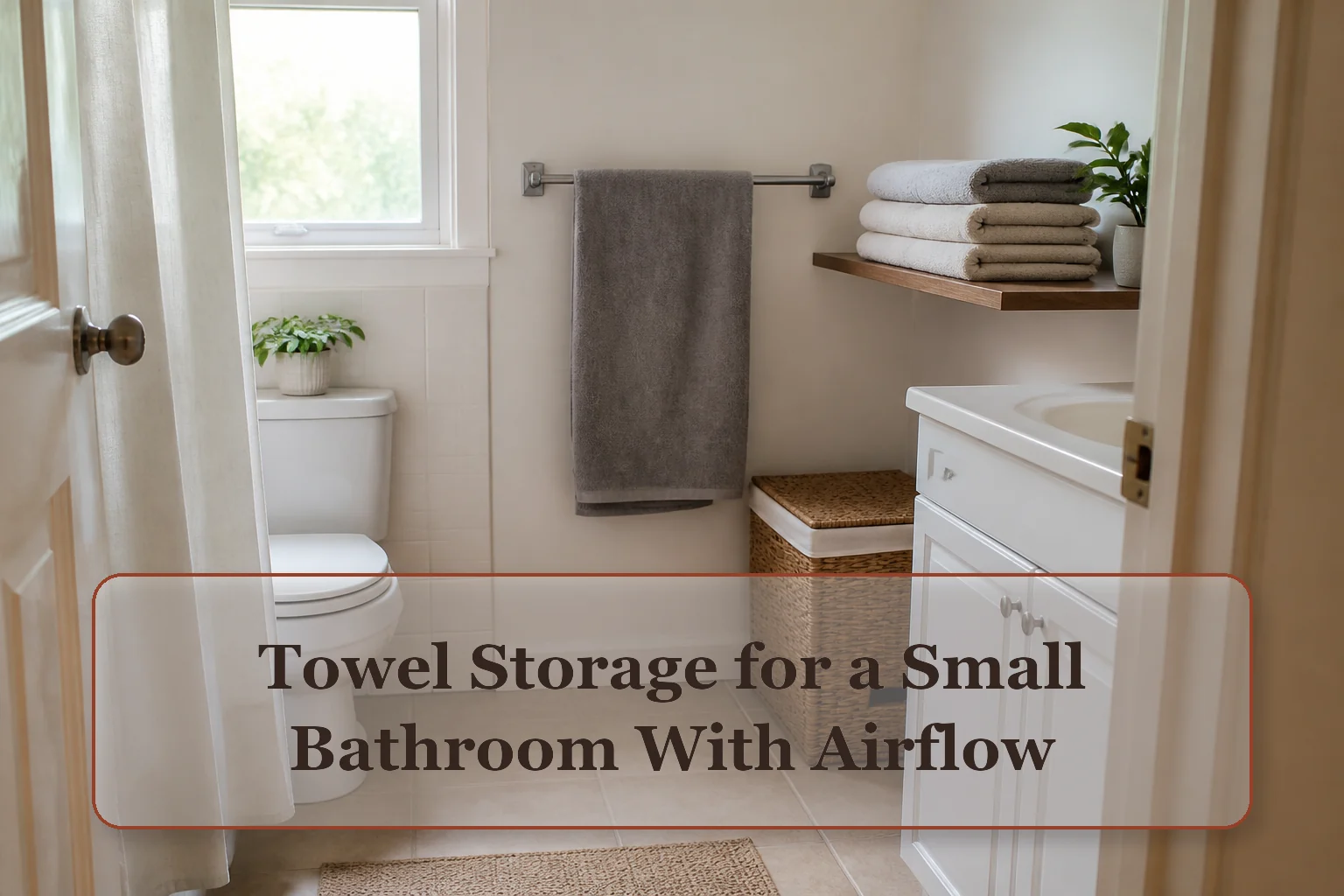
Use the tool: Work toward the towel route and airflow check; test it with the real items and route before expanding storage.
Trace one towel from clean to laundry
- Use: Note where the towel is needed and whether it can spread rather than stay folded while damp. Household members may need separate hooks or bars.
- Dry: Check ventilation, spacing, wall contact, and how quickly the bathroom dries after use. Persistent dampness requires attention beyond storage styling.
- Wash and backup: Place the hamper on the normal exit route and size clean backup stock to the laundry cycle and real guest needs.
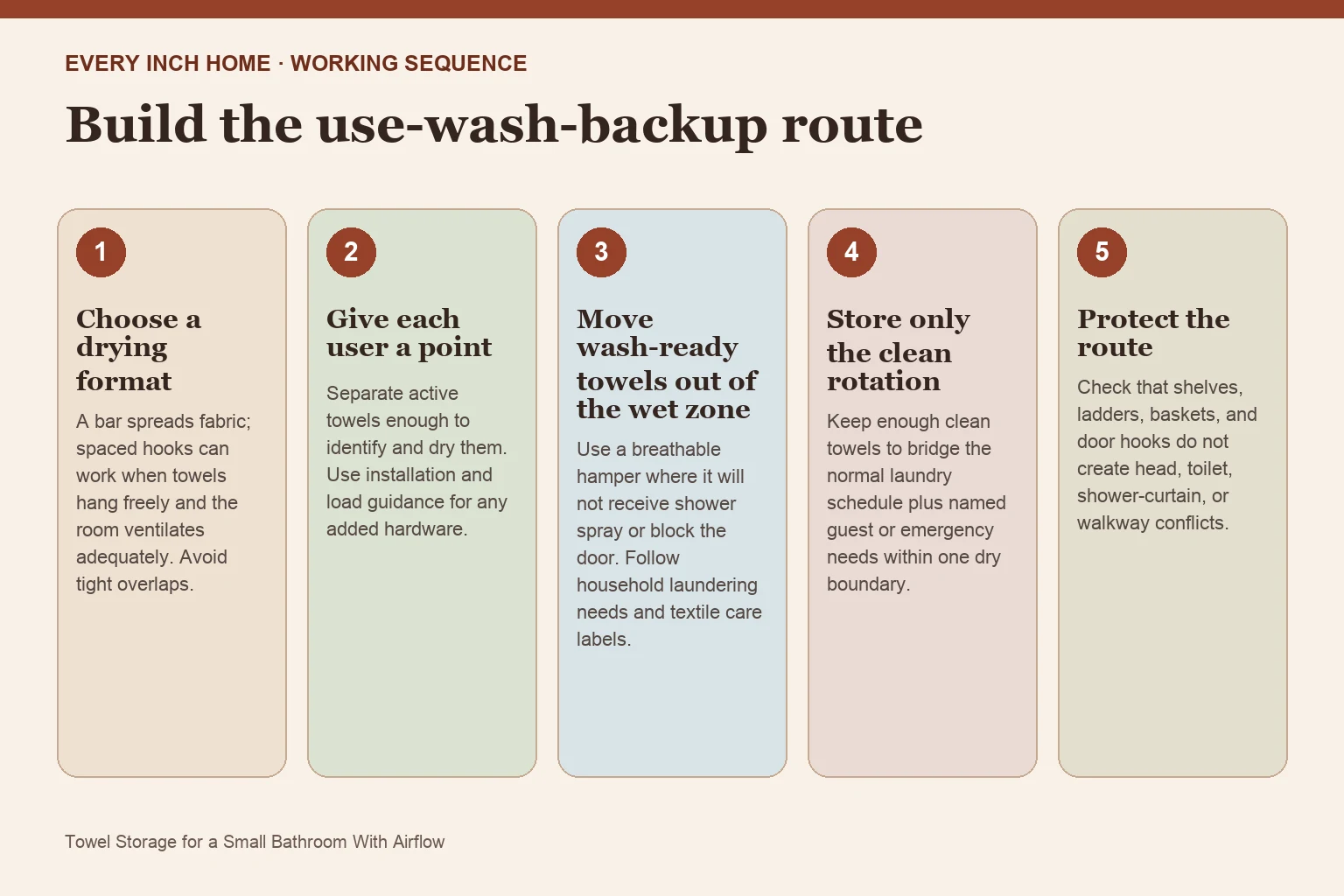
Build the use-wash-backup route
1. Choose a drying format
A bar spreads fabric; spaced hooks can work when towels hang freely and the room ventilates adequately. Avoid tight overlaps.
2. Give each user a point
Separate active towels enough to identify and dry them. Use installation and load guidance for any added hardware.
3. Move wash-ready towels out of the wet zone
Use a breathable hamper where it will not receive shower spray or block the door. Follow household laundering needs and textile care labels.
4. Store only the clean rotation
Keep enough clean towels to bridge the normal laundry schedule plus named guest or emergency needs within one dry boundary.
5. Protect the route
Check that shelves, ladders, baskets, and door hooks do not create head, toilet, shower-curtain, or walkway conflicts.
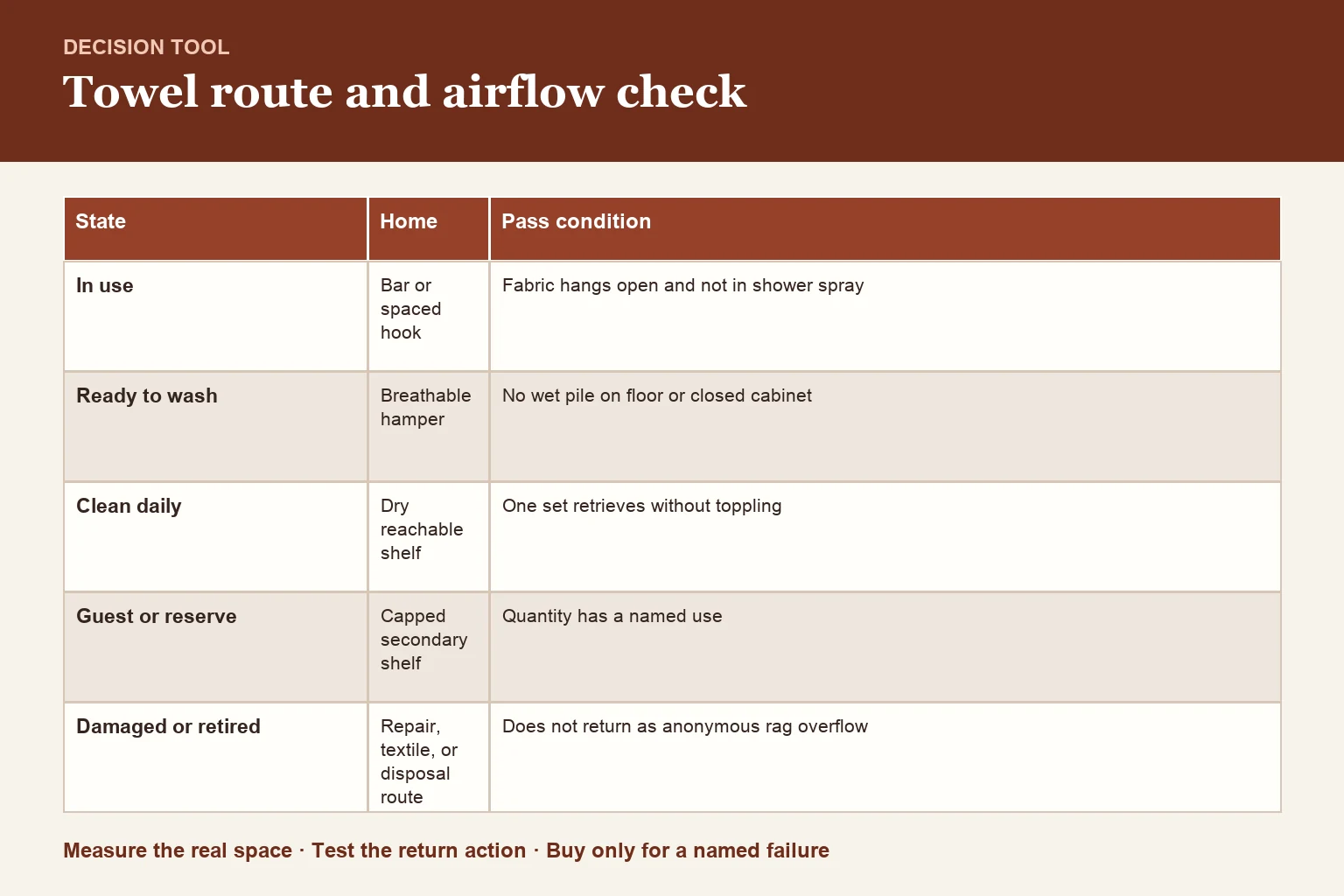
Towel route and airflow check
| State | Home | Pass condition |
|---|---|---|
| In use | Bar or spaced hook | Fabric hangs open and not in shower spray |
| Ready to wash | Breathable hamper | No wet pile on floor or closed cabinet |
| Clean daily | Dry reachable shelf | One set retrieves without toppling |
| Guest or reserve | Capped secondary shelf | Quantity has a named use |
| Damaged or retired | Repair, textile, or disposal route | Does not return as anonymous rag overflow |
Before adding an over-toilet shelf or towel ladder
Measure wall width, fixture clearance, reach, door and shower-curtain movement, base stability, and installation requirements. A tall open unit can hold towels but may expose them to splash or make a narrow room harder to clean. Choose the smallest format that completes the towel route, not the one with the most shelves.
Use laundry day as the capacity audit
Return all clean towels, rotate older usable pieces forward, and confirm the shelf still retrieves cleanly. Wash and dry according to care labels, and investigate persistent mustiness or slow bathroom drying rather than masking it. If the clean supply fits only while towels are in use, reduce the backup count.
Frequently asked questions
Where should towels be stored in a tiny bathroom?
Keep the in-use towel open to dry, wash-ready towels in a breathable hamper, and a small clean rotation in the driest reachable shelf or nearby storage.
Are hooks or bars better for drying towels?
Bars spread fabric more fully; spaced hooks can work when towels hang without overlap and ventilation is adequate. Room conditions and towel size matter.
How many spare towels should I store?
Base backups on household size, laundry frequency, and named guest needs within a shelf that stays easy to retrieve.