
Use the tool: Work toward the bottle limit and placement map; test it with the real items and route before expanding storage.
Map the wet zone before choosing a caddy
- Movement: Trace entry, turning, washing, controls, and exit. Storage cannot narrow a needed handhold or create a shin, shoulder, or curtain collision.
- Water and drainage: Note direct spray, standing water, grout lines, and where bottles drip. The storage itself must drain and remain cleanable.
- Mounting surface: Tile, glass, fiberglass, metal, grout, and painted walls accept different systems. Follow the product and surface instructions and lease rules.
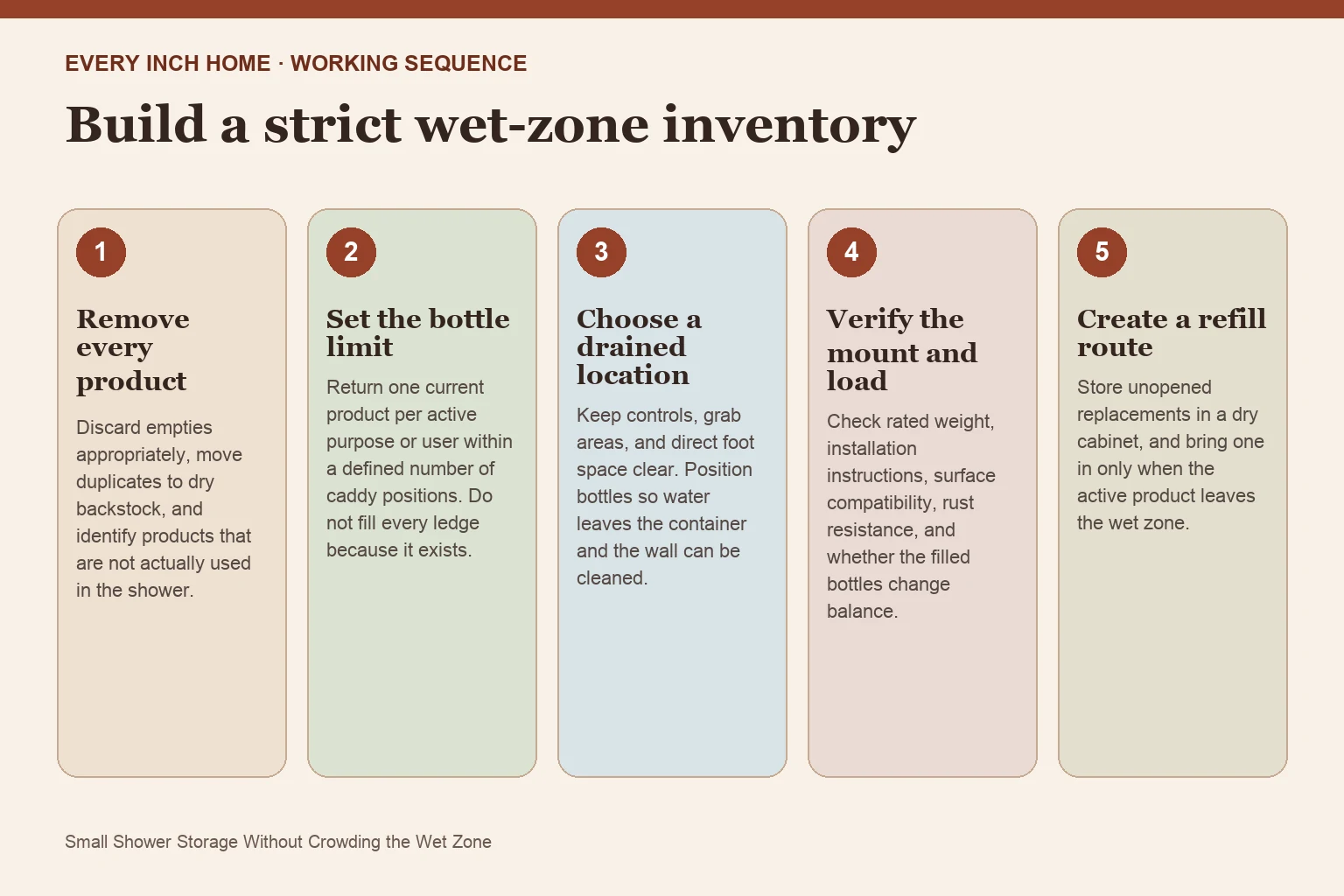
Build a strict wet-zone inventory
1. Remove every product
Discard empties appropriately, move duplicates to dry backstock, and identify products that are not actually used in the shower.
2. Set the bottle limit
Return one current product per active purpose or user within a defined number of caddy positions. Do not fill every ledge because it exists.
3. Choose a drained location
Keep controls, grab areas, and direct foot space clear. Position bottles so water leaves the container and the wall can be cleaned.
4. Verify the mount and load
Check rated weight, installation instructions, surface compatibility, rust resistance, and whether the filled bottles change balance.
5. Create a refill route
Store unopened replacements in a dry cabinet, and bring one in only when the active product leaves the wet zone.
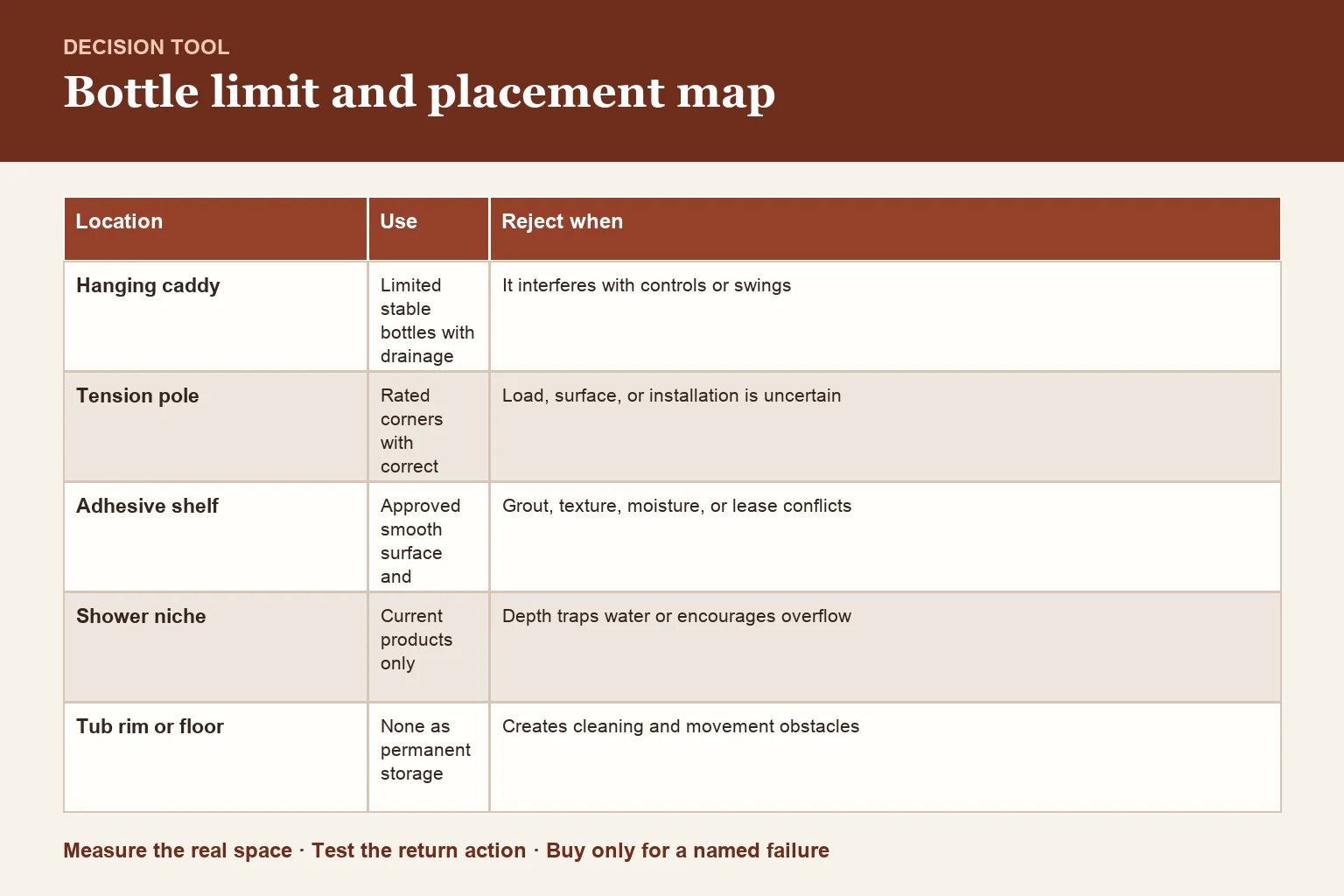
Bottle limit and placement map
| Location | Use | Reject when |
|---|---|---|
| Hanging caddy | Limited stable bottles with drainage | It interferes with controls or swings |
| Tension pole | Rated corners with correct ceiling and tub fit | Load, surface, or installation is uncertain |
| Adhesive shelf | Approved smooth surface and verified load | Grout, texture, moisture, or lease conflicts |
| Shower niche | Current products only | Depth traps water or encourages overflow |
| Tub rim or floor | None as permanent storage | Creates cleaning and movement obstacles |
Buying criteria for shower storage
Compare usable shelf width, bottle height and pump clearance, drainage openings, corrosion-resistant material claims, product weight rating, installation method, and wall compatibility. Verify current specifications. A larger caddy is not better when it encourages extra bottles or reduces body space.
Empty and clean the caddy on a fixed cue
When one bottle empties or during the weekly bathroom routine, remove the active products, clean and dry the caddy as instructed, inspect mounts and corrosion, wipe bottles, and return only the limited set. Stop using hardware that loosens, damages the surface, or no longer carries the load safely.
Frequently asked questions
Where should shampoo be stored in a small shower?
Use a drained, stable caddy or approved shelf outside critical movement and control space, with only current bottles present.
Are adhesive shower shelves safe?
They depend on the exact surface, preparation, load, installation, and moisture conditions. Follow manufacturer instructions and lease requirements.
How many products should stay in the shower?
Keep one active product per real shower purpose or user within a defined caddy limit; store unopened replacements in a dry location.