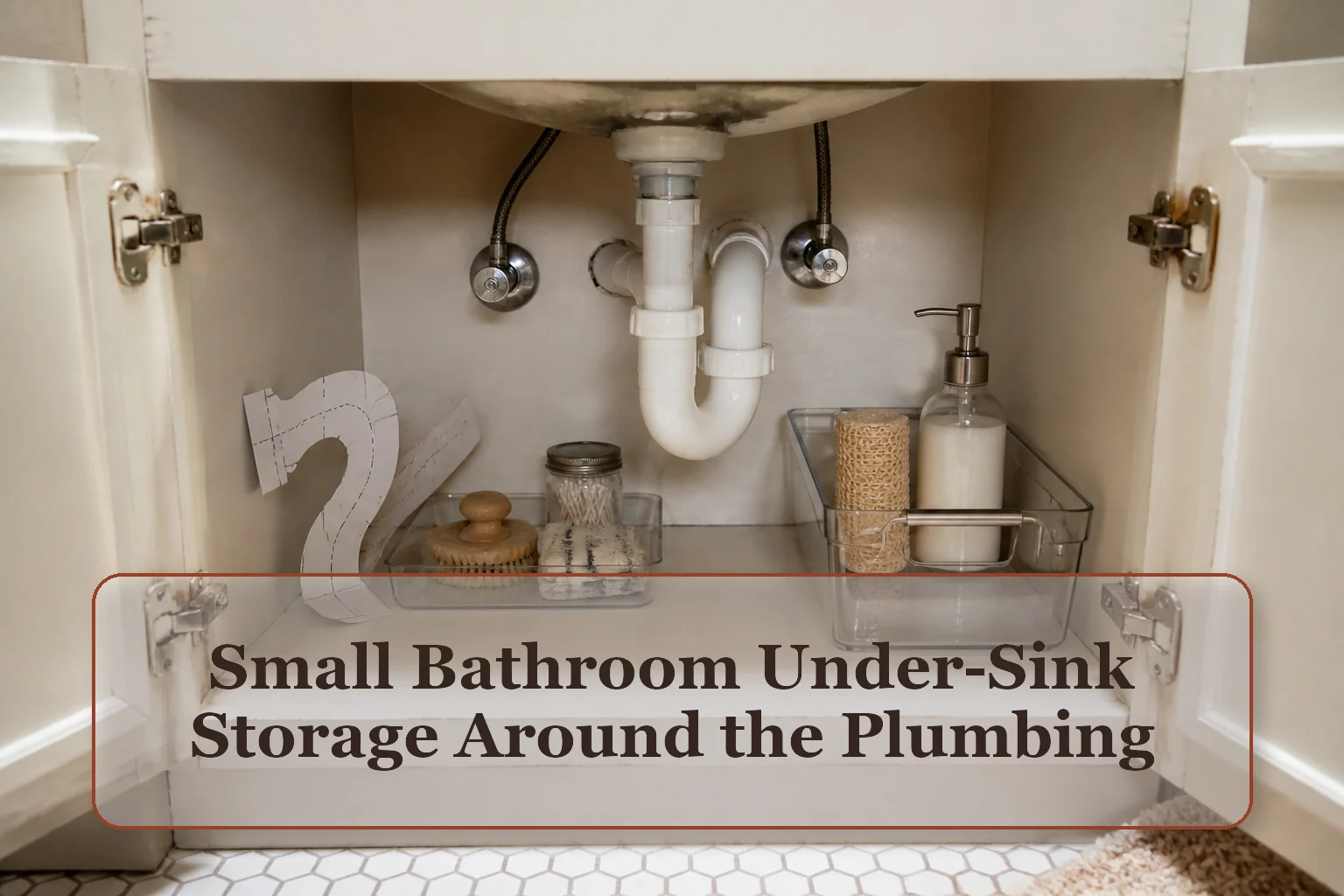
Use the tool: Work toward the pipe-template worksheet; test it with the real items and route before expanding storage.
Make a no-storage plumbing map
- Top view: Sketch the cabinet walls, drain, supply lines, shutoffs, hinges, and door opening. Record each obstruction's widest point, not just the pipe center.
- Front exit: Measure the narrowest door opening and the height required to lift a caddy over the cabinet lip. Interior dimensions alone can mislead.
- Leak sight line: Choose the floor and joint areas you can see from the doorway. Do not put opaque containers in the exact places that need inspection.
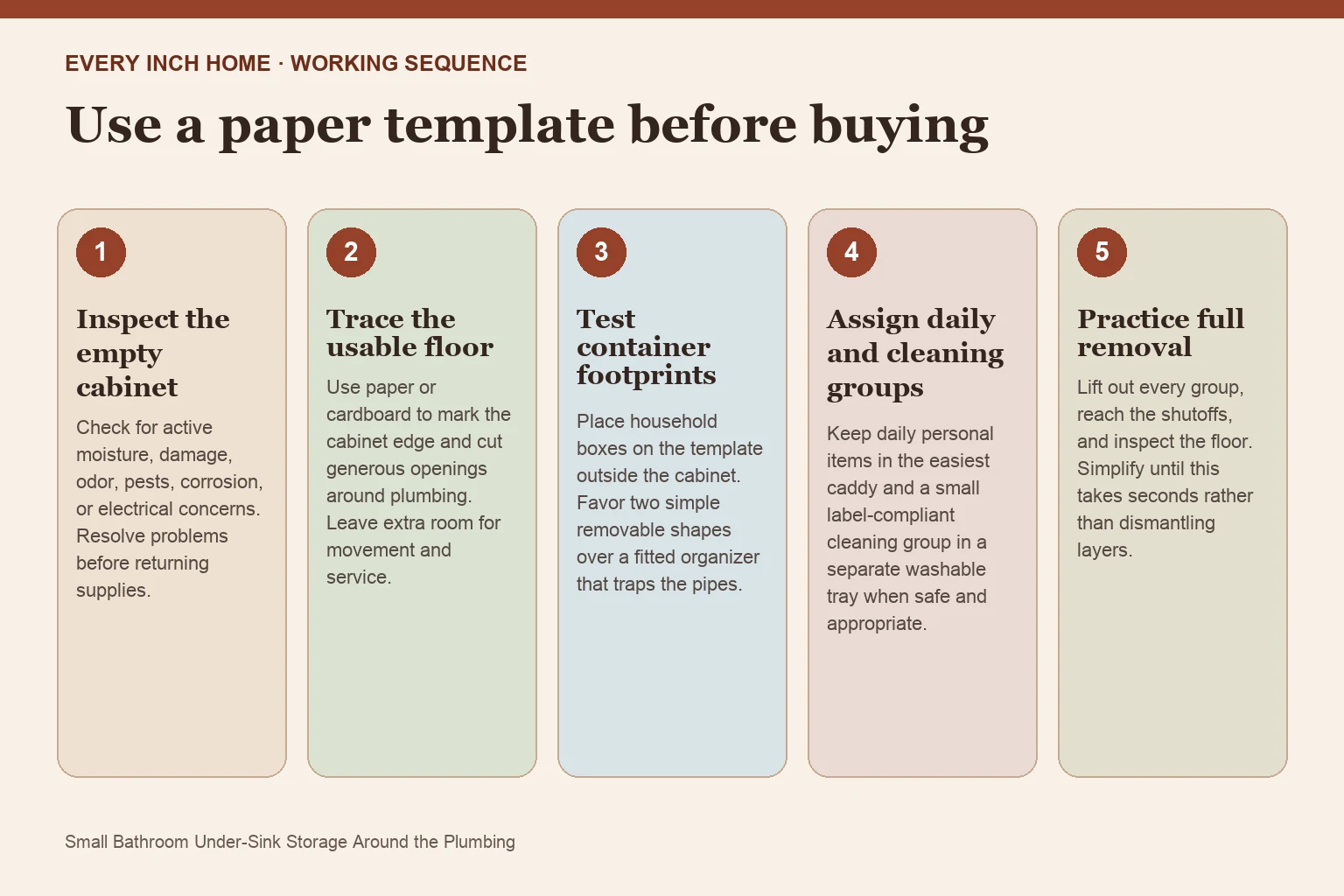
Use a paper template before buying
1. Inspect the empty cabinet
Check for active moisture, damage, odor, pests, corrosion, or electrical concerns. Resolve problems before returning supplies.
2. Trace the usable floor
Use paper or cardboard to mark the cabinet edge and cut generous openings around plumbing. Leave extra room for movement and service.
3. Test container footprints
Place household boxes on the template outside the cabinet. Favor two simple removable shapes over a fitted organizer that traps the pipes.
4. Assign daily and cleaning groups
Keep daily personal items in the easiest caddy and a small label-compliant cleaning group in a separate washable tray when safe and appropriate.
5. Practice full removal
Lift out every group, reach the shutoffs, and inspect the floor. Simplify until this takes seconds rather than dismantling layers.
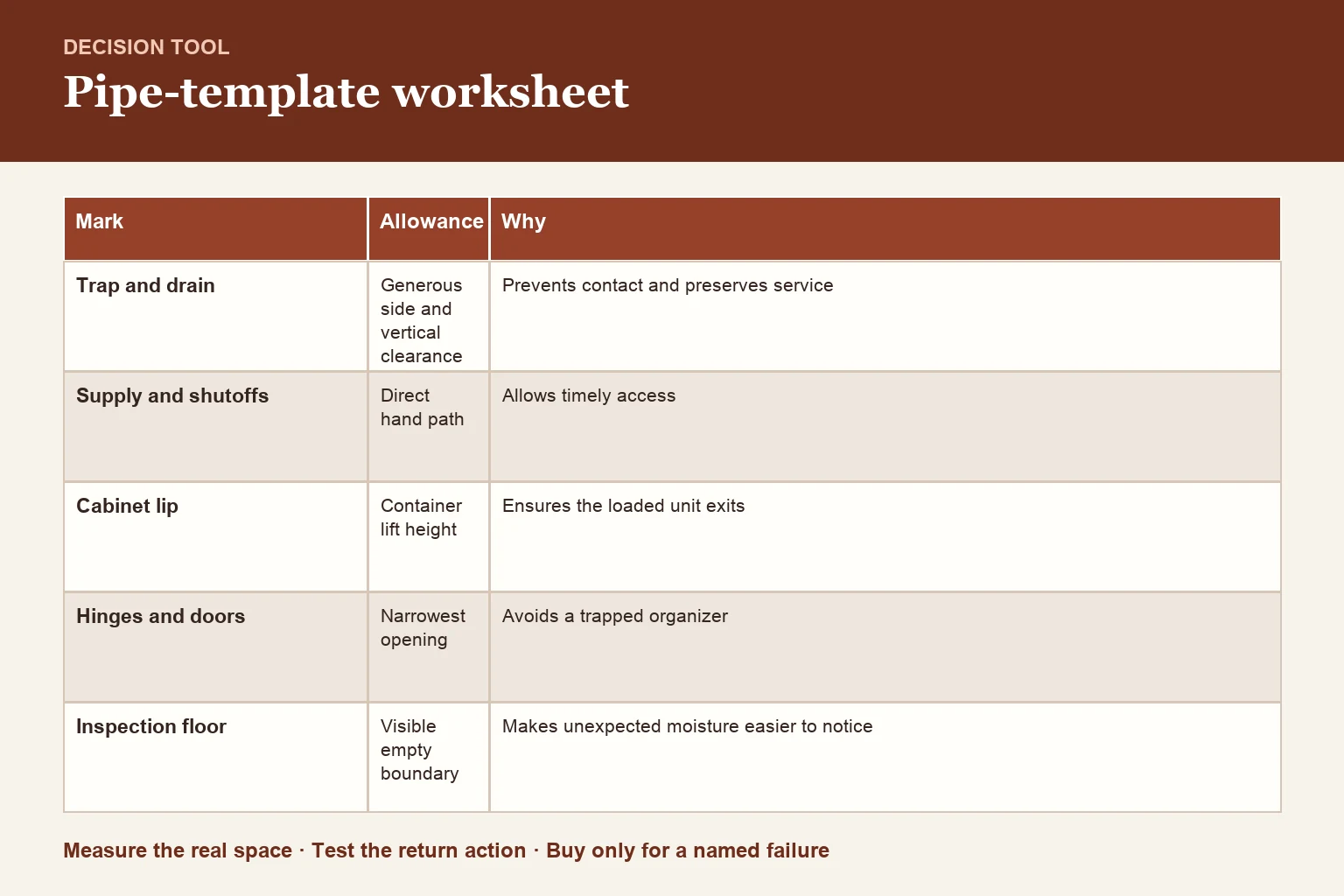
Pipe-template worksheet
| Mark | Allowance | Why |
|---|---|---|
| Trap and drain | Generous side and vertical clearance | Prevents contact and preserves service |
| Supply and shutoffs | Direct hand path | Allows timely access |
| Cabinet lip | Container lift height | Ensures the loaded unit exits |
| Hinges and doors | Narrowest opening | Avoids a trapped organizer |
| Inspection floor | Visible empty boundary | Makes unexpected moisture easier to notice |
A fitted organizer can fit too well
U-shaped shelves and expandable systems look efficient, but reject any format that touches plumbing, blocks shutoffs, hides the floor, or requires disassembly for service. Verify external dimensions and mounting instructions. A plain handled bin often performs better because it leaves immediately when a leak or repair occurs.
Run a monthly remove-and-look check
Take out every container, inspect without disturbing plumbing, wipe dry debris, check packages for leakage or deterioration, and return only the current inventory. Stop normal storage and arrange appropriate maintenance if you find an active leak, cabinet swelling, persistent dampness, odor, or corrosion.
Frequently asked questions
How do I measure around under-sink pipes?
Trace a top-view paper template with generous clearance around the widest pipe points, then measure the door opening and container lift path.
What can I store under a small bathroom sink?
Keep a limited daily-care group and small appropriately stored cleaning kit when the cabinet is dry, while moving bulk backups elsewhere.
Are U-shaped under-sink organizers useful?
They can be, but only when the actual plumbing, shutoffs, door opening, lift path, and service access all pass a measured test.