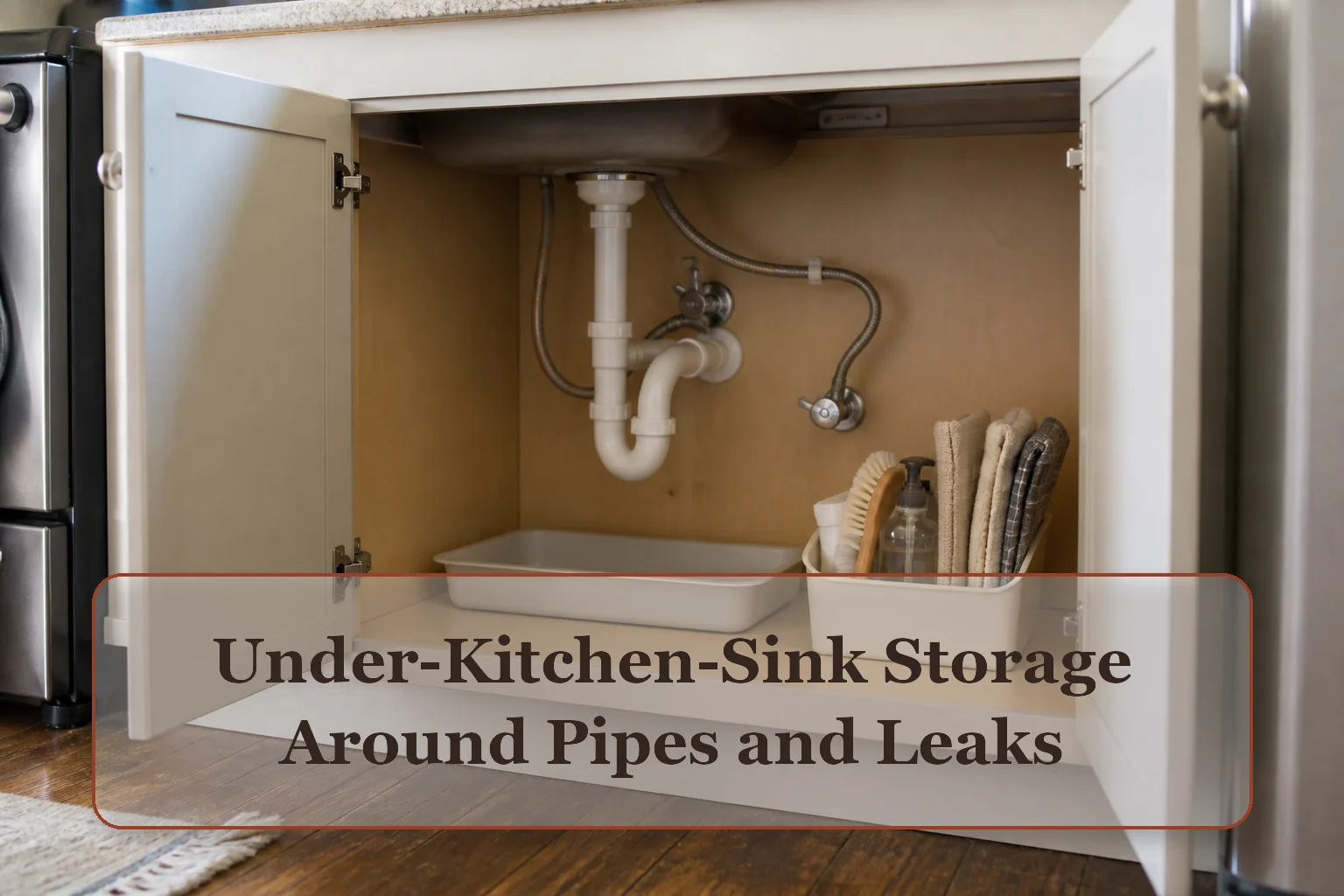
Use the tool: Work toward the plumbing-clearance worksheet; test it with the real items and route before expanding storage.
Map the cabinet as a plumbing zone
- Fixed hardware: Mark the trap, supply lines, shutoff valves, disposal, hoses, filter equipment, hinges, and any electrical components. These areas need clearance, not tight-fitting bins.
- Inspection line: Choose the angle from which you can see the cabinet floor and pipe joints. Storage should lift out without hiding the places where moisture first appears.
- Safe inventory: Keep products in original labeled containers, follow storage directions, and avoid combining incompatible or leaking packages in a crowded caddy.
Build removable storage around the pipes
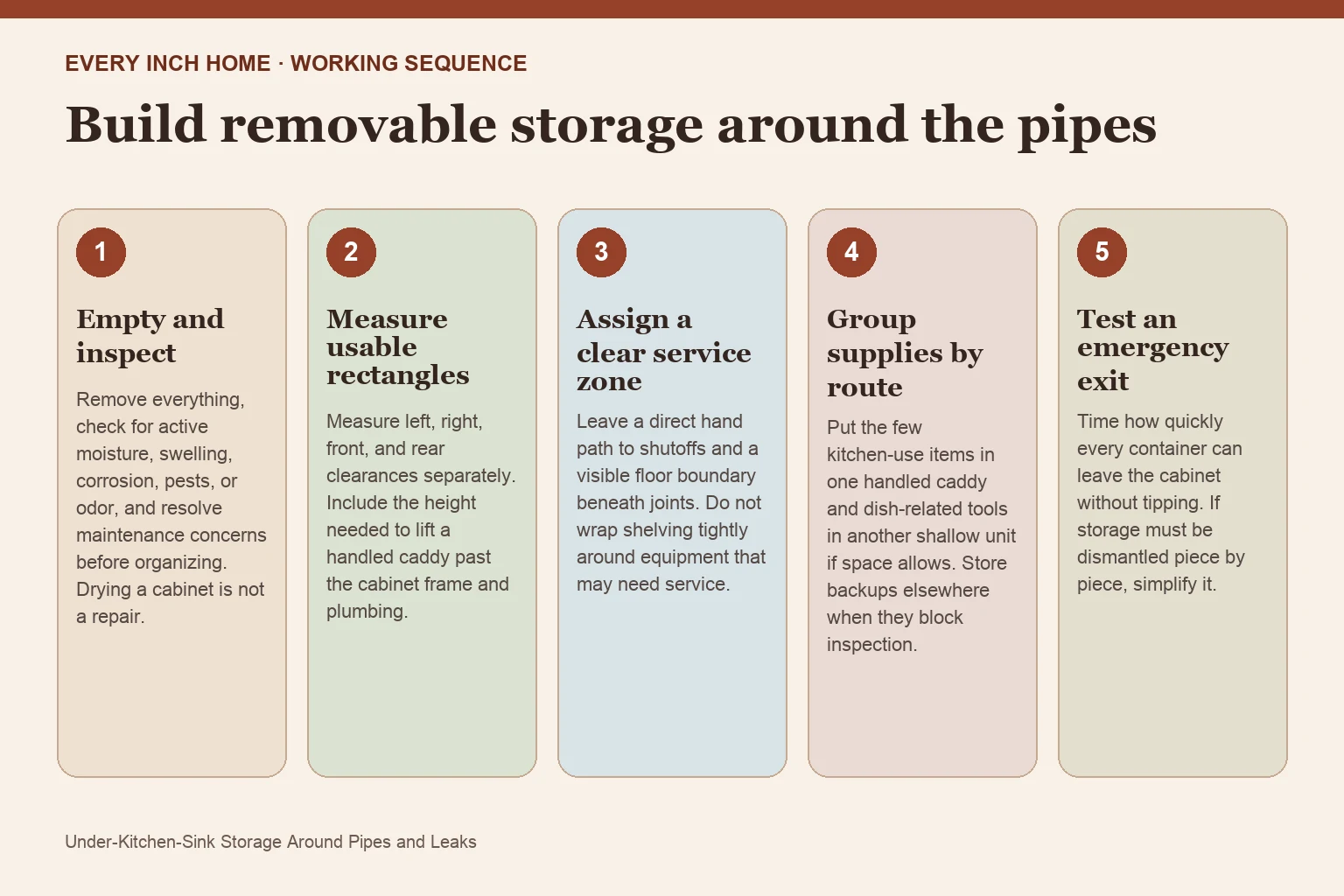
1. Empty and inspect
Remove everything, check for active moisture, swelling, corrosion, pests, or odor, and resolve maintenance concerns before organizing. Drying a cabinet is not a repair.
2. Measure usable rectangles
Measure left, right, front, and rear clearances separately. Include the height needed to lift a handled caddy past the cabinet frame and plumbing.
3. Assign a clear service zone
Leave a direct hand path to shutoffs and a visible floor boundary beneath joints. Do not wrap shelving tightly around equipment that may need service.
4. Group supplies by route
Put the few kitchen-use items in one handled caddy and dish-related tools in another shallow unit if space allows. Store backups elsewhere when they block inspection.
5. Test an emergency exit
Time how quickly every container can leave the cabinet without tipping. If storage must be dismantled piece by piece, simplify it.
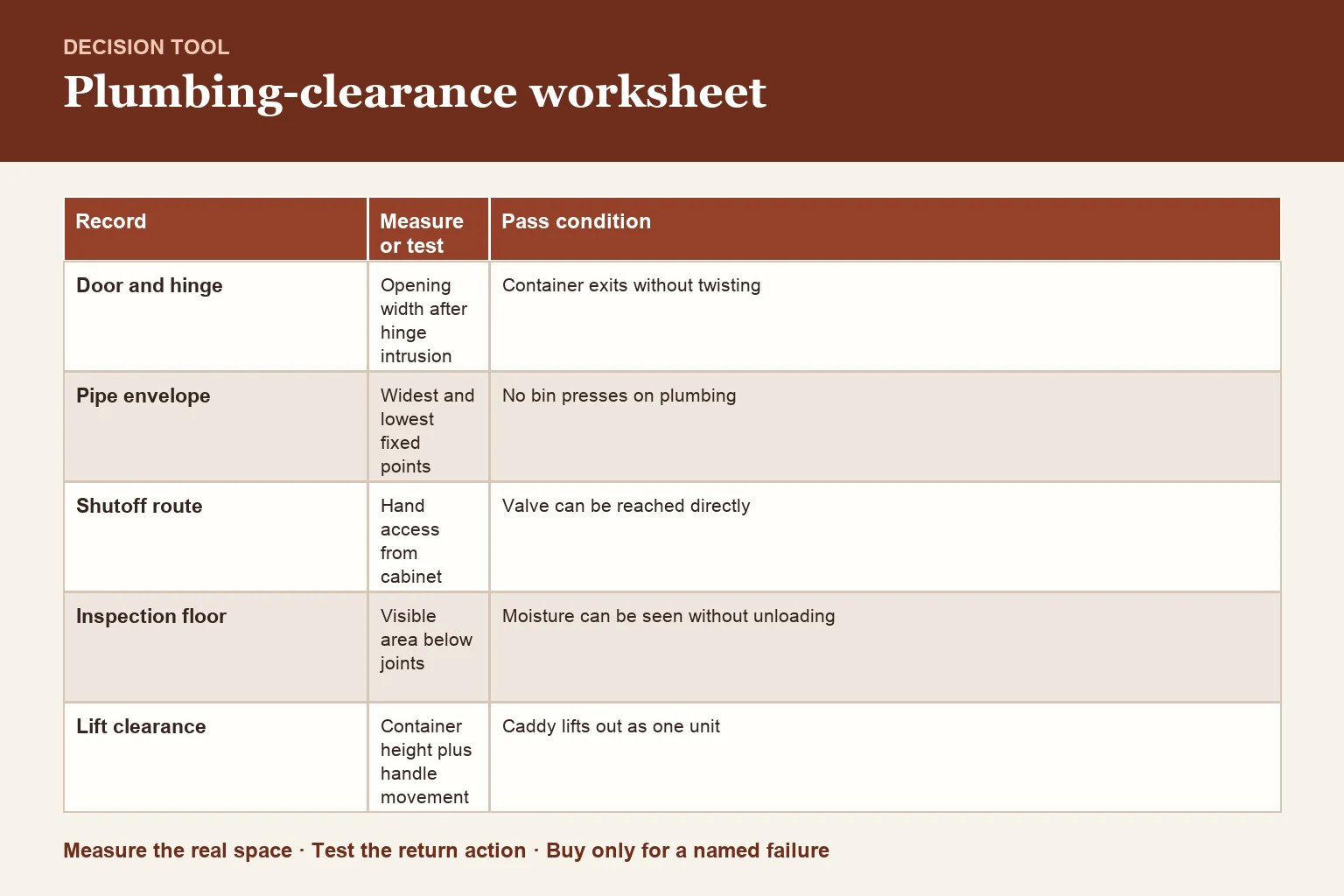
Plumbing-clearance worksheet
| Record | Measure or test | Pass condition |
|---|---|---|
| Door and hinge | Opening width after hinge intrusion | Container exits without twisting |
| Pipe envelope | Widest and lowest fixed points | No bin presses on plumbing |
| Shutoff route | Hand access from cabinet front | Valve can be reached directly |
| Inspection floor | Visible area below joints | Moisture can be seen without unloading |
| Lift clearance | Container height plus handle movement | Caddy lifts out as one unit |
What to buy—and what to skip
A shallow waterproof tray can make small drips visible, but it is not a substitute for repair and should not conceal the cabinet floor. Choose removable, washable containers with stable bases and dimensions that fit your measured rectangles. Skip tension systems that press on pipes, permanent shelves that block service, and elaborate stacks that delay access.
Use a monthly 60-second leak check
Lift out the caddies, look and feel for unexpected moisture without touching electrical components, scan containers for damage, wipe dry debris, and return the small inventory. If you find an active leak, swelling, persistent odor, or corrosion, stop using the cabinet as normal storage until the issue is properly evaluated.
Frequently asked questions
What should be stored under the kitchen sink?
Keep a small kitchen-specific cleaning kit and compatible dish tools when product labels allow it. Preserve plumbing access and store excess stock elsewhere.
Can I put shelves around under-sink pipes?
Only if the measured shelf remains removable, does not press on pipes, and leaves shutoffs and leak-prone areas visible and reachable.
How do I protect the cabinet from leaks?
Inspect regularly and address plumbing problems promptly. A shallow visible tray may help reveal a small drip, but it does not waterproof the cabinet or replace repair.