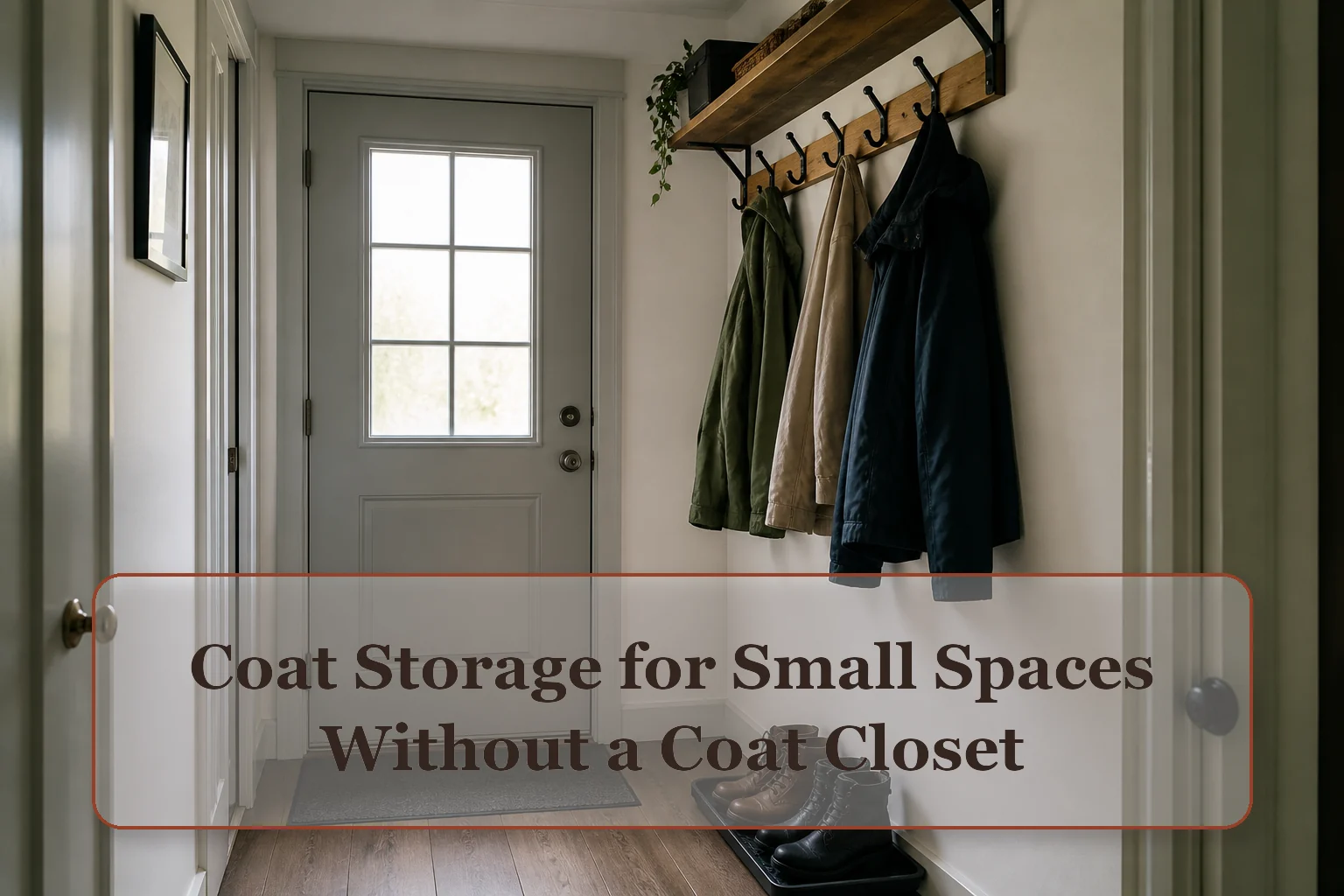
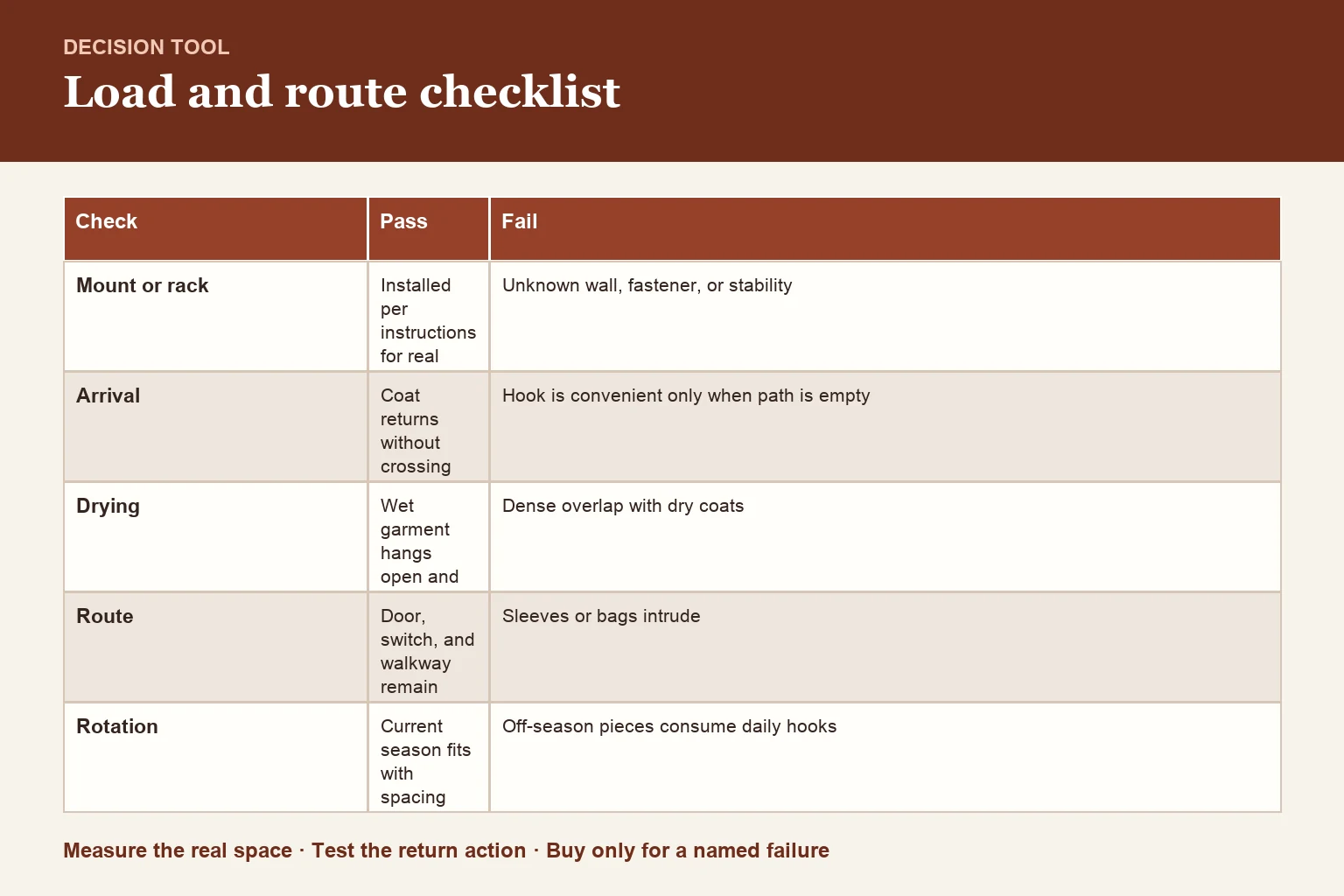
Use the tool: Work toward the load and route checklist; test it with the real items and route before expanding storage.
Calculate the real outerwear load
- Loaded weight: Count the heaviest wet-weather combination likely to hang at once, including bags. A hook's appearance does not reveal its installed capacity.
- Wall and lease: Identify studs or wall construction where appropriate, trim, switches, door swing, and rental restrictions. Follow hardware instructions and obtain permission when required.
- Drying: Choose a temporary place where wet coats can spread and protect nearby finishes, floors, dry clothing, and the walking route.
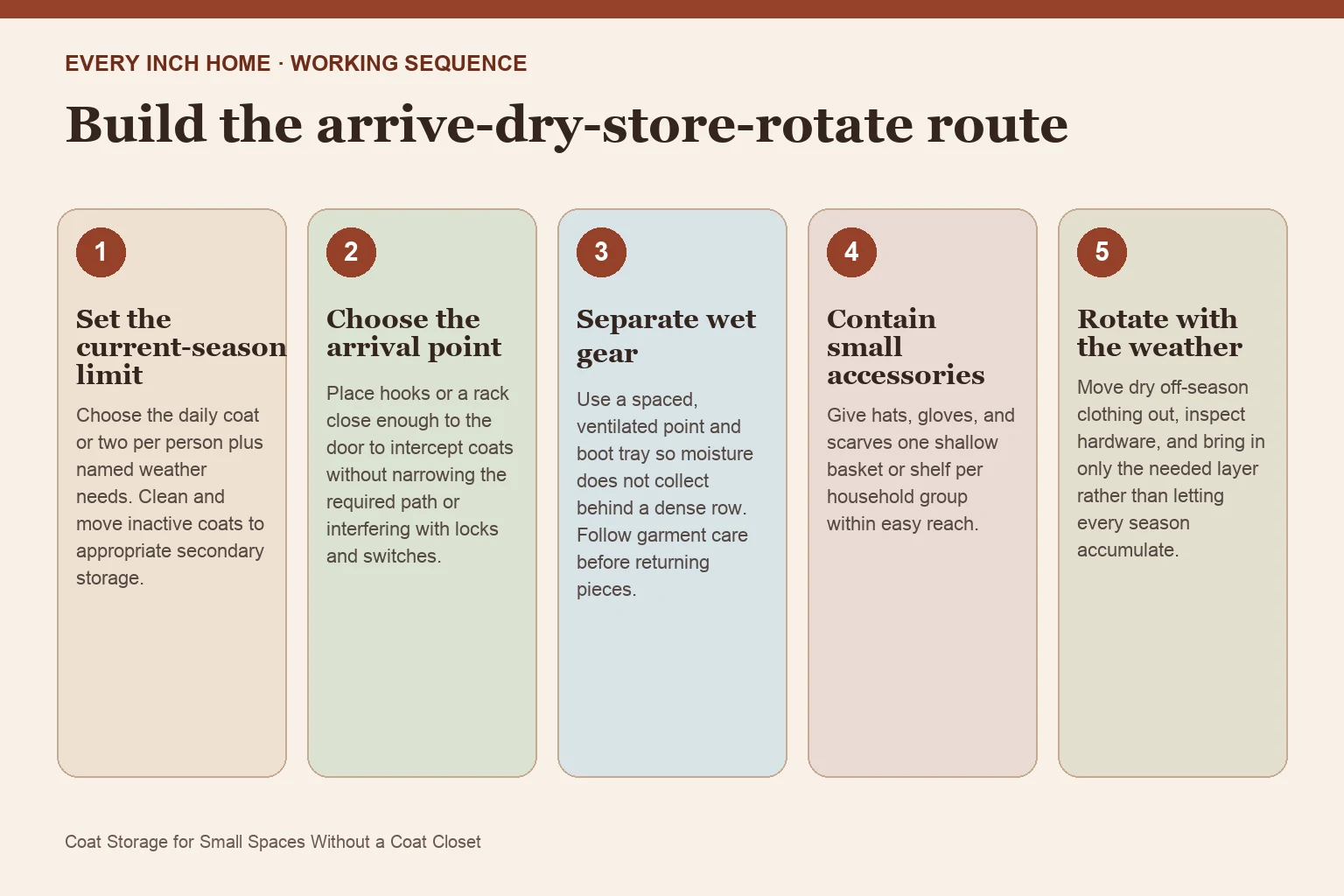
Build the arrive-dry-store-rotate route
1. Set the current-season limit
Choose the daily coat or two per person plus named weather needs. Clean and move inactive coats to appropriate secondary storage.
2. Choose the arrival point
Place hooks or a rack close enough to the door to intercept coats without narrowing the required path or interfering with locks and switches.
3. Separate wet gear
Use a spaced, ventilated point and boot tray so moisture does not collect behind a dense row. Follow garment care before returning pieces.
4. Contain small accessories
Give hats, gloves, and scarves one shallow basket or shelf per household group within easy reach.
5. Rotate with the weather
Move dry off-season clothing out, inspect hardware, and bring in only the needed layer rather than letting every season accumulate.
Load and route checklist
| Check | Pass | Fail |
|---|---|---|
| Mount or rack | Installed per instructions for real loaded weight | Unknown wall, fastener, or stability |
| Arrival | Coat returns without crossing the room | Hook is convenient only when path is empty |
| Drying | Wet garment hangs open and protects surfaces | Dense overlap with dry coats |
| Route | Door, switch, and walkway remain clear | Sleeves or bags intrude |
| Rotation | Current season fits with spacing | Off-season pieces consume daily hooks |
Adhesive, over-door, and freestanding are not load-free
Every system needs verified ratings, compatible surfaces, correct installation, and movement clearance. Adhesive performance varies by surface and environment; over-door hooks can affect closure and hinges; freestanding racks can tip under uneven loading. Follow product instructions, lease terms, and anti-tip guidance where applicable.
Run a weekly pocket-and-weather reset
Empty trash and unneeded items from pockets, reunite gloves, return dry coats, clean the boot tray as appropriate, and check the forecast. Remove coats no longer serving the current week. Inspect loose hardware or unstable racks promptly rather than adding another hook to a failing system.
Frequently asked questions
How do I store coats without a coat closet?
Use a correctly installed hook rail or stable rack for a strict current-season group, plus separate drying and accessory routes.
Are adhesive hooks strong enough for coats?
Only when the product, surface preparation, environment, and installed load meet the manufacturer's current instructions. Do not estimate.
How many coats should stay by the door?
Keep the current daily and named weather needs that fit the rated system with spacing; move off-season and rare coats elsewhere.