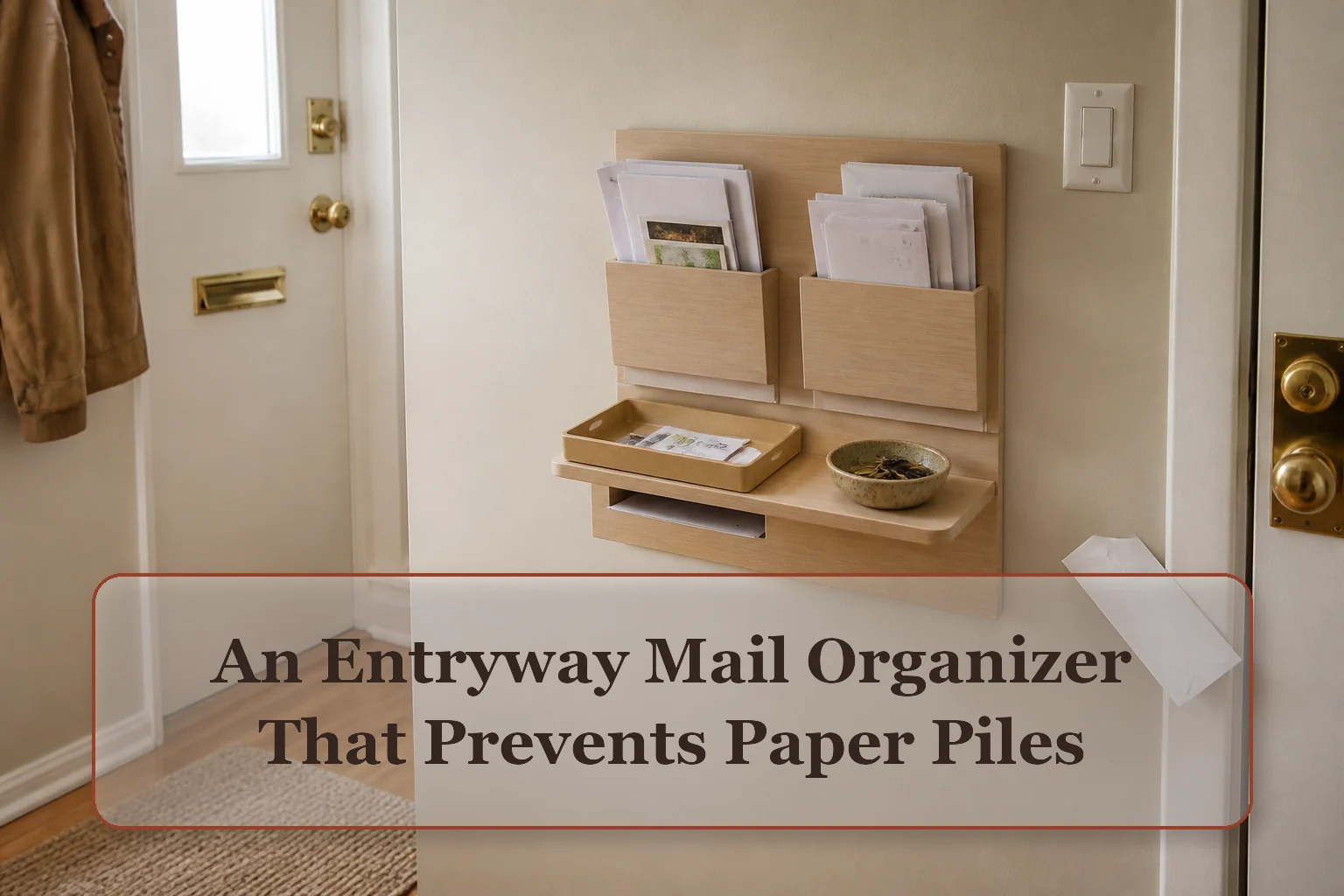
Use the tool: Work toward the paper route and product-fit map; test it with the real items and route before expanding storage.
Separate capture from processing
- Capture: The entry organizer receives today's paper so it does not spread across tables. It is not a permanent archive or a place to make every decision while standing at the door.
- Privacy and security: Protect personal information, checks, cards, medications, and documents according to household needs. A visible open sorter may not suit every item.
- Exit routes: Identify the actual recycling, secure shredding, filing, bill or action, and outgoing-mail routes before choosing compartments.
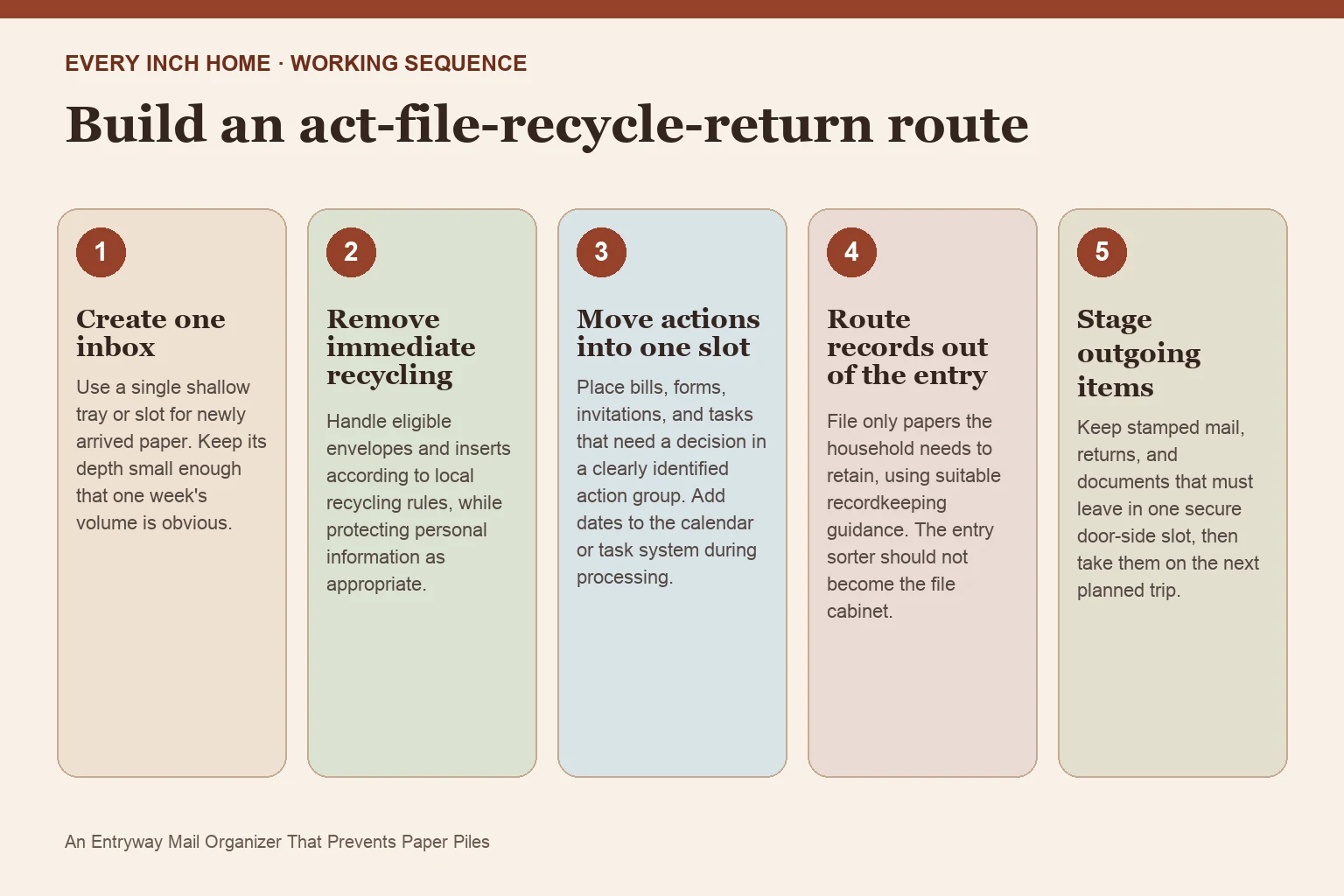
Build an act-file-recycle-return route
1. Create one inbox
Use a single shallow tray or slot for newly arrived paper. Keep its depth small enough that one week's volume is obvious.
2. Remove immediate recycling
Handle eligible envelopes and inserts according to local recycling rules, while protecting personal information as appropriate.
3. Move actions into one slot
Place bills, forms, invitations, and tasks that need a decision in a clearly identified action group. Add dates to the calendar or task system during processing.
4. Route records out of the entry
File only papers the household needs to retain, using suitable recordkeeping guidance. The entry sorter should not become the file cabinet.
5. Stage outgoing items
Keep stamped mail, returns, and documents that must leave in one secure door-side slot, then take them on the next planned trip.
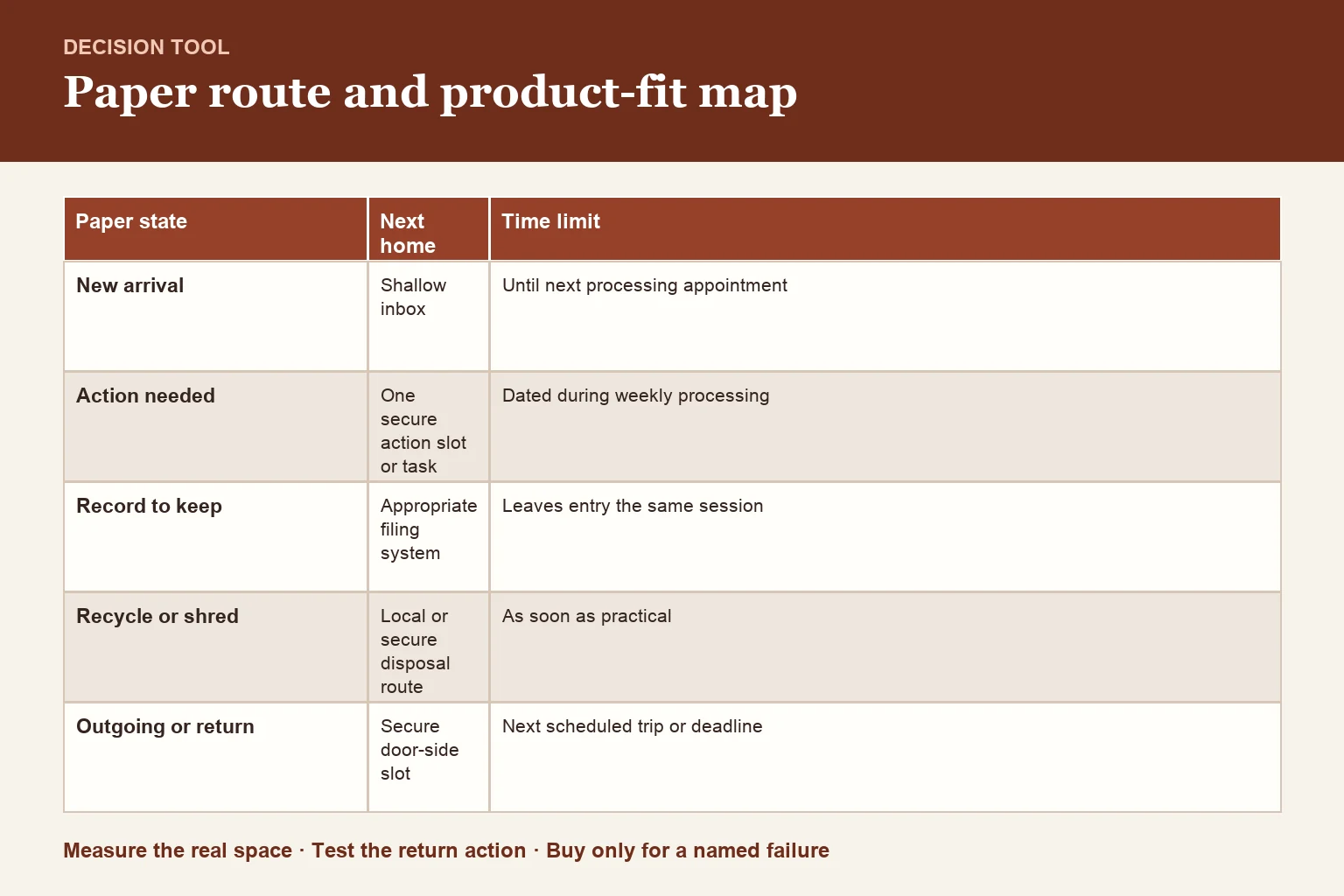
Paper route and product-fit map
| Paper state | Next home | Time limit |
|---|---|---|
| New arrival | Shallow inbox | Until next processing appointment |
| Action needed | One secure action slot or task system | Dated during weekly processing |
| Record to keep | Appropriate filing system | Leaves entry the same session |
| Recycle or shred | Local or secure disposal route | As soon as practical |
| Outgoing or return | Secure door-side slot | Next scheduled trip or deadline |
Buying criteria for an entry mail organizer
Measure normal weekly paper volume, the largest envelope, wall or surface footprint, compartment depth, visibility, privacy, and mounting requirements. Two or three shallow slots usually support action better than many unlabeled pockets. Verify installation instructions and lease rules; do not mount where paper interferes with switches, locks, heat, or the door route.
Keep a 15-minute paper appointment
Once a week, empty the inbox completely: record dates and tasks, pay or schedule bills securely, move retained records, use secure disposal where appropriate, and stage outgoing items. If the session exceeds 15 focused minutes, reduce incoming paper where legitimately possible and simplify the number of destinations rather than buying a deeper sorter.
Frequently asked questions
How do I organize mail in a small entryway?
Use one shallow inbox, one secure action slot, and one outgoing position, then move records and disposal out during a weekly appointment.
How many sections should a mail organizer have?
Use only the distinct states the household will process—often inbox, action, and outgoing. Filing and recycling usually belong in their actual destinations.
How do I stop mail piling up?
Keep capture shallow, schedule a weekly processing appointment, record deadlines immediately, and make every paper leave through act, file, recycle or secure disposal, or return.