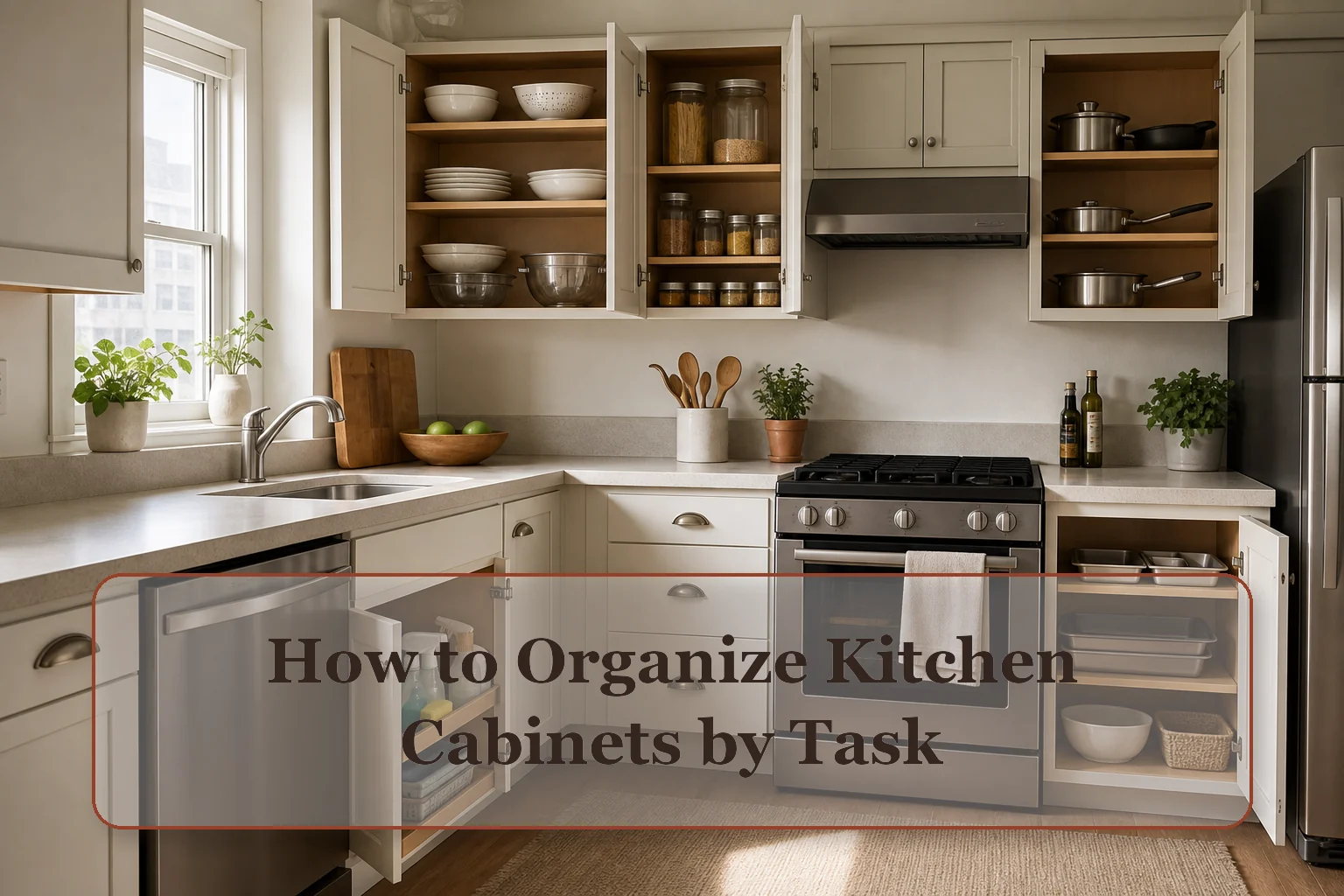
Use the tool: Work toward the cabinet-job map; test it with the real items and route before expanding storage.
Map the kitchen jobs before moving dishes
- Preparation: Identify the uninterrupted counter where chopping, mixing, or packing actually happens. The tools serving that work should be reachable without crossing the room.
- Cooking and serving: Trace the move from pan to plate to table. Heavy cookware needs a low, stable home; daily dishes need safe reach and a short return from washing.
- Cleanup: Open the dishwasher, sink cabinet, trash, and nearby drawers together. Make sure one storage fix does not block another part of the cleanup route.
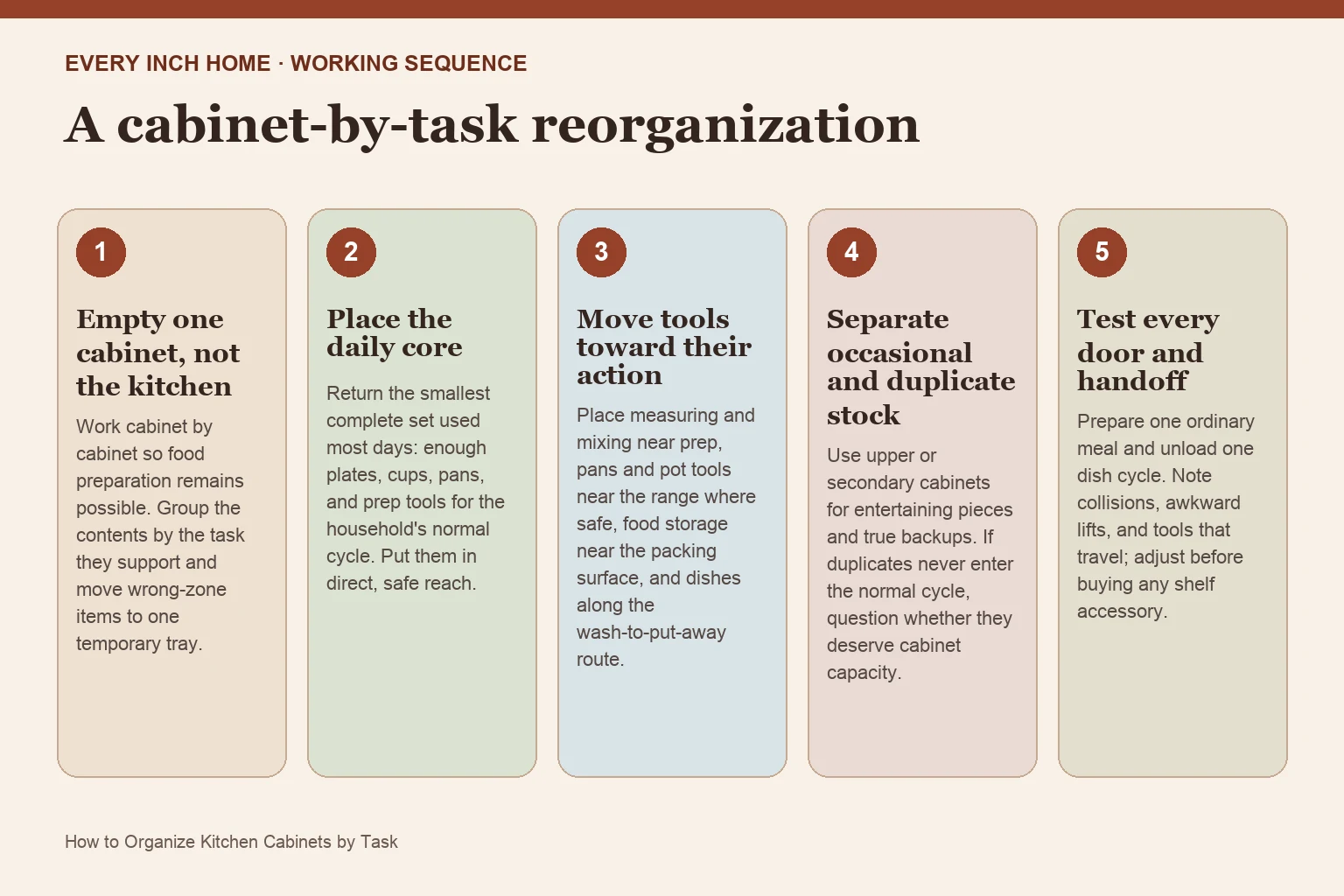
A cabinet-by-task reorganization
1. Empty one cabinet, not the kitchen
Work cabinet by cabinet so food preparation remains possible. Group the contents by the task they support and move wrong-zone items to one temporary tray.
2. Place the daily core
Return the smallest complete set used most days: enough plates, cups, pans, and prep tools for the household's normal cycle. Put them in direct, safe reach.
3. Move tools toward their action
Place measuring and mixing near prep, pans and pot tools near the range where safe, food storage near the packing surface, and dishes along the wash-to-put-away route.
4. Separate occasional and duplicate stock
Use upper or secondary cabinets for entertaining pieces and true backups. If duplicates never enter the normal cycle, question whether they deserve cabinet capacity.
5. Test every door and handoff
Prepare one ordinary meal and unload one dish cycle. Note collisions, awkward lifts, and tools that travel; adjust before buying any shelf accessory.
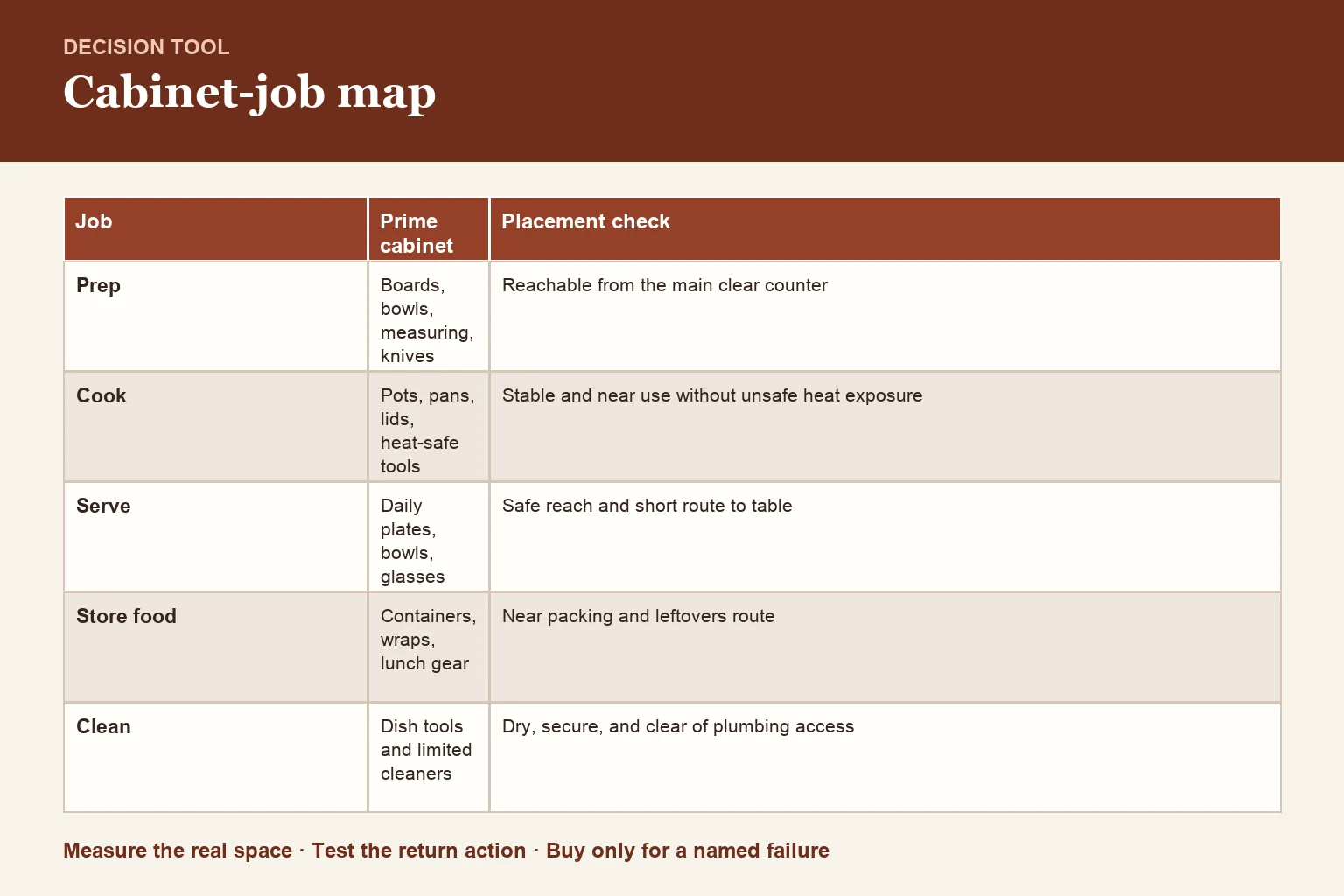
Cabinet-job map
| Job | Prime cabinet contents | Placement check |
|---|---|---|
| Prep | Boards, bowls, measuring, knives stored safely | Reachable from the main clear counter |
| Cook | Pots, pans, lids, heat-safe tools | Stable and near use without unsafe heat exposure |
| Serve | Daily plates, bowls, glasses | Safe reach and short route to table |
| Store food | Containers, wraps, lunch gear | Near packing and leftovers route |
| Clean | Dish tools and limited cleaners | Dry, secure, and clear of plumbing access |
When a shelf riser or pullout is useful
Add hardware only after the job map works. Measure cabinet width, depth, hinge intrusion, shelf thickness, door swing, and the tallest or heaviest item. A riser should expose a back row; a pullout should make one related group retrievable. Neither should reduce safe weight capacity or force you to unload unrelated objects.
Use the one-meal and one-dish-cycle test
The final audit is behavioral. Cook a representative meal, put leftovers away, load and unload dishes, then record every unnecessary trip or moved stack. Correct the three highest-friction handoffs. A cabinet can look beautifully grouped and still fail if the household cannot put things away along the route it already uses.
Frequently asked questions
What is the best way to organize kitchen cabinets?
Start with task zones and daily-use frequency, then place heavy items low, daily dishes in safe reach, and occasional pieces farther away.
Where should plates and glasses go?
Choose a safe reachable cabinet with a short path from the dishwasher or drying area and to the place where meals are served.
Should pots and pans go in upper or lower cabinets?
Their weight and size usually favor a stable lower cabinet or deep drawer. Make sure handles, lids, and the door or drawer can move without collision.