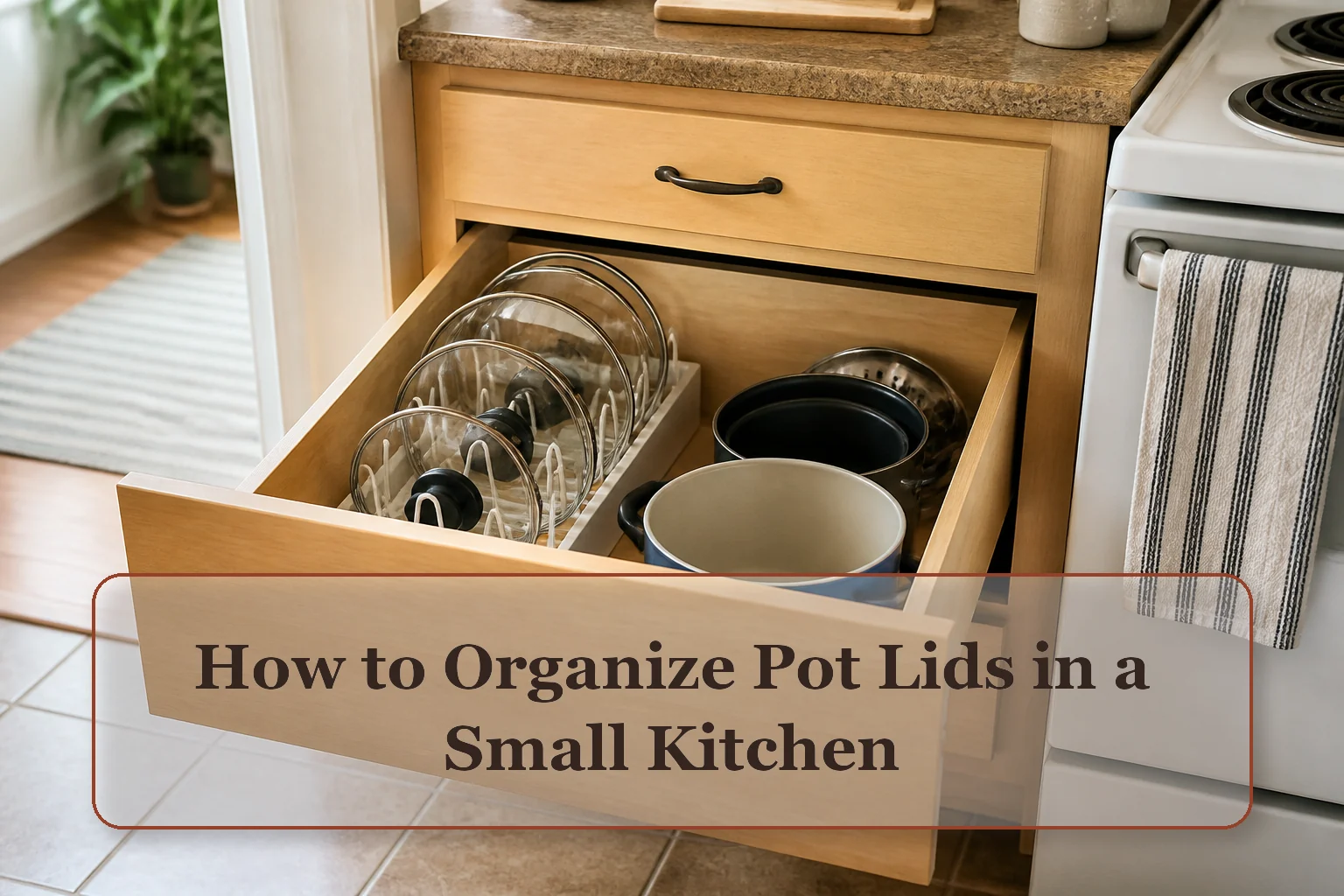
Use the tool: Work toward the lid placement score; test it with the real items and route before expanding storage.
Inventory the lids, not the organizer
- Match: Set every lid on its intended pan and note lids that serve more than one piece. An unverified lid collection wastes the most useful measurement.
- Handle profile: Measure lid diameter, rim thickness, knob or handle height, and weight. Low cabinet clearance can rule out a rack even when the diameter fits.
- Use frequency: Separate daily, weekly, and rare cookware. The daily group deserves direct grip access; occasional lids can tolerate a secondary position.
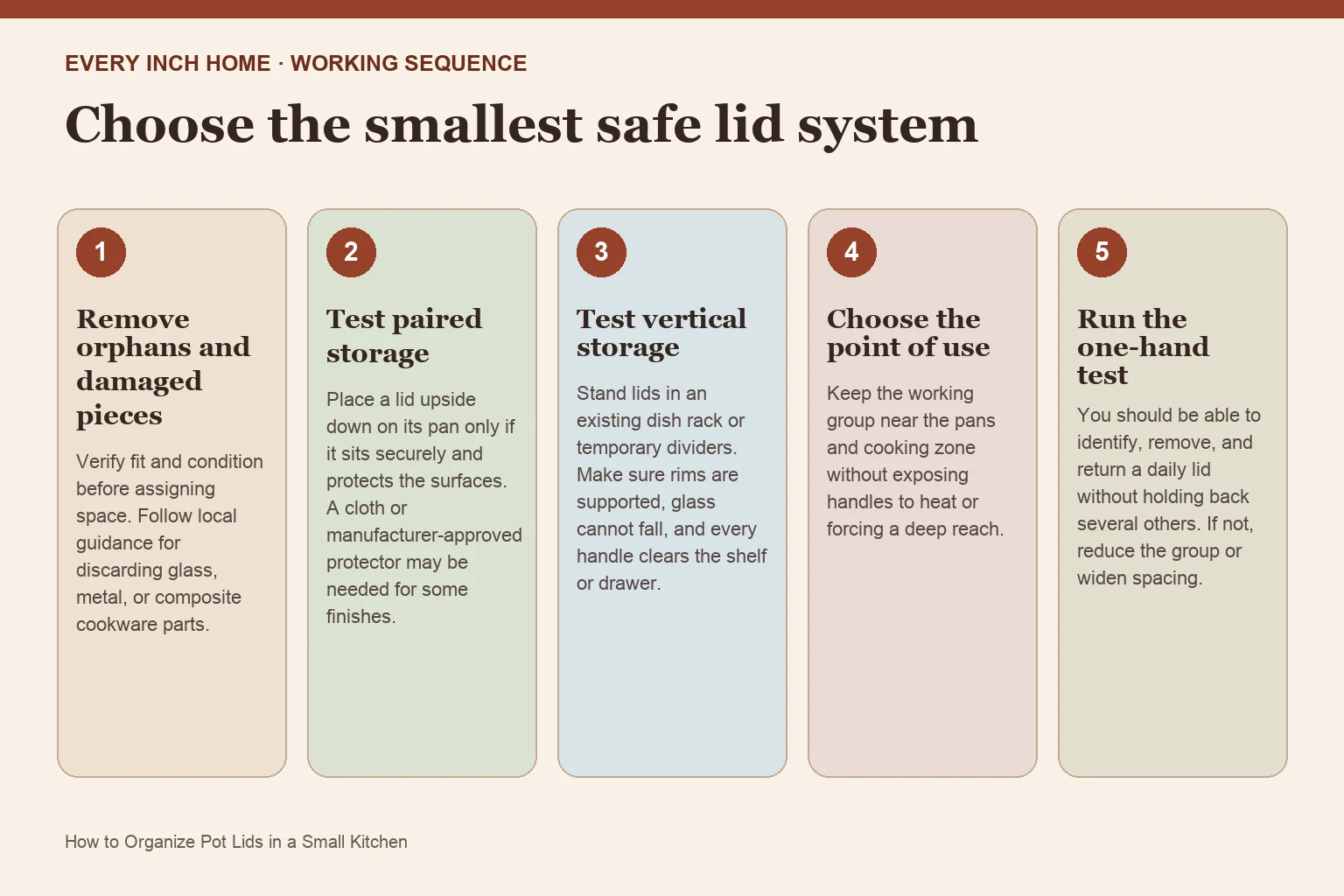
Choose the smallest safe lid system
1. Remove orphans and damaged pieces
Verify fit and condition before assigning space. Follow local guidance for discarding glass, metal, or composite cookware parts.
2. Test paired storage
Place a lid upside down on its pan only if it sits securely and protects the surfaces. A cloth or manufacturer-approved protector may be needed for some finishes.
3. Test vertical storage
Stand lids in an existing dish rack or temporary dividers. Make sure rims are supported, glass cannot fall, and every handle clears the shelf or drawer.
4. Choose the point of use
Keep the working group near the pans and cooking zone without exposing handles to heat or forcing a deep reach.
5. Run the one-hand test
You should be able to identify, remove, and return a daily lid without holding back several others. If not, reduce the group or widen spacing.
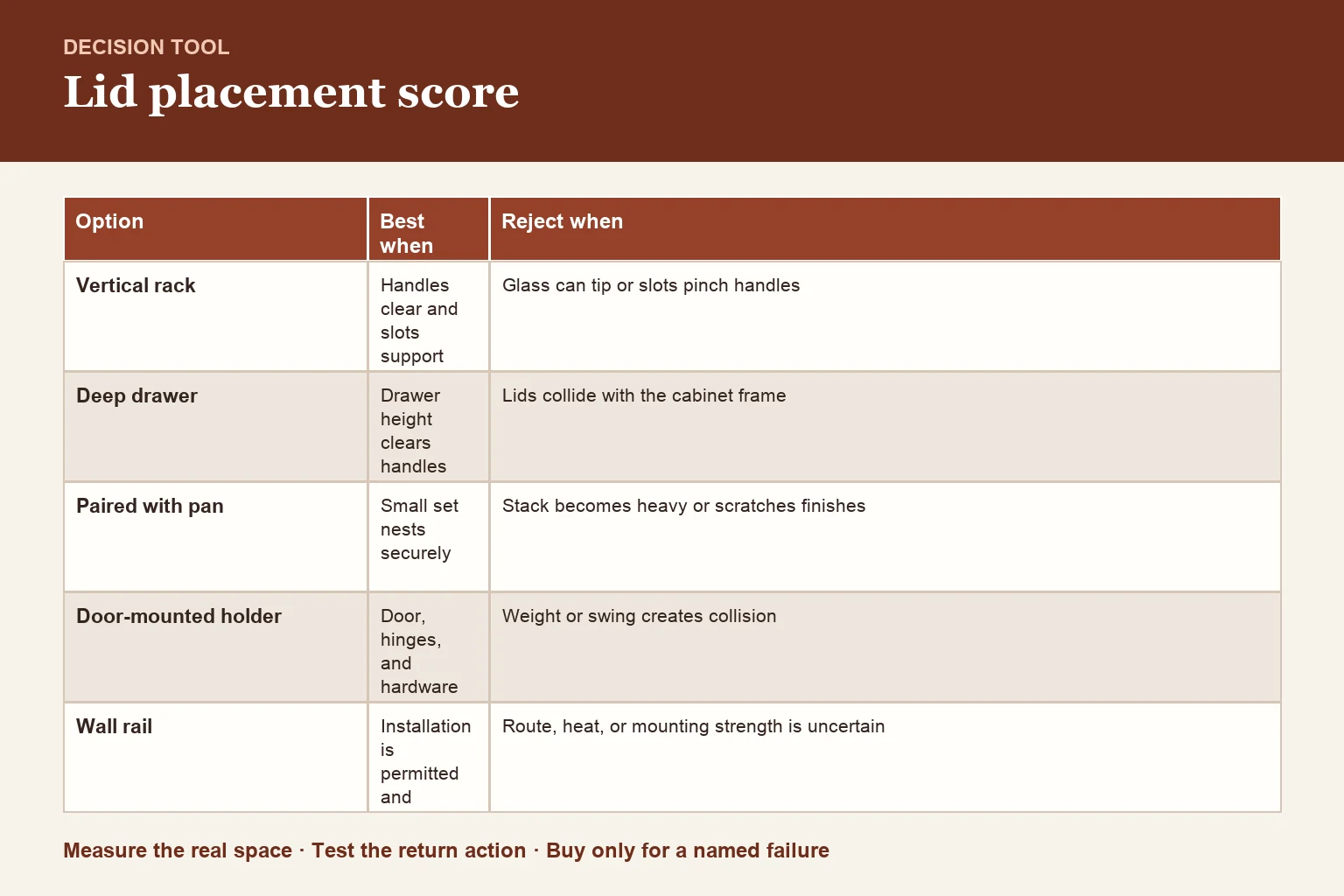
Lid placement score
| Option | Best when | Reject when |
|---|---|---|
| Vertical rack | Handles clear and slots support each rim | Glass can tip or slots pinch handles |
| Deep drawer | Drawer height clears handles and weight rating fits | Lids collide with the cabinet frame |
| Paired with pan | Small set nests securely | Stack becomes heavy or scratches finishes |
| Door-mounted holder | Door, hinges, and hardware are rated and clear shelves | Weight or swing creates collision |
| Wall rail | Installation is permitted and cookware is stable | Route, heat, or mounting strength is uncertain |
Buying criteria for a lid organizer
Use the largest daily lid as the fit test. Confirm slot width, base stability, product weight rating, cabinet or drawer clearance, moisture resistance, and whether screws or adhesives suit the surface and lease. Adjustable spacing is useful only if it remains locked under the real lid weight. Product dimensions can change, so verify them at purchase.
Keep the working set together
During dish put-away, return lids in size or pan-family order and flag any piece that repeatedly has no match. Once a quarter, check for loose knobs, chips, cracks, bent rims, or unstable storage. Follow the cookware maker's care and replacement guidance for damaged parts.
Frequently asked questions
Is it better to store pot lids vertically?
Vertical storage can improve identification and grip when a stable rack supports the rims and handles clear the cabinet. It is not safe or efficient in every space.
Can lids be stored on their pots?
Yes for a small set when they sit securely, nesting remains safe, and finishes are protected according to cookware guidance.
How do I measure for a pot-lid rack?
Measure usable cabinet width and depth, the opening height, every lid's diameter and rim thickness, and the tallest handle in its stored orientation.