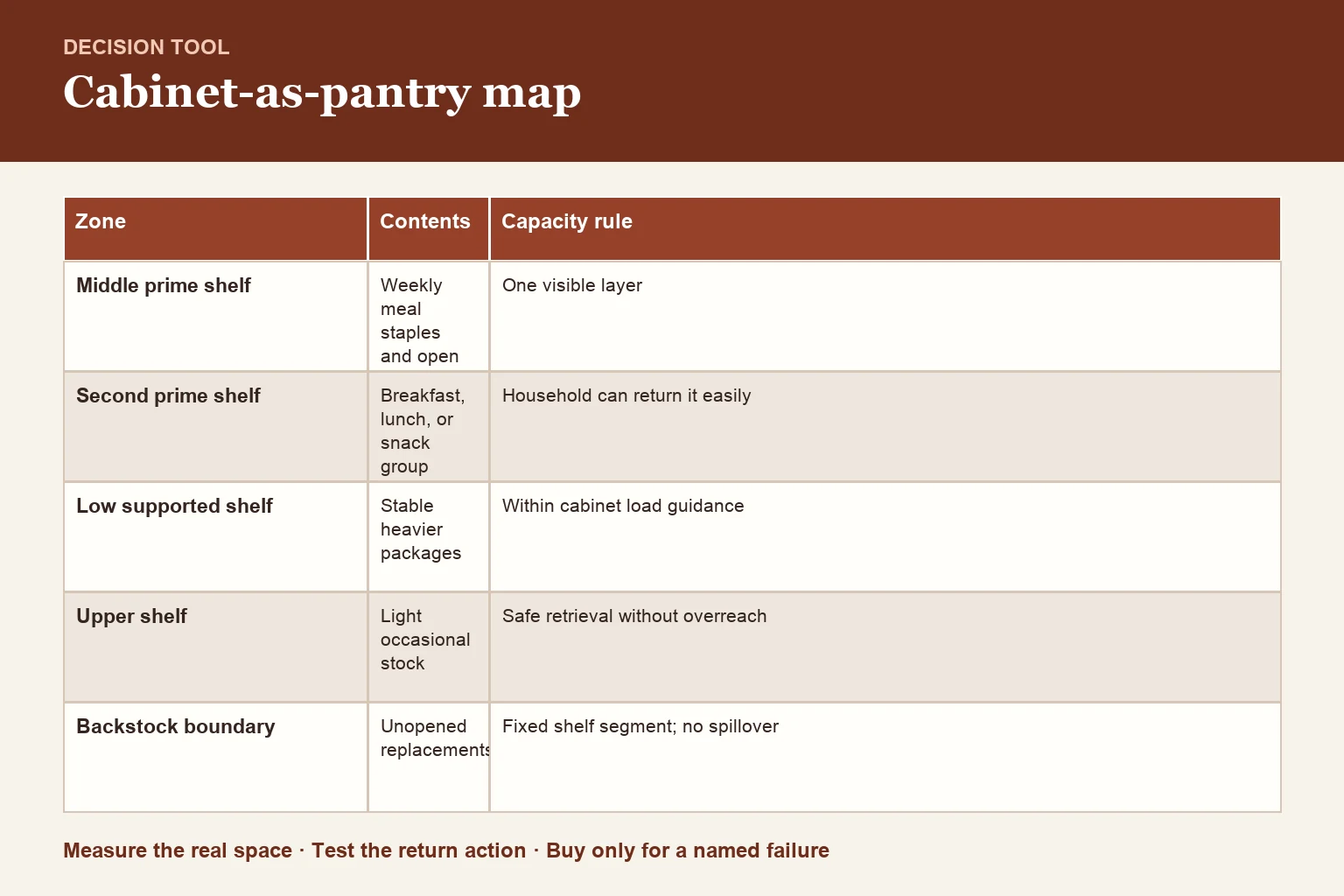
Use the tool: Work toward the cabinet-as-pantry map; test it with the real items and route before expanding storage.
Choose the right cabinet before zoning it
- Environment: Avoid locations exposed to unsuitable heat, moisture, or direct sun, and follow food and appliance storage guidance. Check that the cabinet is clean and in good repair.
- Door and shelf: Record hinge intrusion, shelf adjustability, manufacturer load guidance, and the space required to lift a container out.
- Household reach: The primary users should be able to see and retrieve daily food safely. Child-access and allergy needs may change the map.
Build a cabinet pantry by meal route
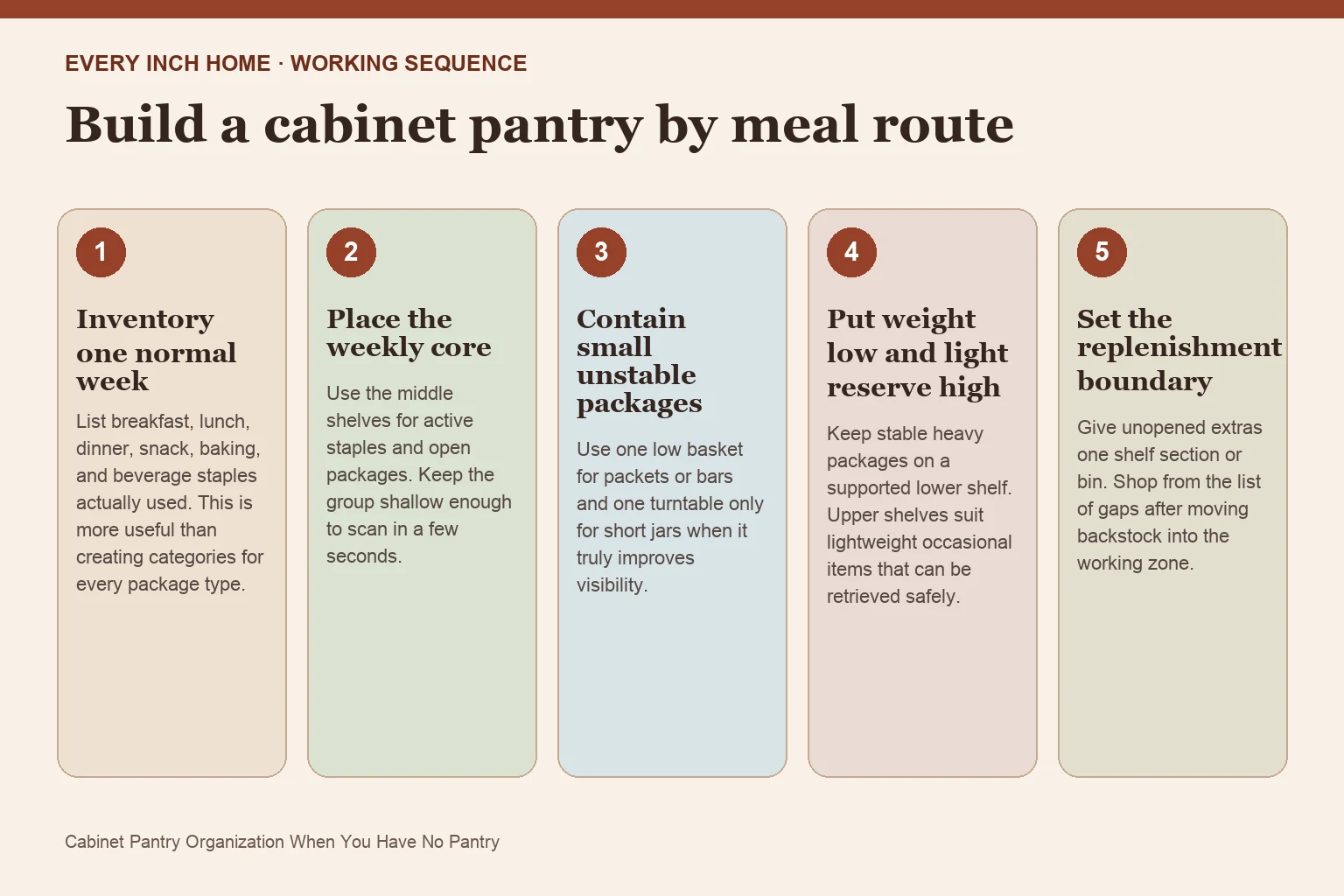
1. Inventory one normal week
List breakfast, lunch, dinner, snack, baking, and beverage staples actually used. This is more useful than creating categories for every package type.
2. Place the weekly core
Use the middle shelves for active staples and open packages. Keep the group shallow enough to scan in a few seconds.
3. Contain small unstable packages
Use one low basket for packets or bars and one turntable only for short jars when it truly improves visibility.
4. Put weight low and light reserve high
Keep stable heavy packages on a supported lower shelf. Upper shelves suit lightweight occasional items that can be retrieved safely.
5. Set the replenishment boundary
Give unopened extras one shelf section or bin. Shop from the list of gaps after moving backstock into the working zone.
Cabinet-as-pantry map
| Zone | Contents | Capacity rule |
|---|---|---|
| Middle prime shelf | Weekly meal staples and open packages | One visible layer |
| Second prime shelf | Breakfast, lunch, or snack group | Household can return it easily |
| Low supported shelf | Stable heavier packages | Within cabinet load guidance |
| Upper shelf | Light occasional stock | Safe retrieval without overreach |
| Backstock boundary | Unopened replacements | Fixed shelf segment; no spillover |
Do not solve a cabinet pantry with excessive decanting
Original packages often use less time and preserve essential information. Decant only when a food-safe container improves closure, pest protection, pouring, or visibility and can hold a full package. Measure cabinet depth and opening height, and preserve ingredient, allergen, date, and preparation information.
Restock from the cabinet, then write the list
Once a week, move reserve items forward, check open packages and dates, wipe fresh crumbs, and write down only the missing staples. If the cabinet will not accept an ordinary grocery trip without reorganization, reduce variety, backstock, or the number of active categories before adding shelves.
Frequently asked questions
How do I make a pantry out of kitchen cabinets?
Choose a suitable cabinet, map weekly food to the easiest reach, contain only small items, put stable weight low, and cap backstock.
What should go in a cabinet pantry?
Prioritize shelf-stable foods used in normal meals. Keep household-specific safety, allergen, and child-access needs in the placement plan.
How much backstock should a small pantry hold?
Use a physical boundary based on shopping frequency and storage conditions. When it is full, replenish the working zone before buying more.