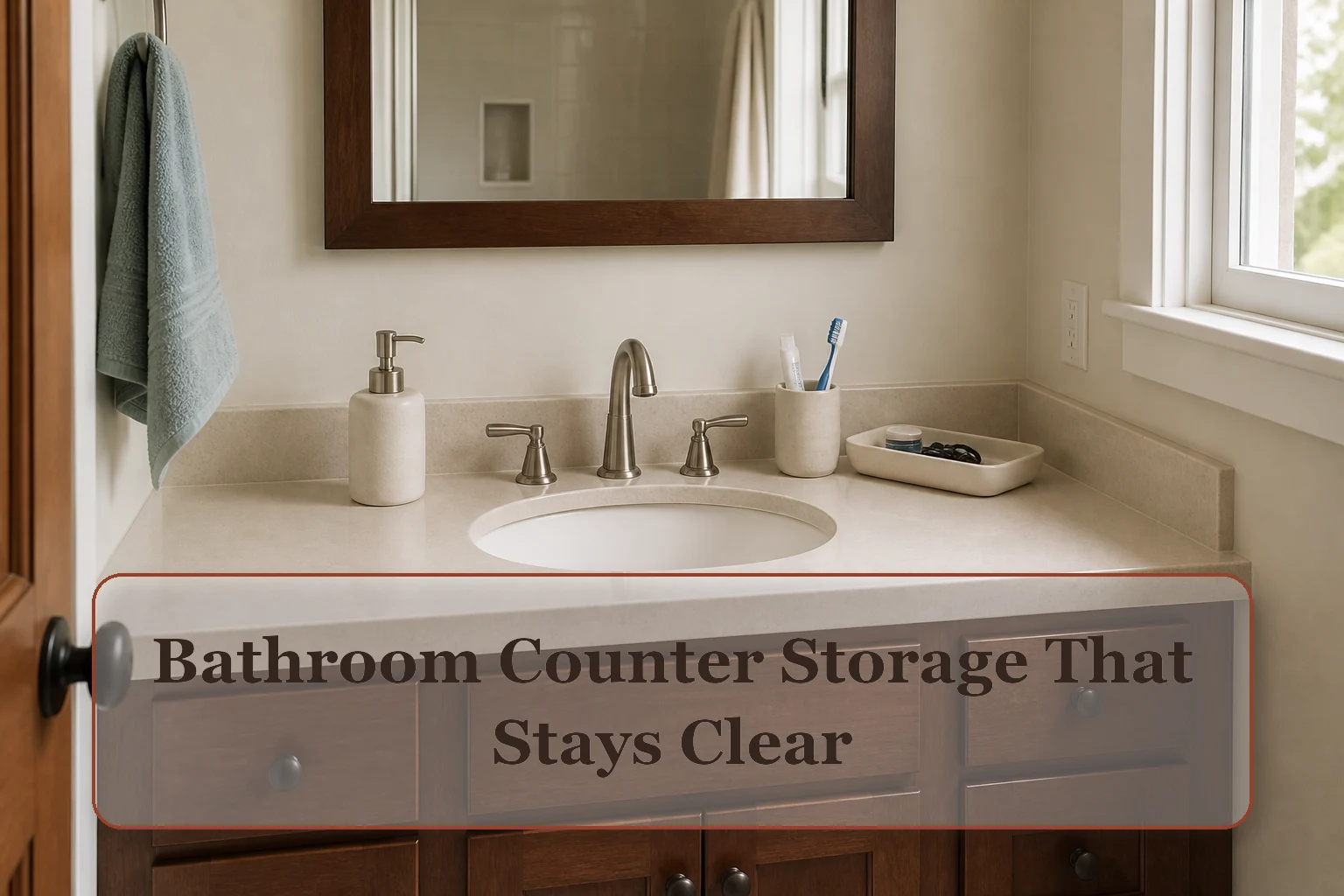
Use the tool: Work toward the counter-resident decision; test it with the real items and route before expanding storage.
Make every resident earn exposure
- Frequency: A counter resident should be used at least daily or be essential to the sink function. Weekly items can travel from a drawer without creating real friction.
- Moisture and cleaning: Anything left out is exposed to splash and must move when the counter is cleaned. Packaging that traps residue creates extra maintenance.
- Household access: Keep necessary items safely reachable for their users while respecting child, medication, electrical, and privacy considerations.
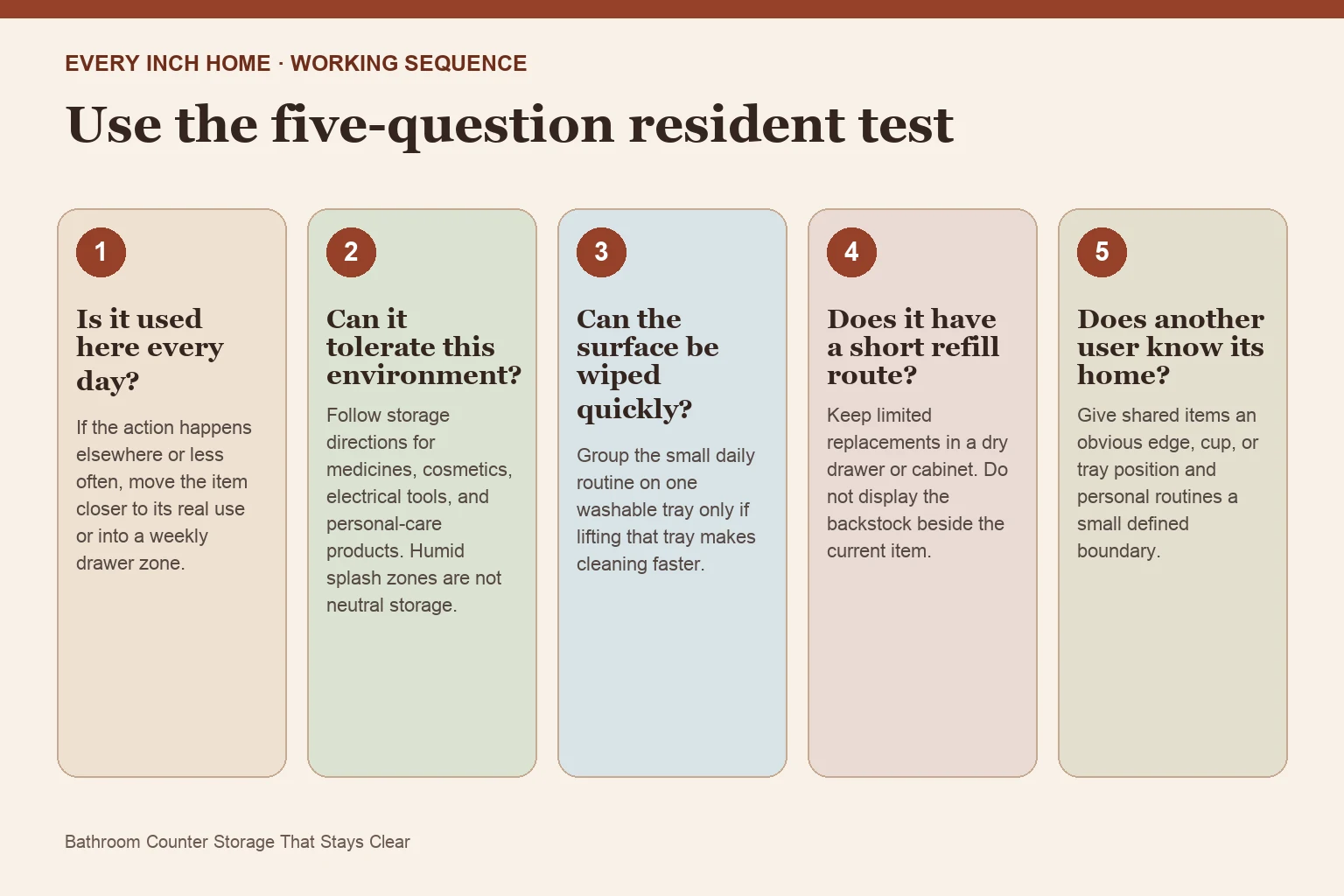
Use the five-question resident test
1. Is it used here every day?
If the action happens elsewhere or less often, move the item closer to its real use or into a weekly drawer zone.
2. Can it tolerate this environment?
Follow storage directions for medicines, cosmetics, electrical tools, and personal-care products. Humid splash zones are not neutral storage.
3. Can the surface be wiped quickly?
Group the small daily routine on one washable tray only if lifting that tray makes cleaning faster.
4. Does it have a short refill route?
Keep limited replacements in a dry drawer or cabinet. Do not display the backstock beside the current item.
5. Does another user know its home?
Give shared items an obvious edge, cup, or tray position and personal routines a small defined boundary.
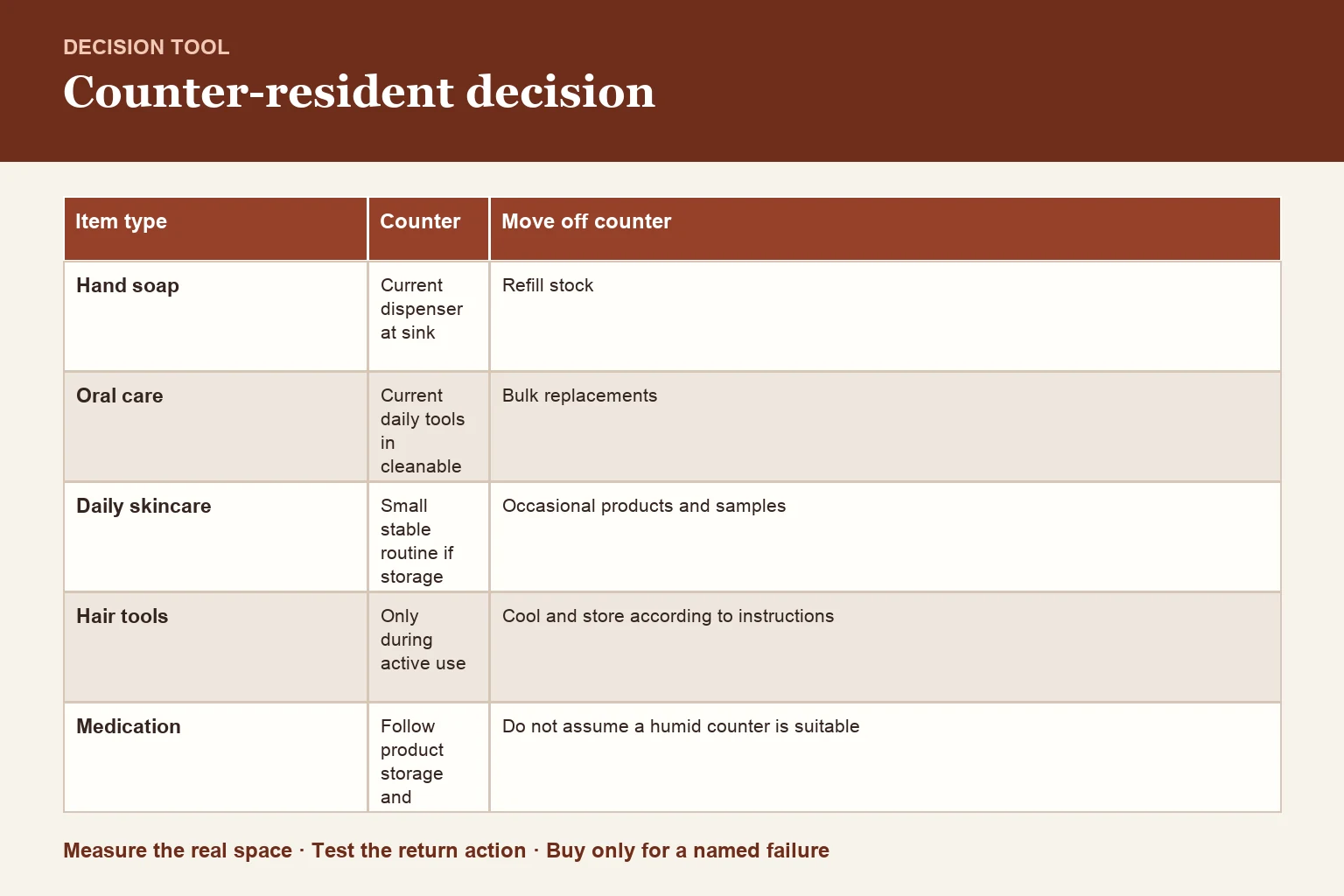
Counter-resident decision
| Item type | Counter | Move off counter |
|---|---|---|
| Hand soap | Current dispenser at sink | Refill stock |
| Oral care | Current daily tools in cleanable holder | Bulk replacements |
| Daily skincare | Small stable routine if storage permits | Occasional products and samples |
| Hair tools | Only during active use | Cool and store according to instructions |
| Medication | Follow product storage and security directions | Do not assume a humid counter is suitable |
A tray is useful only when it reduces moves
Choose a shallow, washable, stable tray that fits the resident group with a little hand clearance and leaves the sink and main work area open. Skip tiered counter organizers that expand the exposed inventory vertically. Measure faucet sweep, outlet access, and cleaning clearance before purchase.
The 90-second return path
After the final evening routine, return personal items, move laundry to the hamper, remove trash, wipe fresh water, and restore the resident tray. If this takes longer than 90 seconds, there are too many exposed categories or a needed drawer is too far away. Change the path rather than repeating a longer cleanup.
Frequently asked questions
What should stay on a bathroom counter?
Keep only sink essentials and a very small daily routine that is safe for the environment and easy to move for cleaning.
How do I organize a bathroom counter with no drawers?
Use one shallow washable tray for current items and move backups to a dry nearby container or room; do not build a tall product display.
Are tiered organizers good for bathroom counters?
They can increase capacity but also expose more items and complicate cleaning. Use one only when the measured footprint and routine genuinely improve.