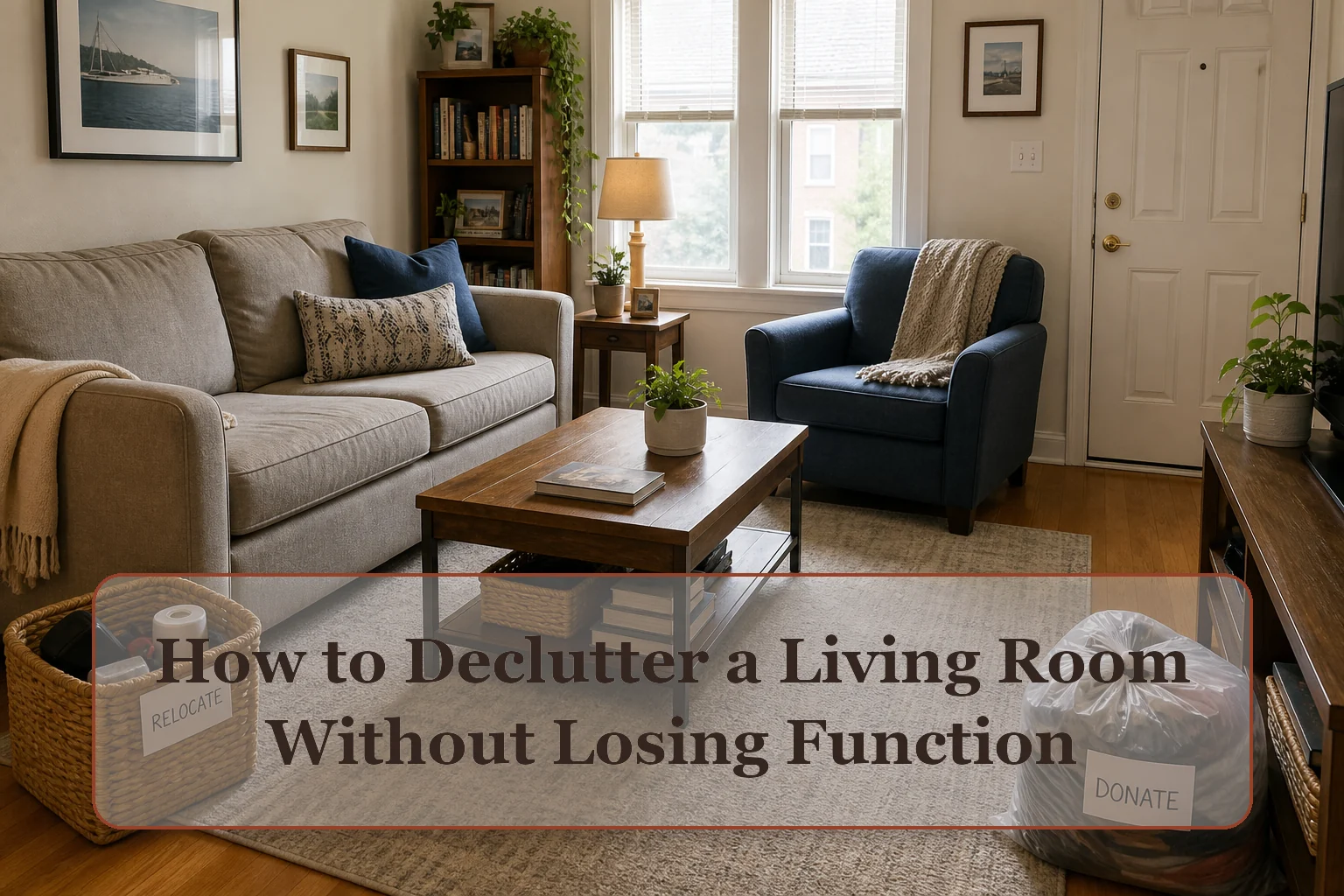
Use the tool: Work toward the route-seat-surface capacity checklist; test it with the real items and route before expanding storage.
Audit route, seat, and surface capacity
- Route: Walk from entry to seating and through adjacent rooms. A functional path should not require moving bags, toys, baskets, or furniture.
- Seats: Count the seats the household intends to use. A chair permanently holding laundry is clothing storage that happens to look like furniture.
- Surfaces: Name the job of the coffee table, side table, and media unit. Each needs enough empty area to perform that job.
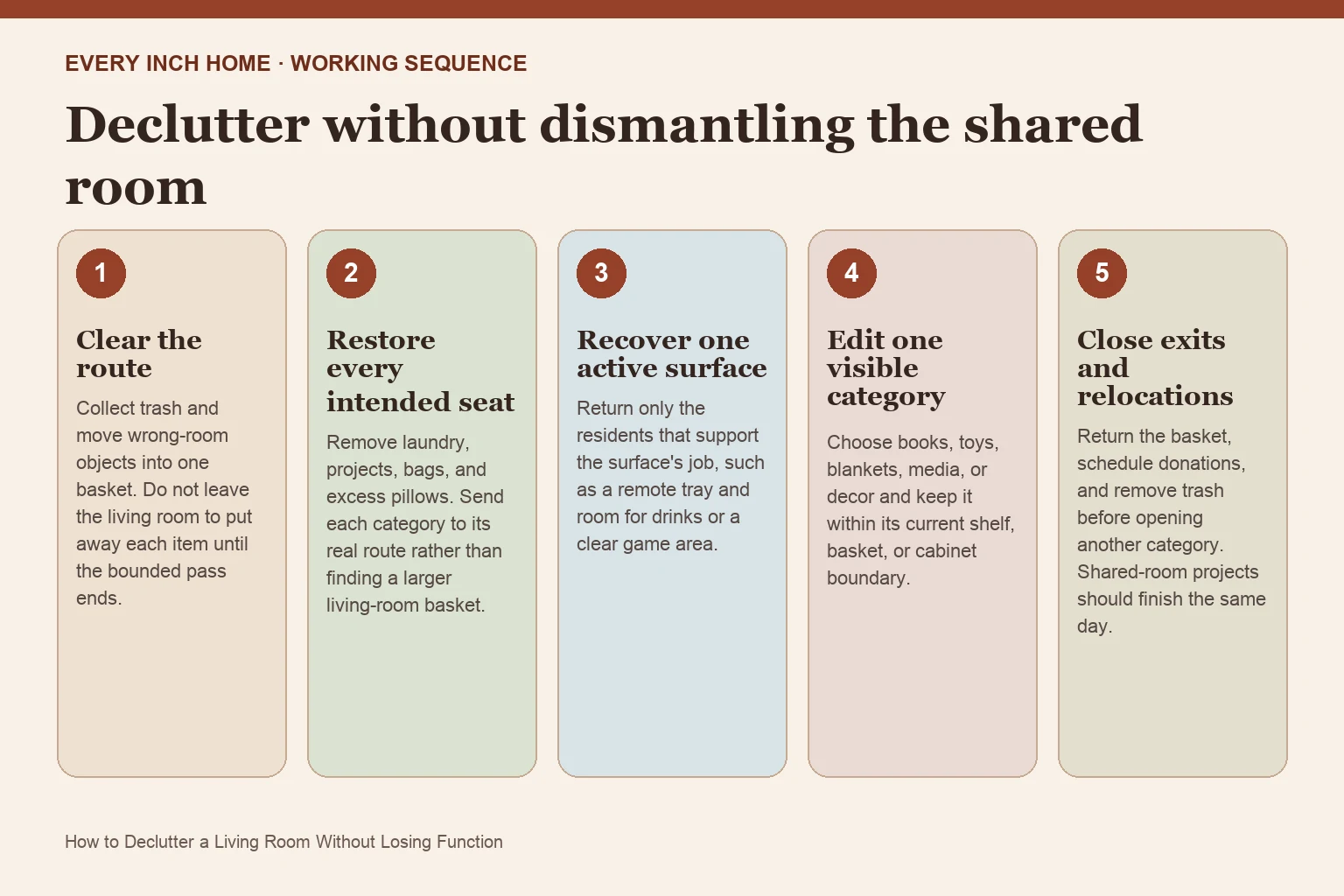
Declutter without dismantling the shared room
1. Clear the route
Collect trash and move wrong-room objects into one basket. Do not leave the living room to put away each item until the bounded pass ends.
2. Restore every intended seat
Remove laundry, projects, bags, and excess pillows. Send each category to its real route rather than finding a larger living-room basket.
3. Recover one active surface
Return only the residents that support the surface's job, such as a remote tray and room for drinks or a clear game area.
4. Edit one visible category
Choose books, toys, blankets, media, or decor and keep it within its current shelf, basket, or cabinet boundary.
5. Close exits and relocations
Return the basket, schedule donations, and remove trash before opening another category. Shared-room projects should finish the same day.
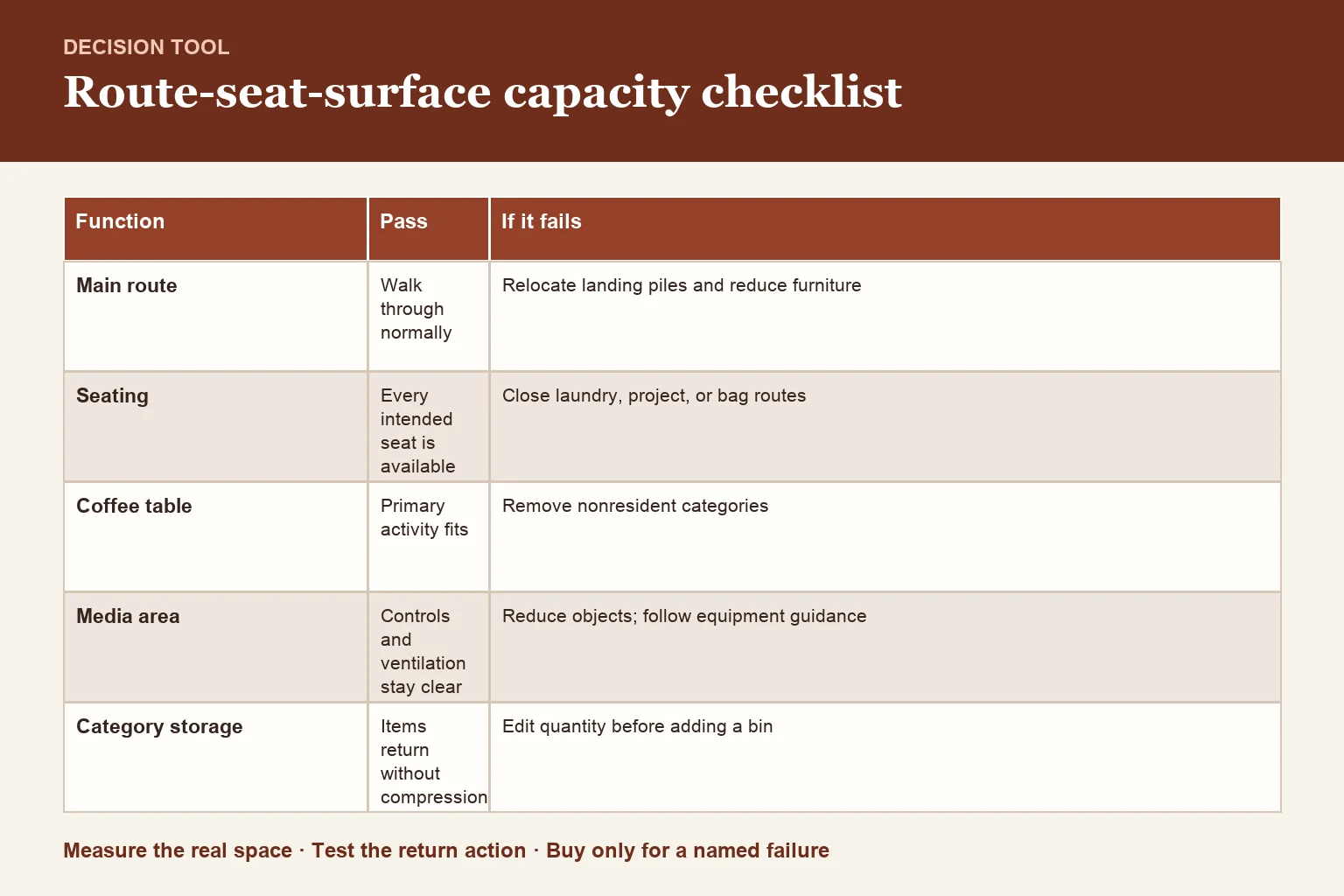
Route-seat-surface capacity checklist
| Function | Pass | If it fails |
|---|---|---|
| Main route | Walk through normally | Relocate landing piles and reduce furniture |
| Seating | Every intended seat is available | Close laundry, project, or bag routes |
| Coffee table | Primary activity fits | Remove nonresident categories |
| Media area | Controls and ventilation stay clear | Reduce objects; follow equipment guidance |
| Category storage | Items return without compression | Edit quantity before adding a bin |
Keep the room alive, not empty
A living room can hold books, toys, hobbies, blankets, and evidence of daily life. The limit is functional: the category has a clear home, can be returned, and does not take another activity’s seat, route, or surface. Remove objects that perform only as overflow; retain the items that support the way the room is actually shared.
Run a seven-minute shared-room close
Return active items to their category homes, carry the relocate basket once, fold or place current blankets, clear drinkware, and restore the main surface. If one category consumes most of the seven minutes, reduce its visible capacity or move its return home closer to where it is used.
Frequently asked questions
Where should I start decluttering a living room?
Clear the main route, make intended seats usable, and recover one active surface before sorting storage or decor.
How do I declutter a living room with kids?
Protect play and adult functions, give return-now toys a low visible boundary, rotate excess elsewhere, and use a reset the household can perform.
How do I keep the living room from becoming a drop zone?
Support a small arrival zone near the entry, use one relocate basket temporarily, and do not let bags or mail claim seating and tables.