Small-Space Organizing
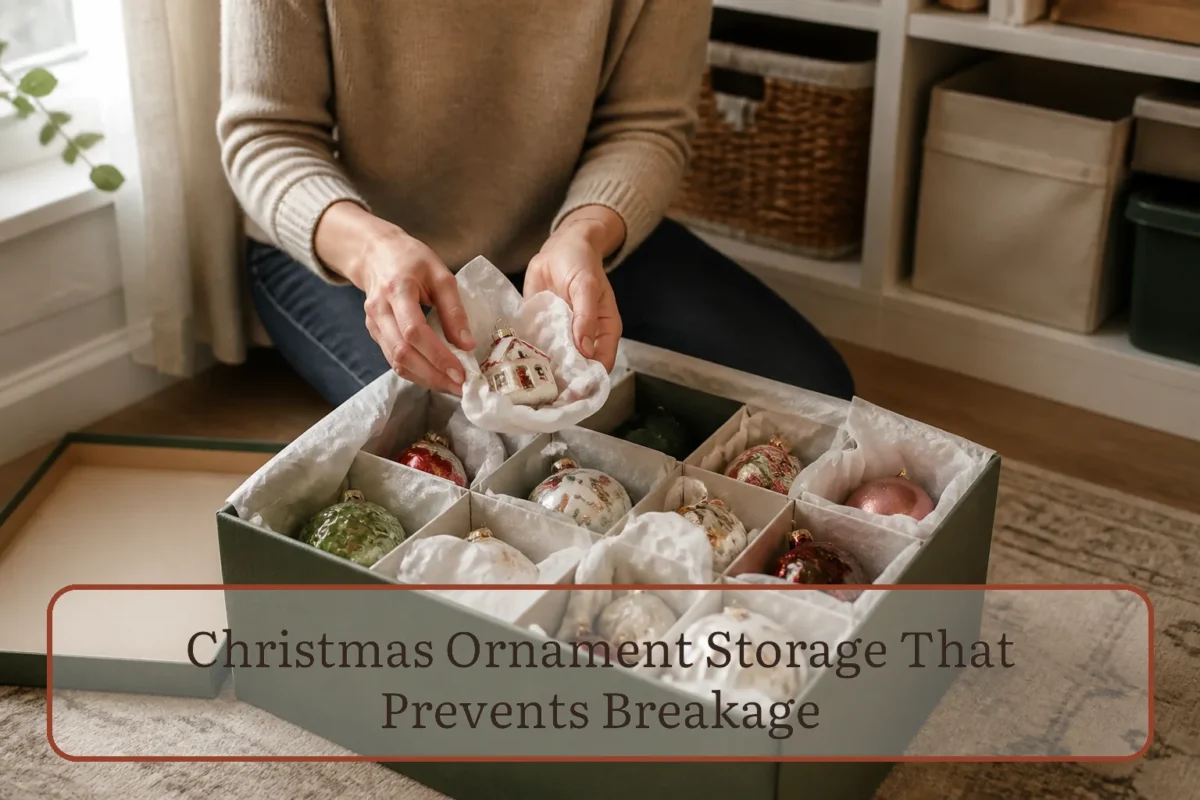
Christmas Ornament Storage That Prevents Breakage
Prevent ornament breakage with a material-and-condition risk matrix, measured individual cells, a stable packing sequence, and a photo inventory.
Make the space easier to use
Use capacity, access, and reset effort to make compact-home organization easier to maintain.
Recommended first guide
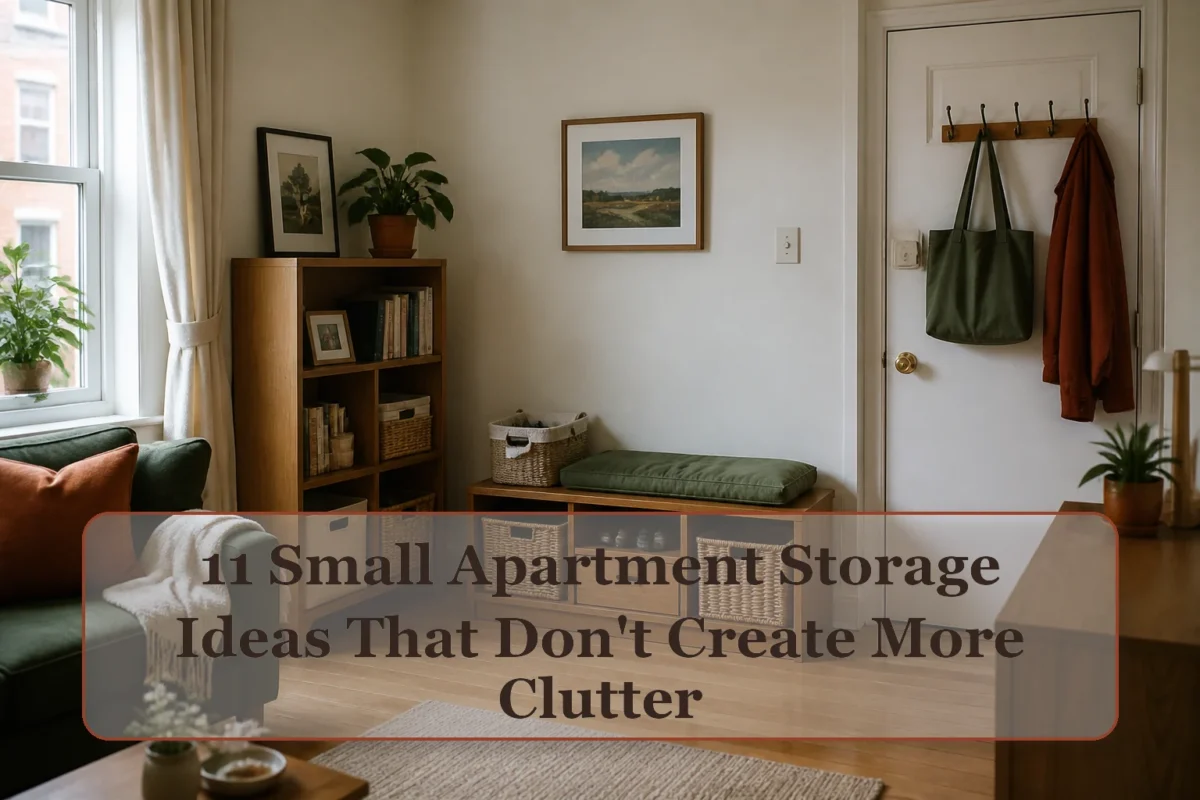
Make a small apartment easier to use with 11 storage ideas, a capacity-access-reset audit, and a measure-before-buying worksheet.
A practical framework
Name the exact boundary: shelf, drawer, cabinet, closet section, wall zone, or floor footprint. Edit to that boundary before shopping. A container cannot create capacity; it can only divide the capacity already there.
Keep frequent-use items between knee and shoulder height when the space allows. Avoid stacking unlike items so deeply that using one category disturbs another. The easiest place to retrieve an item is usually also the easiest place to return it.
Count the steps needed to put something away. Lids, nested bins, distant rooms, and tightly packed shelves can make a neat system fragile. Remove a step when the same category repeatedly lands on a surface.
Before you buy storage: remove obvious out-of-zone items, group what remains, measure the usable interior, note pipes, hinges, and outlets, and decide what must stay visible.
Published in this section
Small-Space Organizing
Prevent ornament breakage with a material-and-condition risk matrix, measured individual cells, a stable packing sequence, and a photo inventory.
Small-Space Organizing
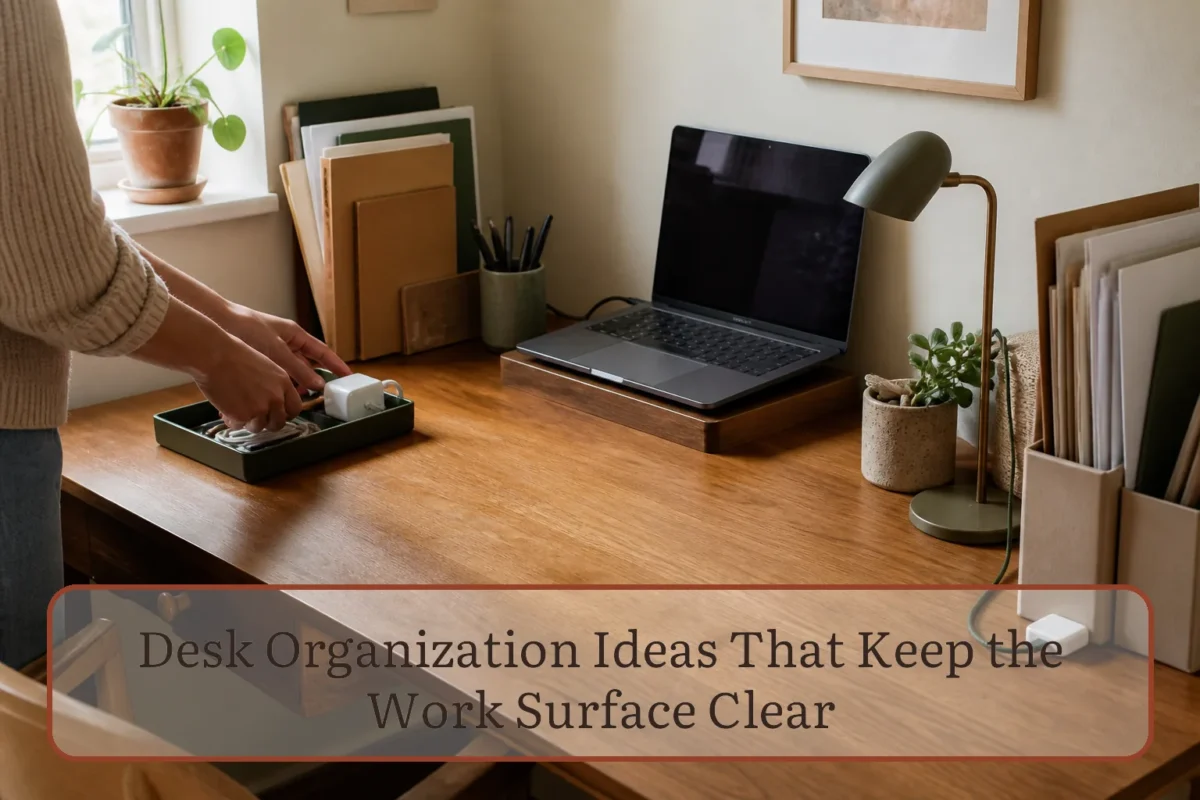
Organize a working desk with a four-zone map, a bounded paper system, a five-minute close-down checklist, and fixes for recurring clutter.
Small-Space Organizing
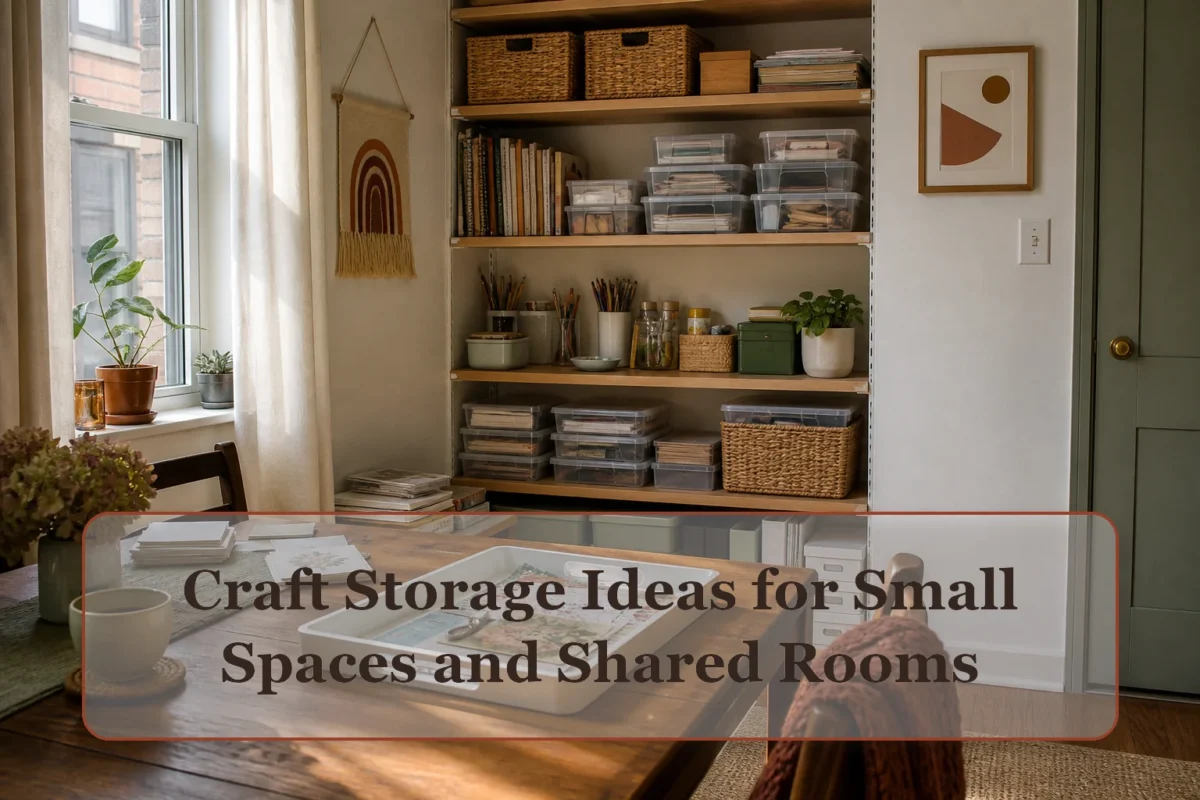
Separate active projects from backstock and tools so crafts can pause, travel, and reset in a shared room.
Small-Space Organizing
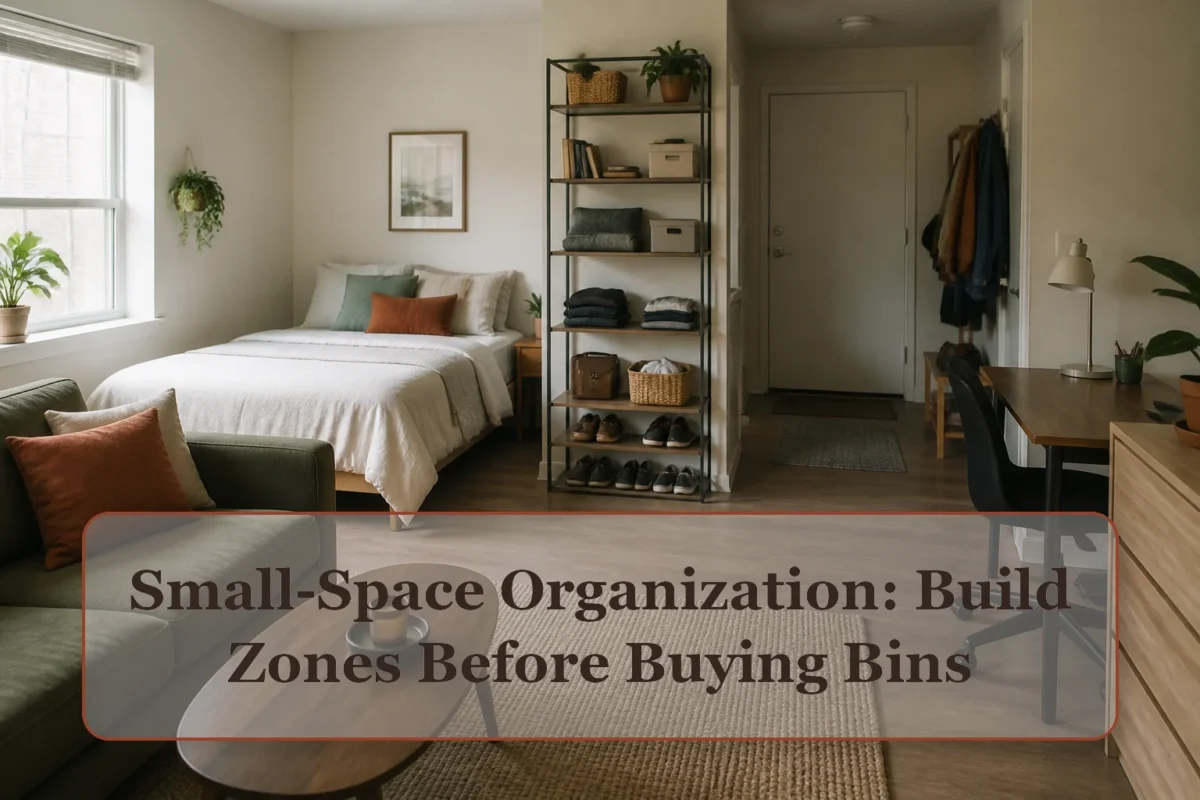
Map the jobs, routes, and natural landing points in a small home before buying bins or adding furniture.
Small-Space Organizing
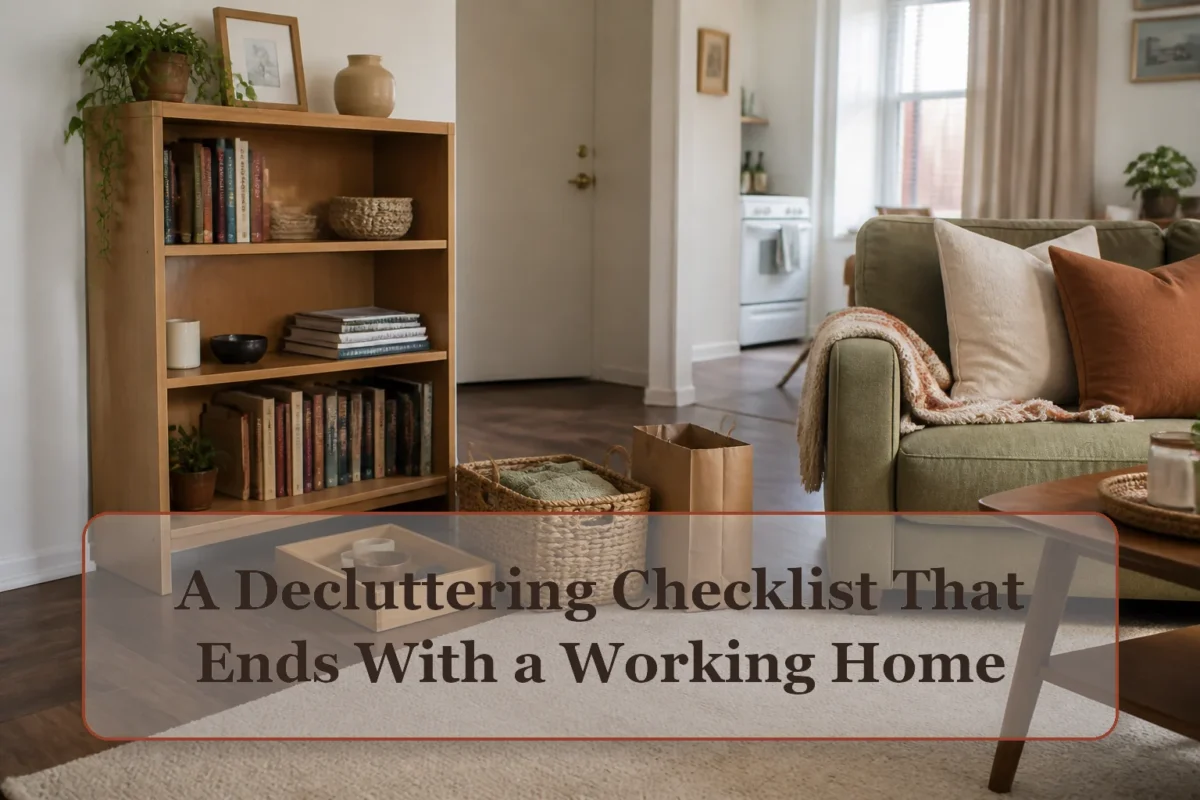
Use a room-order checklist, capacity limits, and clear stop rules to declutter without turning the whole home into a sorting project.
Small-Space Organizing
Declutter a small apartment without emptying every room. Use a bounded 20-minute zone, four decisions, and a clear stopping rule.
Small-Space Organizing
Make a small apartment easier to use with 11 storage ideas, a capacity-access-reset audit, and a measure-before-buying worksheet.
Keep moving through the home