Use the tool: Work toward the pantry decision table; test it with the real items and route before expanding storage.
Prepare food decisions before emptying a shelf
- Identity and dates: Keep packaging or records needed for ingredients, allergens, preparation, and dates. Follow current food-safety guidance rather than guessing from appearance.
- Donation rules: Contact the receiving organization first. Programs differ on accepted foods, packaging, dates, and drop-off; never assume an item can be donated.
- Local disposal: Use local guidance for food, glass, cans, cardboard, and household waste. Do not pour unsuitable food or grease down drains.
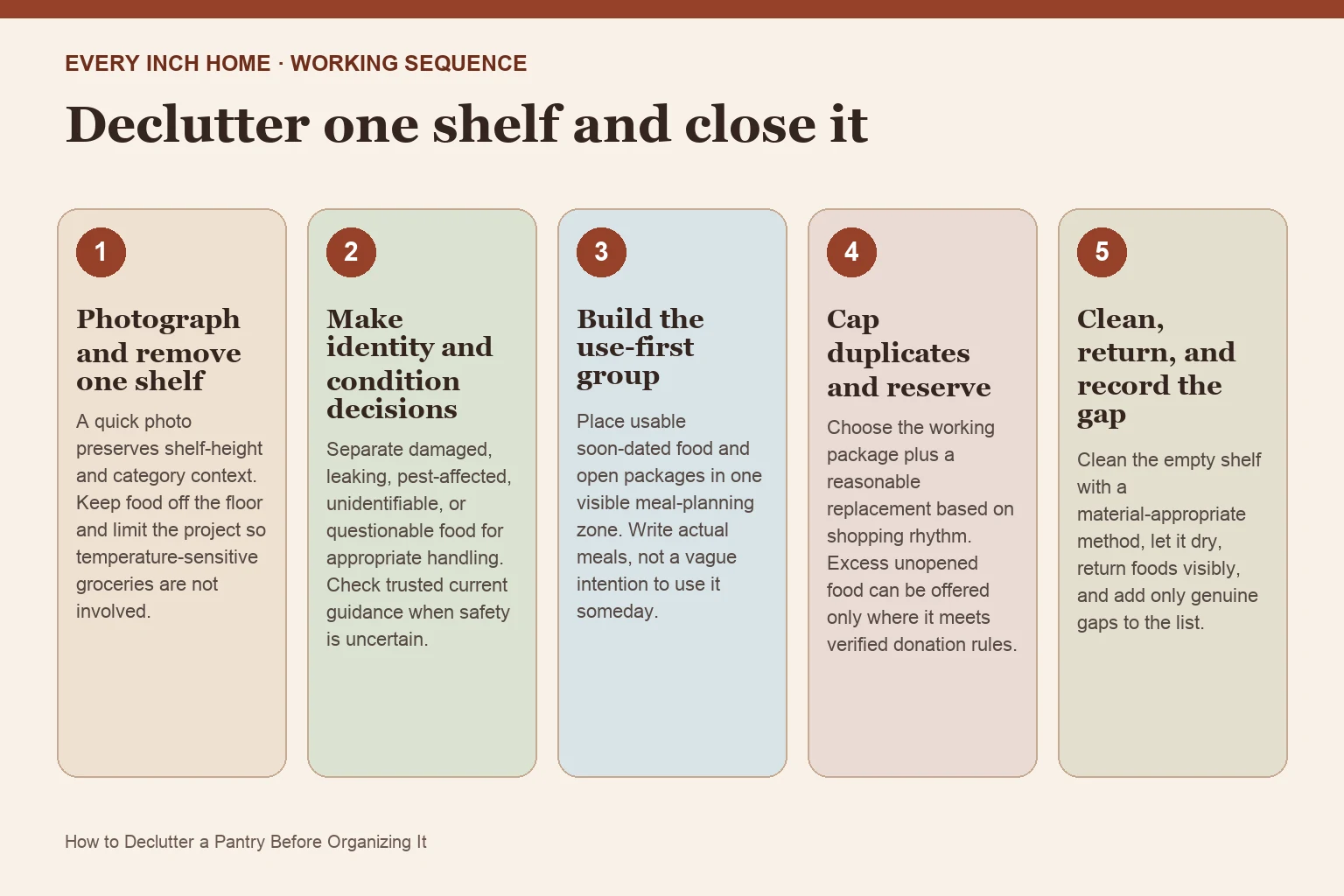
Declutter one shelf and close it
1. Photograph and remove one shelf
A quick photo preserves shelf-height and category context. Keep food off the floor and limit the project so temperature-sensitive groceries are not involved.
2. Make identity and condition decisions
Separate damaged, leaking, pest-affected, unidentifiable, or questionable food for appropriate handling. Check trusted current guidance when safety is uncertain.
3. Build the use-first group
Place usable soon-dated food and open packages in one visible meal-planning zone. Write actual meals, not a vague intention to use it someday.
4. Cap duplicates and reserve
Choose the working package plus a reasonable replacement based on shopping rhythm. Excess unopened food can be offered only where it meets verified donation rules.
5. Clean, return, and record the gap
Clean the empty shelf with a material-appropriate method, let it dry, return foods visibly, and add only genuine gaps to the list.
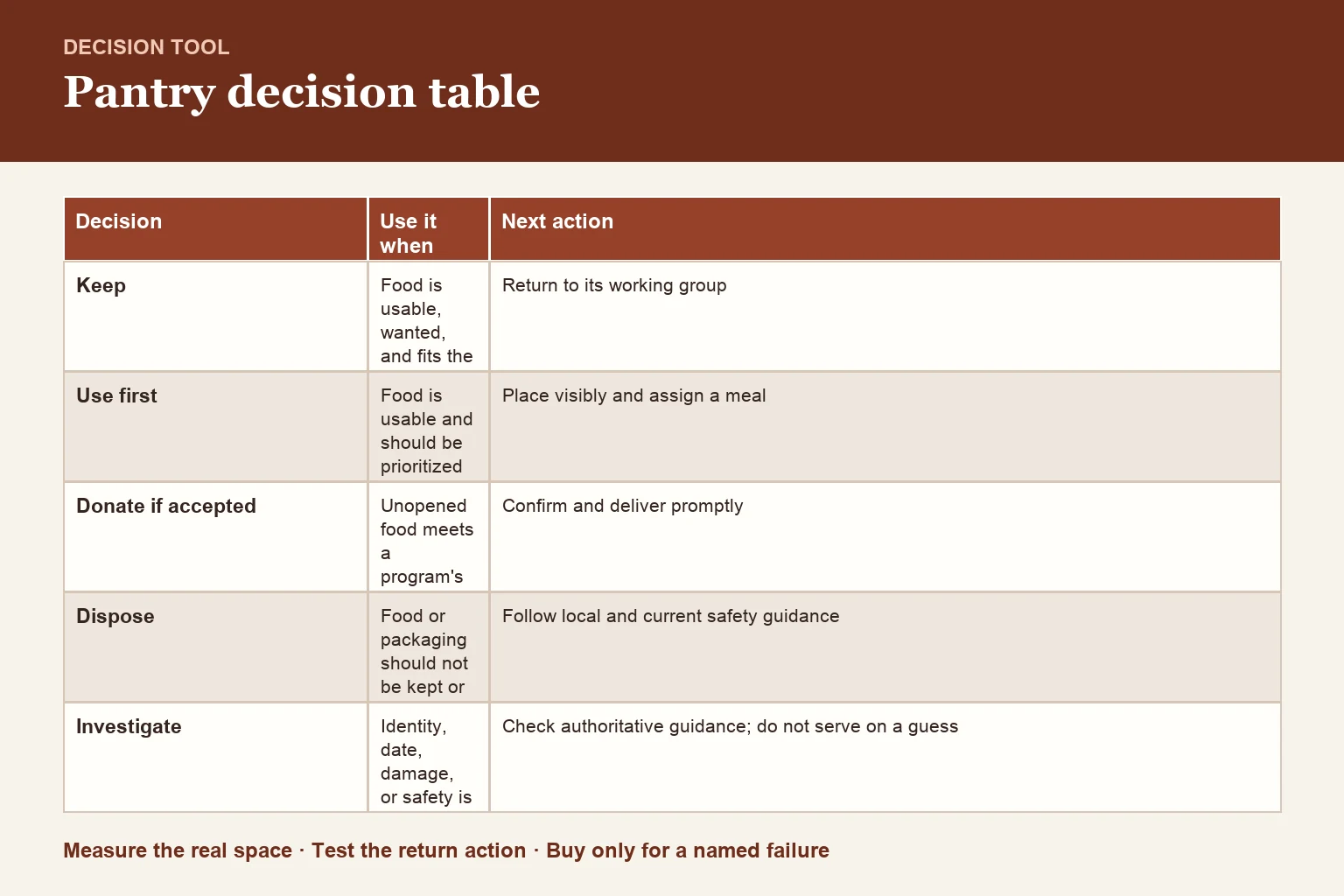
Pantry decision table
| Decision | Use it when | Next action |
|---|---|---|
| Keep | Food is usable, wanted, and fits the pantry plan | Return to its working group |
| Use first | Food is usable and should be prioritized | Place visibly and assign a meal |
| Donate if accepted | Unopened food meets a program's current rules | Confirm and deliver promptly |
| Dispose | Food or packaging should not be kept or donated | Follow local and current safety guidance |
| Investigate | Identity, date, damage, or safety is uncertain | Check authoritative guidance; do not serve on a guess |
Empty shelf space is an inventory control
Do not refill a newly open area with extra organizers or sale purchases. The visible gap absorbs an ordinary grocery trip, reveals what is running low, and makes spills easier to catch. Pantry capacity is working when food can arrive without creating hidden rows.
Use the use-first group in meal planning
At the start of each week, choose meals that use safe, suitable items from the use-first area, then replenish the working shelf from backstock. Review anything that remains there repeatedly: it may need a recipe, an offered transfer to someone who wants it, or appropriate disposal rather than another month of storage.
Frequently asked questions
What should I throw away when decluttering a pantry?
Handle leaking, pest-affected, damaged, unidentifiable, or unsafe food using current food-safety and local disposal guidance. When uncertain, consult an authoritative source.
Can I donate expired food?
Acceptance rules vary. Ask the food bank or program directly about dates, packaging, and eligible items before setting anything aside.
Should I buy bins before decluttering the pantry?
No. Resolve dates, duplicates, use-first food, and backstock quantity, then measure only the groups that still need containment.