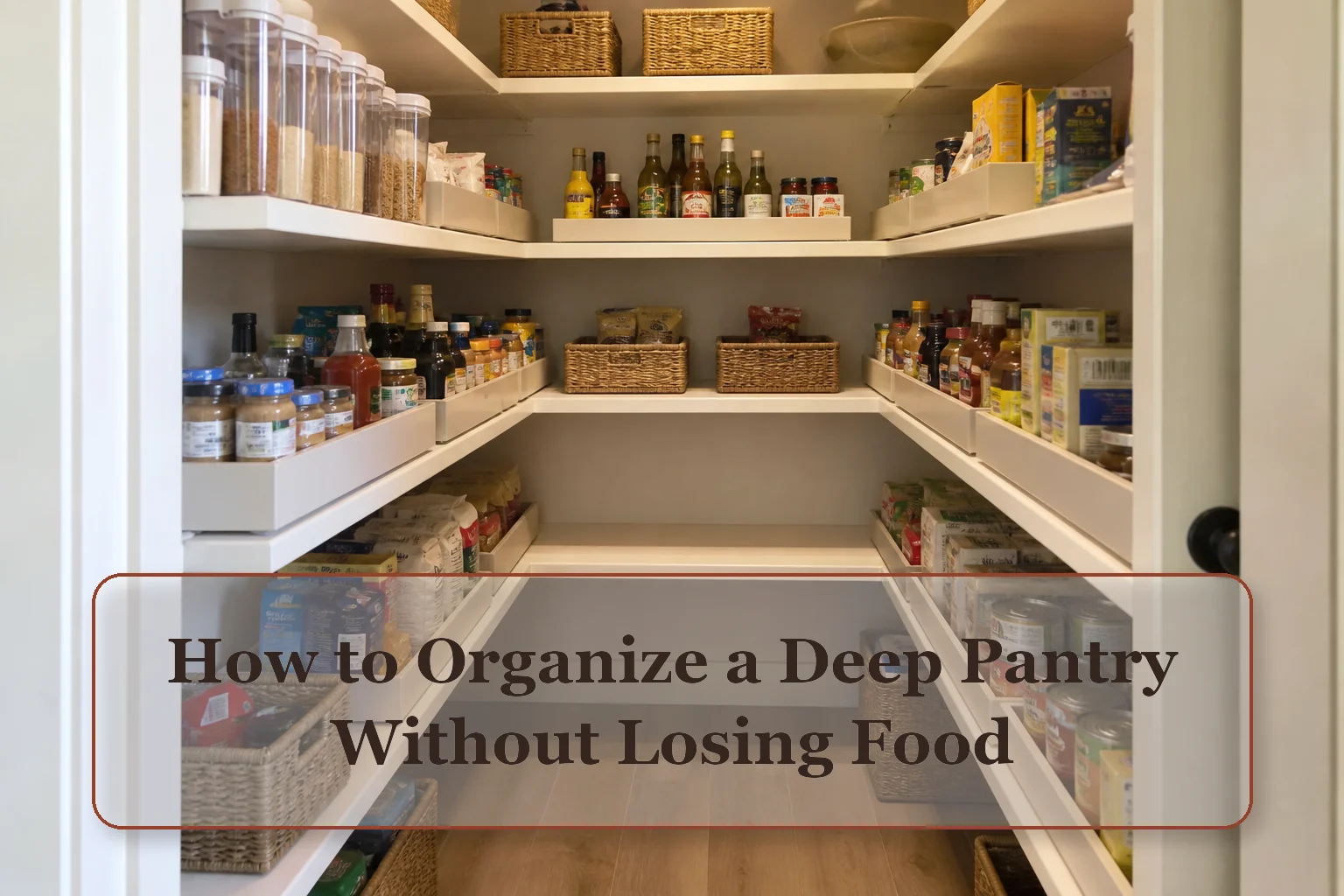
Use the tool: Work toward the depth and retrieval matrix; test it with the real items and route before expanding storage.
Measure hidden depth as a retrieval problem
- Front reach: Measure the depth you can see and grasp without unloading the shelf. This is the working zone, even if the shelf extends much farther.
- Back relationship: Anything stored behind another item should be related: refills behind the working package, occasional baking behind weekly baking, not a random second pantry.
- Lift path: A front tray needs side and top clearance plus a manageable loaded weight. Theoretical cubic capacity is useless if the unit cannot move.
Create one removable layer per shelf
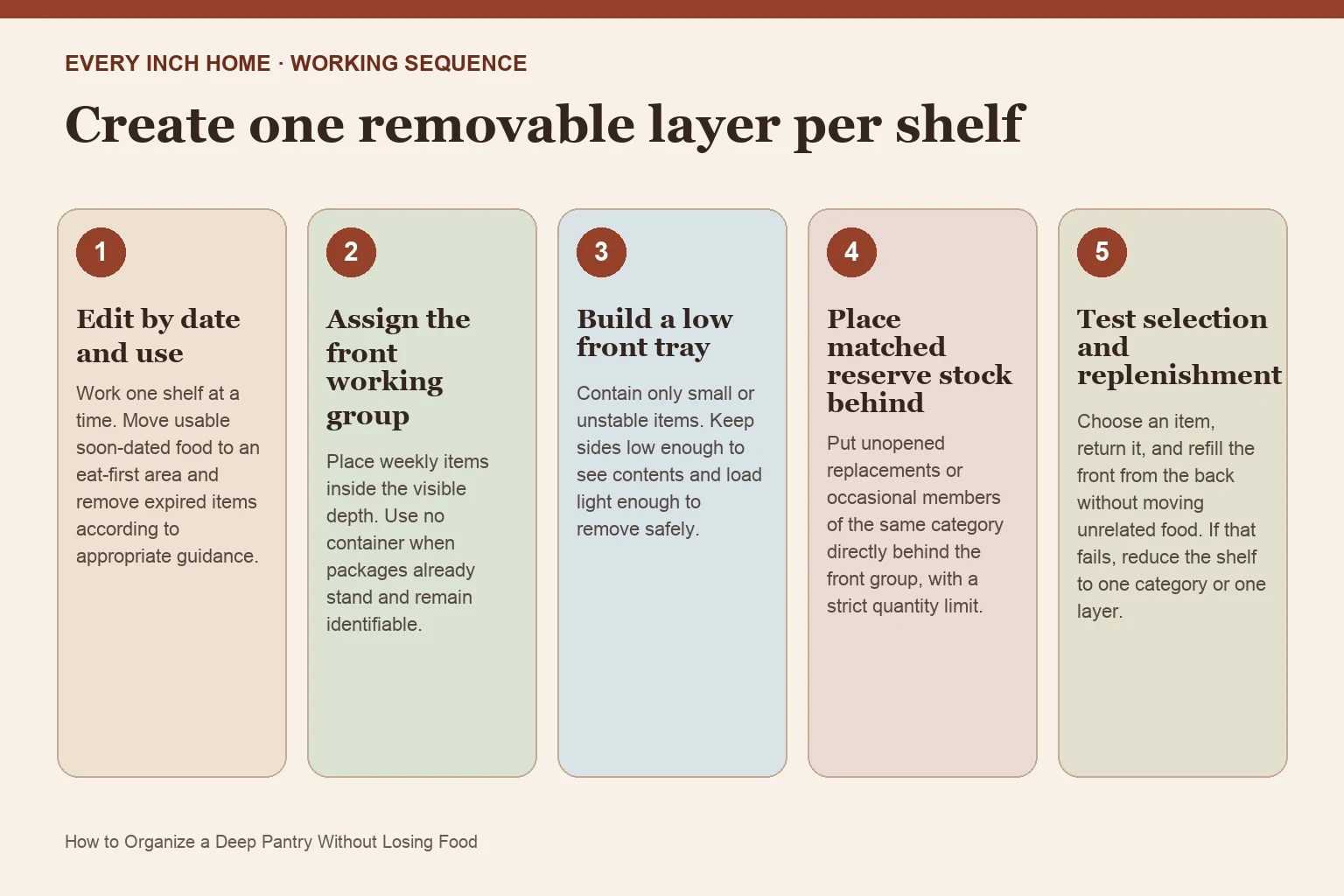
1. Edit by date and use
Work one shelf at a time. Move usable soon-dated food to an eat-first area and remove expired items according to appropriate guidance.
2. Assign the front working group
Place weekly items inside the visible depth. Use no container when packages already stand and remain identifiable.
3. Build a low front tray
Contain only small or unstable items. Keep sides low enough to see contents and load light enough to remove safely.
4. Place matched reserve stock behind
Put unopened replacements or occasional members of the same category directly behind the front group, with a strict quantity limit.
5. Test selection and replenishment
Choose an item, return it, and refill the front from the back without moving unrelated food. If that fails, reduce the shelf to one category or one layer.
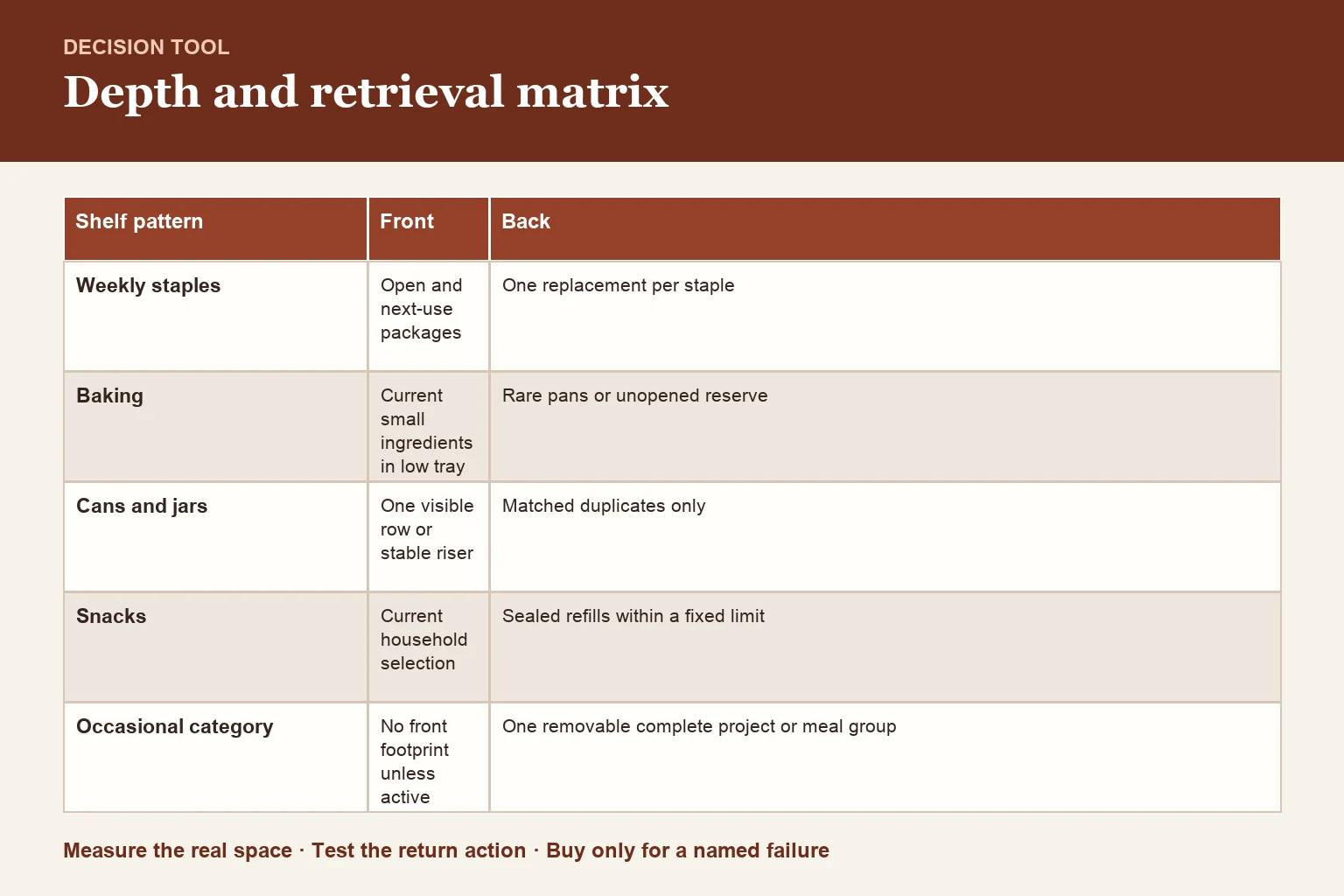
Depth and retrieval matrix
| Shelf pattern | Front | Back |
|---|---|---|
| Weekly staples | Open and next-use packages | One replacement per staple |
| Baking | Current small ingredients in low tray | Rare pans or unopened reserve |
| Cans and jars | One visible row or stable riser | Matched duplicates only |
| Snacks | Current household selection | Sealed refills within a fixed limit |
| Occasional category | No front footprint unless active | One removable complete project or meal group |
Turntables, pullouts, and bins need clearance
A turntable suits small bottles only when the corners of the shelf remain useful and nothing falls during rotation. A pullout suits a related loaded group only when the shelf can handle it and the unit clears the frame. Measure hardware, grip, lift, and loaded weight; do not buy by shelf depth alone.
Pull every front unit before restocking
During the pre-shopping scan, remove each front tray, check the back layer, move older usable stock forward, and record true gaps. This single action prevents a deep pantry from holding duplicate food nobody can see. If a tray is too heavy to pull weekly, split or reduce the category.
Frequently asked questions
How do you organize extra-deep pantry shelves?
Treat the visible front as the working zone and make it removable as one light unit; keep only related, capped backstock behind it.
Are clear bins best for a deep pantry?
Low, visible, easy-to-lift bins can help small packages. Tall clear walls still hide labels and add weight, so test the loaded unit.
How do I stop food from expiring in the back?
Place related reserve behind its working group, pull the front unit before shopping, and move older usable stock forward each time.