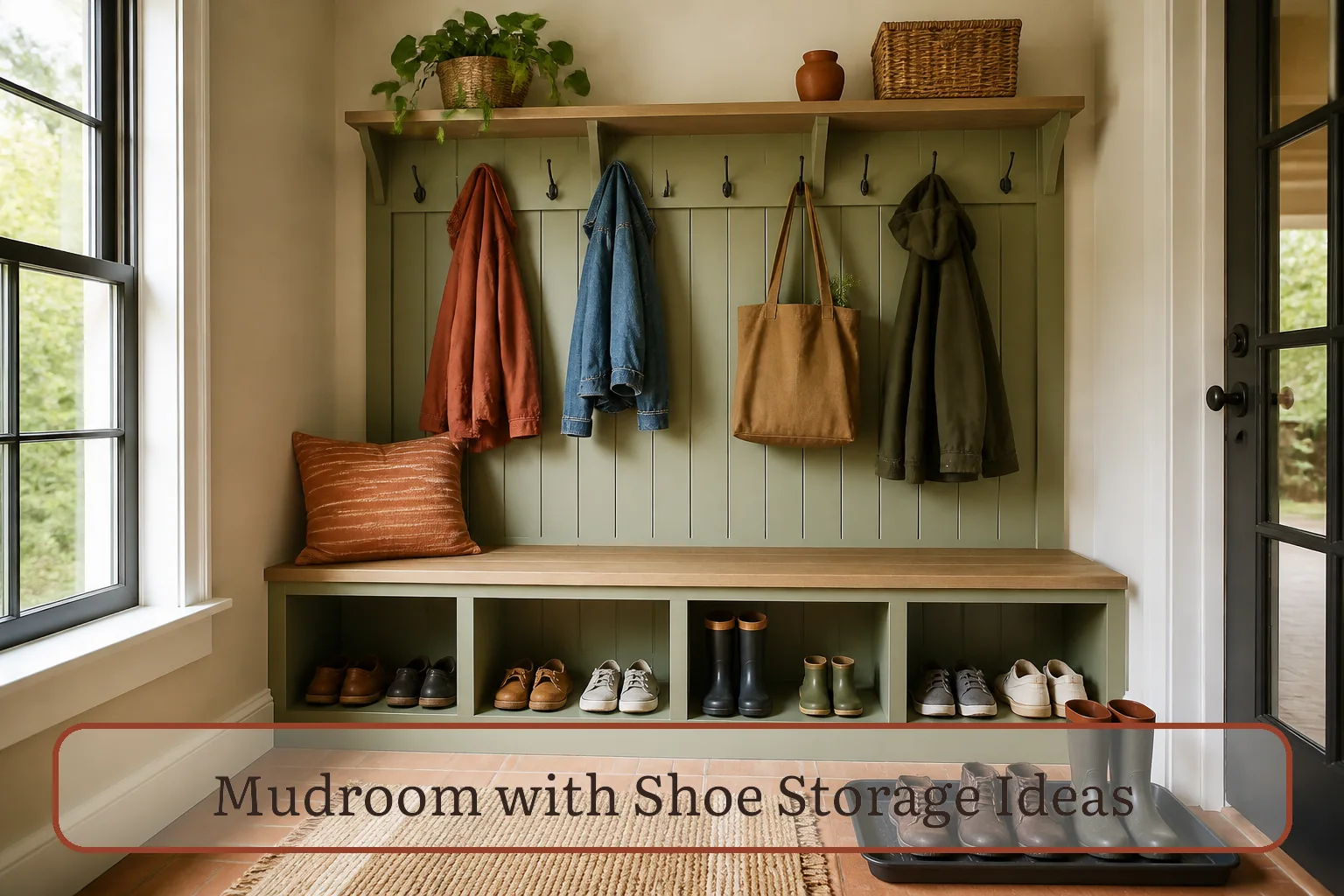
Map the entry path before adding shoe furniture
Open the exterior and interior doors fully, then walk the route while carrying groceries or a bag. Mark the floor and wall area that the doors, handles, vents, switches, radiators, access panels, and walking path already use. Shoe storage has to fit outside those areas. A narrow bench that forces people sideways or blocks a door is not an upgrade.
Measure the remaining wall width, usable height, baseboard projection, and depth available without catching a heel or bag. If the mudroom is also an exit route, preserve the required clear path and door operation; local building and fire rules control. Freestanding tall or top-heavy furniture needs the manufacturer-specified anti-tip hardware. CPSC recommends securing top-heavy furniture to help prevent tip-overs, especially where children live or visit.
The pair-width capacity worksheet
| Measure | How to test it | Design decision |
|---|---|---|
| Usable shelf width | Measure between side panels after accounting for brackets and dividers | Do not use the product’s outside width as shoe capacity |
| Widest everyday pair | Place the pair naturally side by side and measure its total width | Divide usable width by this real pair width; round down |
| Tallest boot in the daily group | Measure from sole to top without folding the shaft | Give boots one tall bay instead of raising every shelf |
| Deepest shoe | Measure heel to toe and add the space needed to grasp it | Reject a cabinet that requires shoes to project into the walkway |
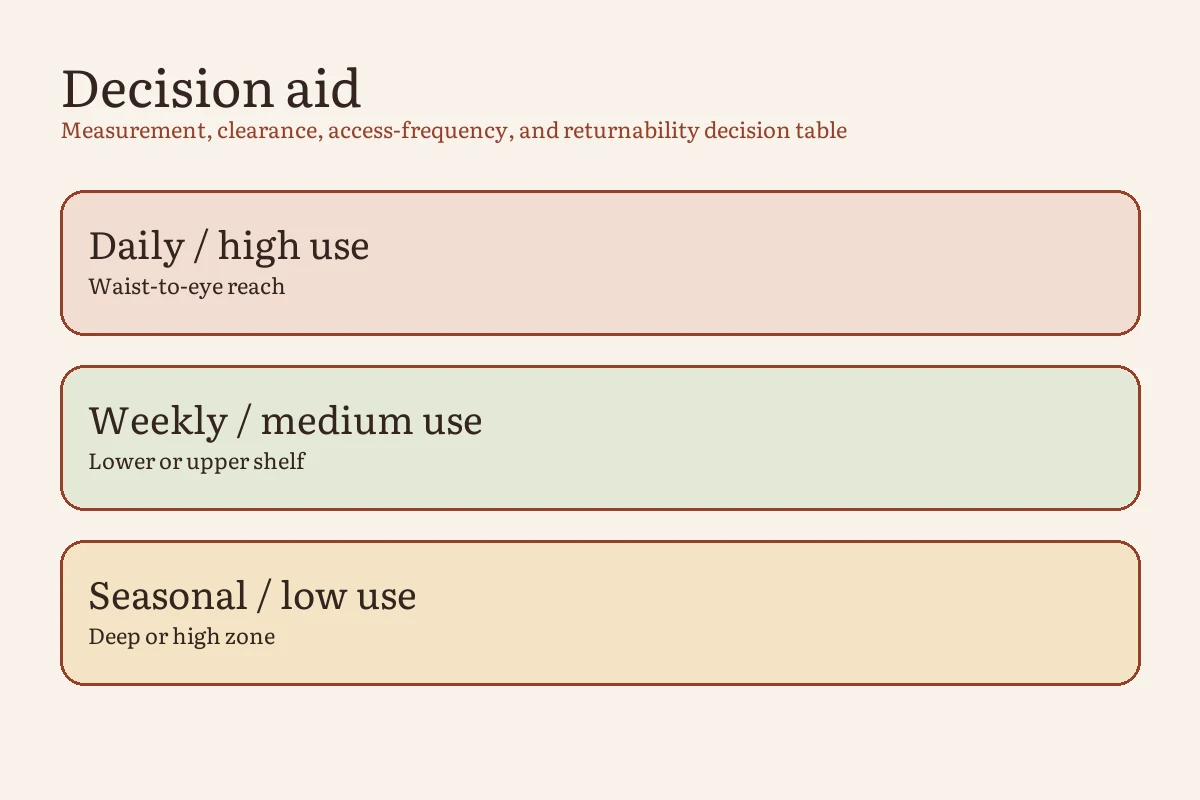
| Daily pair count | Count only pairs worn in the current week by each household member | Set the open daily capacity to that count, not to the entire shoe collection |
| Wet-pair capacity | Count the maximum wet pairs that typically arrive together | Size a washable landing tray for that event |
Example: A shelf with 29 inches of clear interior width does not hold four pairs merely because the catalog says “four-pair rack.” If the widest daily pair occupies 8 inches, the reliable capacity is three pairs with 5 inches left for easy retrieval. The spare space is what makes putting shoes away possible.
Sort footwear by moisture, height, and departure frequency
Make four temporary groups: wet or muddy now, worn most days, worn occasionally, and out of season. Damaged footwear awaiting repair gets its own deadline outside the daily row. Shoes that no longer fit or will not be worn should not consume the most convenient entry space.
Do not place dripping shoes directly into a closed cubby. Knock off loose outdoor debris where appropriate, use a washable tray that protects the floor, and allow air to reach the footwear according to its care instructions. EPA moisture guidance emphasizes drying wet items promptly; its general benchmark is within 24–48 hours to reduce the chance of mold growth. Correct a recurring leak or water entry instead of treating the tray as permanent water storage.
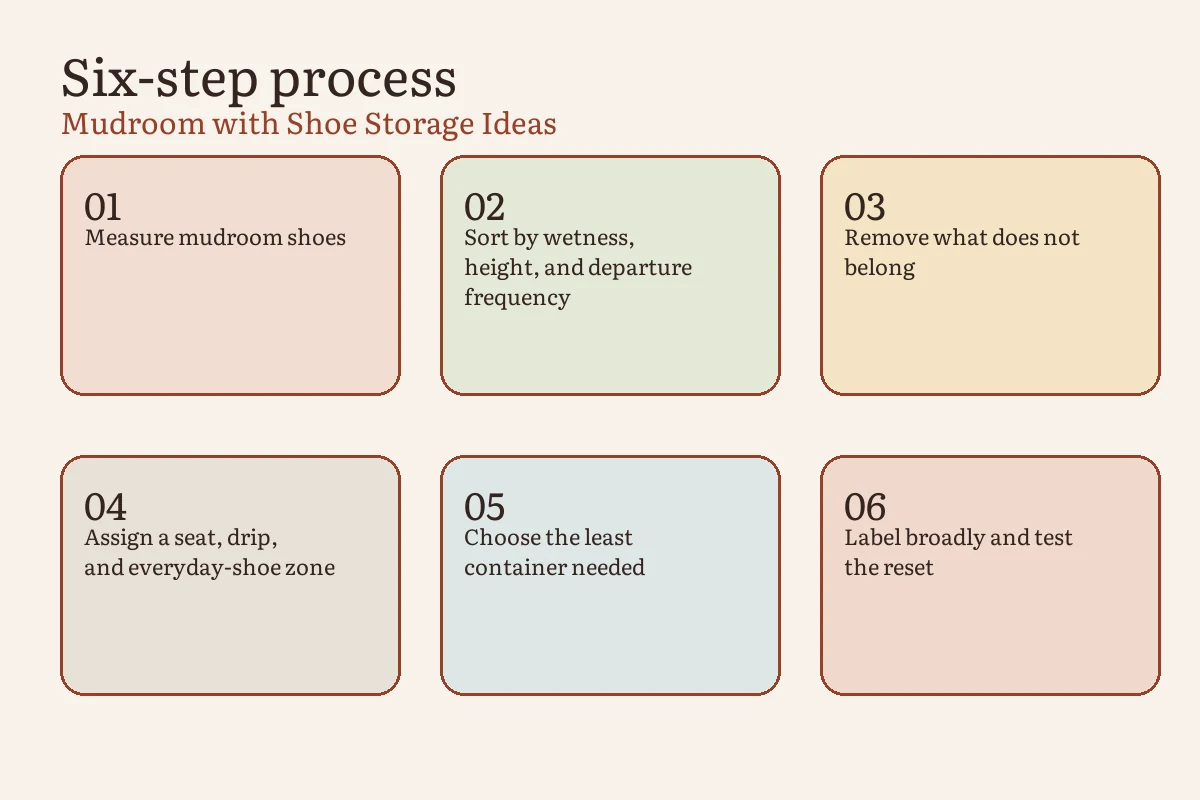
Build the storage in arrival order
- Create the wet landing first. Put a removable tray immediately beside—but not within—the door swing. It should lift out for cleaning and hold the household’s realistic rainy-day arrival, not every shoe owned.
- Place a steady changing point. If anyone needs to sit to remove shoes, choose a properly rated bench that remains stable and does not narrow the route. A wall-mounted option needs suitable structure and correct hardware; do not assume drywall anchors alone can support body weight.
- Give each frequent user a visible daily section. A shelf, cubby, or low pull-out row should hold the measured weekly pairs. Children should be able to return their own shoes without climbing furniture.
- Reserve one tall bay. Keep daily boots upright in the lowest practical position. Avoid storing heavy footwear overhead, where pulling it down can dislodge other items.
- Move occasional pairs out of the entry. Occasion and seasonal shoes can live in a labeled closet bin or bedroom storage location. Rotate them when the season changes instead of expanding the mudroom row.
- Anchor and load furniture correctly. Follow the product and wall-fastener instructions, secure top-heavy units, and place heavier items lower. Never encourage climbing by putting an appealing basket or child item on the top shelf.
- Run an arrival test. Have each household member enter, park wet shoes, retrieve a dry pair, and leave. Fix collisions now: the wet tray may need to move, cubbies may be too deep, or the daily capacity may be unrealistic.
Choose the storage type from the failure you need to solve
| Current problem | Useful format | Measurement or safety check | Tradeoff |
|---|---|---|---|
| Shoes spread into the entry path | Low open rack with a fixed pair limit | Depth stays outside the door swing and walking route | Contents remain visible |
| Wet shoes soil dry pairs | Separate washable boot tray | Holds the simultaneous wet-pair count and can be removed easily | Requires prompt drying and cleaning |
| A narrow hall cannot accept deep shelves | Shallow tilt cabinet rated for the footwear | Doors open without creating a trip point; furniture is anchored | May not fit large shoes or boots |
| Someone needs seated dressing | Load-rated bench with open clearance below | Stable on the floor and does not obstruct the route | Seat can attract bags and mail |
| Many seasonal pairs crowd the room | Labeled rotation bins elsewhere | Pairs are clean and fully dry before closed storage | Requires a calendar-based swap |
| Rental walls cannot take a built-in | Low sturdy freestanding rack | Complies with lease rules and does not create a tip-over risk | Less vertical capacity |
Handle a mudroom that is really a hallway
When there is no separate room, use the smallest viable version of each job. A two-pair tray handles wet arrivals. A shallow rack holds current daily shoes. A hook rail or basket may hold non-shoe departure items, but it should not sit where straps swing into the doorway. Store backups in a nearby closet rather than building upward until the passage feels like a tunnel.
For a shared building corridor or landing, confirm what storage is permitted before placing anything outside the unit. Do not narrow a common path, block a fire door, or assume the area belongs to one household.
The two-minute evening reset
- Move dry shoes from the wet tray to their daily shelf or long-term home.
- Remove loose grit and empty standing water using the tray’s care method.
- Return stray daily pairs without exceeding each person’s measured section.
- Relocate bags, mail, toys, and packages that landed on the bench or shoe rack.
- Confirm the door, walking path, vent, switch, and floor remain unobstructed.
Frequently asked questions
How many pairs should stay in a mudroom?
Keep the pairs actually worn during the current week plus the wet-weather capacity your household needs. The shelf-width worksheet determines how many fit without stacking or blocking retrieval. The rest can rotate from another storage area.
Is closed shoe storage better for odor?
A door hides shoes but does not remove moisture or soil. Store footwear only after it is clean enough and fully dry according to its care instructions, and choose a cabinet design that allows the ventilation the product and room require.
What can replace a bench in a tiny entry?
If seated shoe changes are not necessary, omit the bench and preserve the path. If a seat is needed, consider a compact properly rated stool that has a safe parking place when not in use. Do not use an unrated shoe shelf as a seat.
Sources and editorial method
Every Inch Home created the capacity worksheet, arrival sequence, and option comparison for this guide. Moisture and furniture-safety boundaries were checked against current EPA and CPSC guidance. Exact installation, fastener, floor-care, footwear-care, lease, and local egress requirements still control.